
I don’t often speak with presidents, and when I do, I don’t always have something to remember afterwards. But this case stuck with me for a long time: there was a meeting with Petro Poroshenko on the topic of either cultural development or language protection, to which I was invited for some reason. The conversation was philosophical, and one participant expressed the opinion that if we do not do this and that, we will have a failed state, a country that did not happen. Petro Oleksiyovych reacted somewhat inadequately, it seemed he heard only the last phrase, and literally exploded. No, we will never be a failed state, such things cannot even be spoken out loud! We will be a modern, advanced, successful country, and soon we will be cited as an example. He raged for about five minutes. Then, however, he apologized. Both were very sincere and left me with a feeling of respect and probably solidarity despite some details of the Madrid court, which I was aware of.
Ukraine under Poroshenko, frankly speaking, did not look like an example, except maybe in the distant future. Zelensky’s Ukraine evokes shame and anger in everything associated not with the people, history, geography, culture, but with the purely state organism, the sum of technologies. If not for one “but”: this administrative formation is still resisting a 140-million-strong gang of robbers, hypocrites, and deviants. Not the people, not the volunteers, not the partisans, but precisely the state with all its imperfect branches, levels, and flawed bodies, including the Armed Forces, the National Guard, the SBU, and other services and departments that are part of the Defense Forces, plans, gives orders, provides, supplies as it can, in short, governs. Separating incompetence and meanness from heroism and self-sacrifice — this difficult task everyone is forced to perform alone with themselves, as we see, discussions on social networks are not helpful.
Four years ago, long before all the depressive “Midas,” “Forrest Gump,” and “Carthage,” but already after the first fervor with queues to the TCC had settled, it was among the soldiers that discussions began, for what are we fighting? More precisely, they are fighting. The scandal with “Skela” was also not yet heard, but there was no lack of inappropriate relationships. My friend, an officer-volunteer, specifically called me directly from the point (and at that moment, for a minute, I was warming under the November Spanish sun, waiting for the screening and discussion of my film at a local university — a greater cognitive contrast is impossible to imagine) with a proposal to write something uplifting and, most importantly, sincere and convincing on this topic. I achieved nothing because, like the rest of my compatriots, involved or not, I am constantly in a difficult dialogue with myself.
The very first temptation is to separate the personal from the official. Yes, “up there” are “they,” the predators (as if “they” landed from the planet Krypton and have nothing to do with “us”). We don’t communicate with them and avoid interaction if possible. They divide the European pie, they messed up mobilization and energy protection, they occasionally throw us a thousand or two from their master’s shoulder, either for the children or for the resettlement arrangements. We raise funds for drones and wait for our loved ones from the front, crippled and traumatized—or, conversely, hide fiercely from every patrol. From time to time, they invade our lives with taxes, business initiatives, and motivational speeches, but overall we run parallel lives. Then there are the third ones. Heroes, Demigods. Their return is awaited with fear, as it turns out. No one asks them, their position isn’t considered, no one anymore predicts: “the guys will come, put things in order,” no one. Such a chess game.
This is a blatant simplification. I remember well my encounters with the state in various guises (since everything was state-owned) in the late USSR, each time was a trial worthy of Kafka’s pen and the late Strugatsky brothers. My recent visit to the local pension fund office left an impression of science fiction: they smiled, can you imagine! My problem was resolved in twenty minutes of waiting in line for a ticket and five minutes of attentive dialogue with a calm lady with the face of a wise teacher. When my still-living mother had her balcony windows shattered from a nearby strike, attentive guys came in the morning, cleaned up the debris, and covered the frames with temporary film that lasted almost a year. Just recently, a close friend completed two chemotherapy courses and is preparing for a third; despite the promised horrors, it cost her a purely symbolic amount, including taxi rides there and back. In the end, everything works more or less, there are buckwheat and pasta in the markets (there is also meat, whiskey, three dozen kinds of beer, and Fine de Claire №1 oysters), the lights are turned on despite everything, and there is water. Public transport runs on schedule—I’m honestly not the best expert, but they say there’s EasyWay, and that’s quite a miracle. Not exactly like pictures from real failed states like Cuba or Haiti. As for how things are arranged up there, we won’t get there anyway (or maybe, suddenly, we will?!).
No, intelligent people have already found the right words: the Ukrainian state, as an administrative machine, naturally or unnaturally formed into a network of mafias, where access to levers automatically means access to resources, and the ability to “make deals” implies cooperation with outright criminals. An interdepartmental competition serves as a certain safeguard against the total degradation of the entire structure, especially when one control-repressive agency hunts another and, preferably, is under the patronage of an independent foreign curator or concerned public, or both. It’s possible to hope for the resistance of crystal-clear officials at separate levels, but it’s not very wise. From my own experience: I knew quite a few law enforcement officers of different levels who themselves were carriers of principles and ideals, with whom one could discuss complex social problems and hear quite sensible thoughts, but as soon as they were commanded from above to engage in the scheme of service interaction, they began to act not of their own will but according to the logic of the organism that united them, and before your eyes turned almost into monsters—sometimes it looked comical, as if a play should be written.
Does this mean that by defending the state, we simultaneously consciously find ourselves on the side of a corrupt corporation that performs its initial functions on a residual principle because it does not contradict its main interest? Yes, it’s painfully sad, but yes. So what’s the point? I can name two right away.
First, our monster is still a monster; it is vulnerable and can be influenced from below, even with placards, and from the side — by the forces of international monitors, donors, and sponsors. Eventually, we can get rid of it or significantly modify it through entirely conventional democratic procedures; we just need to wait for a pause in the war.
Second, if we refuse to support our immoral feudal lord, we automatically give free rein to another despot, hundred times worse, more hideous, and dangerous. We have learned what the aggressor is capable of over these years; those who haven’t felt it personally have been told. With him, no maneuvers, no sweet compromises are possible by definition, let alone humanitarian discussions; even former fervent supporters suddenly face many years for extremism or treason.
In the first case, the choice is so-so. In the second — none at all.
I hate the scoundrels in power, in our power. But the world is imperfect. Democracy even more so. The last time I idealized it was 35 years ago. A series of precedents from completely different countries allows me to come to terms with the bitter reality a bit, where top officials after the end of their mandate go to prison, possibly a bit more comfortable than Moscow’s Butyrka, but nonetheless not Courchevel. Former Israeli Prime Minister Olmert, former French Presidents Sarkozy and Chirac, former Italian Prime Minister Berlusconi, former Croatian Prime Minister Sanader, and I haven’t even mentioned former South Korean presidents — it seems none of them have avoided the option of exchanging their office for a cell after the end of their term. They say this is called inevitability. I really, really want to live to the moment when Trump’s term ends; oh, what Shakespeare awaits us!!!
The voice of the Mexican, the Criminal, the Chancellor, Mykytas, and the Wise (yes, her too) on the infamous tapes makes me nauseous. I am repulsed by their intonations, pronunciation, and vocabulary. Philological education, you know. However, I will endure. Because I believe in inevitability on the other side of the worldview chasm — when the gray reserve colonel will finally receive his lifelong Nuremberg, and the perfect state of informers and sadists crumbles into dust. It is worth the effort and patience to live to see this. And also, like President-5, I believe that we will manage to avoid the fate of a failed state, although I have zero arguments.
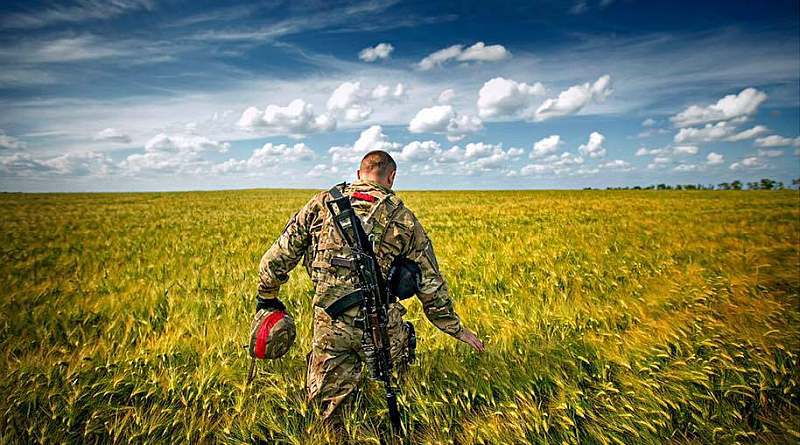
Photo: Dmytro Muravskyi
