

Information regarding current Russian losses due to sanctions as of 11/19/2026.
1. Ukrainian Defense Forces attacked the Crimean Bridge for the third time this week, likely targeting the railway section of the crossing.
– After the attack on the night of November 19, the occupation authorities halted bridge traffic to assess the damage. The head of the Russian-controlled occupation administration of Crimea, Sergey Aksyonov, reported the latest attack. According to monitoring channels, around 15 explosions were heard in the Kerch area, with at least two hits reported on the railway section of the bridge.
– Previous attacks on November 16–17 resulted in the destruction of the road section of the crossing: a 227-meter span collapsed into the water. Although railway traffic was restored after previous strikes, the new attack once again stopped train movements.
2. Ukrainian UAVs attacked Tatarstan, reporting fire and smoke in the area of the “Kaleikino” pumping station, one of the key nodes of Russia’s oil transportation system.
– The “Kaleikino” station belongs to Transneft — Prikamye. It receives oil from Tatarstan, Bashkortostan, Udmurtia, and Western Siberia, pumping it through main pipelines toward Samara, Nizhny Novgorod, and Nizhnekamsk.
– The station is a crucial node of the system, particularly connected to the “Druzhba” export pipeline. Local residents reported at least 16 explosions in Almetyevsk.
– “Kaleikino” had already been attacked in February this year.
3. Ukrainian drone attacks have nearly halved Russia’s oil processing volumes since the end of October.
– Currently, Russian refineries process about 400,000 tons of oil per day, or approximately 3 million barrels, compared to over 700,000 tons at the end of October. Due to strikes, operations at 15 out of 35 of Russia’s largest oil refineries have been disrupted or suspended. As of the middle of last week, there were nine such enterprises.
– The combined capacity of refineries affected by the attacks since the end of October is about 500,000 tons per day—approximately 54% of Russia’s total primary oil processing capacity.
– Meanwhile, due to gradual recovery of certain operations, the average processing volume for November so far exceeds 500,000 tons per day. This is 5–10% lower than the September and October levels.
– However, almost daily Ukrainian drone attacks continue to severely limit Russian oil processing operations, creating risks for the production of gasoline, diesel fuel, and other oil products.
4. Russia’s costs for servicing the national debt have sharply increased due to the war and next year will amount to 10.6% of federal budget revenues.
– Before the full-scale invasion, this figure did not exceed 3.5–4%. Russia’s national debt has already reached about 20% of GDP, although according to the government’s basic forecast, this level was expected to be reached only in 2029, and under a negative scenario – in 2027.
– On the eve, Putin stated that the debt amounts to 17% of GDP, while the Ministry of Finance estimates it at 19.9%. For comparison, the UK allocates 7.1% of budget revenues to service its national debt, Germany – 7.8%, and Canada – 10.4%.
– According to the Russian government’s negative forecast, by 2042, the national debt could grow to 69.4% of GDP, and its servicing under current borrowing conditions would consume 44% of the federal budget.
– The increase in debt expenses will increasingly limit the Russian government’s ability to finance civilian needs. Loans raised during the war are not directed towards the development of infrastructure, education, or healthcare, but towards military expenditures, while repaying the debts will have to come at the cost of further reducing funding in these areas.
5. In Russia, the construction of over 290 large federal projects worth a total of 9.5 trillion rubles has been frozen or delayed.
– More than 380 planned state constructions totaling at least 1 trillion rubles have not even started. Among the unfinished projects are roads, bridges, children’s hospitals, oncology centers, water treatment facilities, scientific laboratories, and industrial enterprises. The most common reason cited by the authorities for postponing deadlines is a lack of funding, less frequently – the absence of necessary equipment.
– The number of postponed construction deadlines increases every year: 15 in 2021, 24 in 2022, 26 in 2023, 59 in 2024, 86 in 2025, and already 81 for the incomplete 2026. Some projects have been postponed multiple times. The most expensive long-term construction project is the gas processing complex in Ust-Luga, valued at 3.5 trillion rubles. The launch of its first phase was planned for 2023, and the second by the end of 2024.
– Among other large-scale projects with delayed timelines are the Northern Latitudinal Route worth 850 billion rubles, the Kursk NPP-2 at 508.7 billion rubles, and the automobile bridge over the Lena River worth 174.8 billion rubles.
– The suspension of constructions is related to the worsening financial situation and the reduction of available state resources. The scale of unfinished projects indicates that budgetary constraints increasingly affect not only new investments but also the implementation of already initiated infrastructure programs.
6. Russia is reducing funding for road infrastructure.
– In 2027, federal budget expenditures on federal highways and transfers to regions will amount to 1.29 trillion rubles against 1.49 trillion provided in previous budget plans. The reduction is about 13% and may lead to decreased volumes of construction, reconstruction, and road repair.
– Funding for federal highways was cut by 113.7 billion rubles, and inter-budgetary transfers to regions by 85.5 billion. For 2028, expenses have also been revised downward by 175 billion rubles compared to previous plans.
– Additional pressure on regional budgets will be created by the change in the management system for local roads from January 1, 2027. Responsibility for organizing their maintenance and repair will be transferred to the federal subjects, which can delegate these powers to municipalities. The total length of regional roads in Russia is about 502,000 km, local ones over 1 million km.
– It is estimated that an average of 2.65 million rubles per year is allocated for the maintenance and repair of one kilometer of regional roads, and only 710,000 for local ones. If these networks are combined without additional funding, the average funds will be reduced to 1.35 million rubles per kilometer. Local and rural roads are at the greatest risk of suffering.
– Due to the lack of funds, the authorities may postpone major repairs and reconstruction, limiting themselves to routine maintenance and fixing isolated damages.
– In 2027, the actual volumes of road construction and repair may decrease by 4-6% compared to previously planned figures.
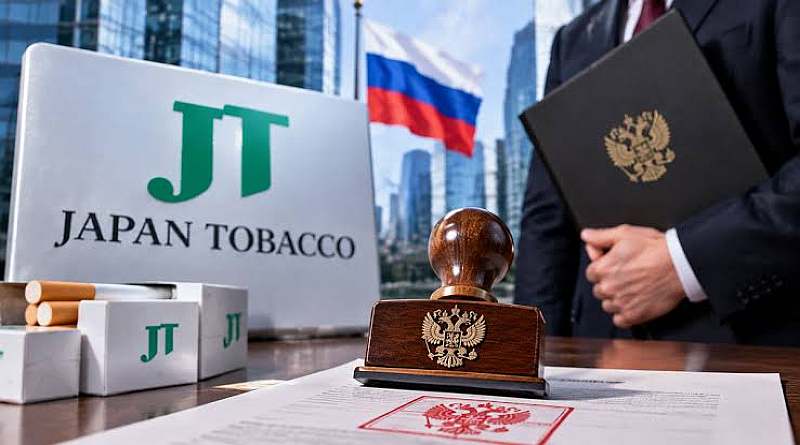
7. Japan’s Japan Tobacco will lose control over its business in Russia and will write off assets worth 1.4 trillion yen ($8.9 billion).
– As a result, the company expects to end the year with an operating loss of 368 billion yen instead of the previously forecasted profit of 1 trillion yen. The reason was Putin’s decision to transfer seven Russian subsidiaries of JT under temporary management.
– Formally, ownership rights remain with the Japanese corporation, but it has lost the ability to make operational decisions and exercise shareholder rights. Because of this, JT will exclude Russian units from consolidated financial reports.
– Russia was one of the company’s key foreign markets: it accounted for about 10% of the group’s sales and a quarter of adjusted operating profit.
– Japan Tobacco has been operating in the country since 1999, employs about 4,000 workers, and controls approximately 41% of the local cigarette market. The company also lowered its annual revenue forecast by 63 billion yen to 3.8 trillion yen, and expected dividends per share were halved from 136 to 68 yen. After the assets were transferred to Russian management, JT shares lost about a quarter of their value.
– The case of Japan Tobacco is yet another example of how the Kremlin uses the mechanism of temporary management to establish control over foreign business. In September, several international companies’ assets, including Nestlé, Auchan, and Germany’s Metro, were also transferred under it.
– The Japanese government has already expressed protest and stated it is coordinating further actions with the company.
8. The Czech Republic will not allow Russian female athletes to the women’s under-18 hockey world championship to be held January 8–16, 2027, in Ostrava.
– This was announced by the country’s Minister of the Interior, Lubomír Metnar, after a meeting with the leadership of the Czech Ice Hockey Federation.
– In the Czech Republic, there is a government directive from 2023 that effectively prohibits issuing visas to Russian athletes. The restrictions will also apply to those who obtain a Schengen visa in another country: Prague has stated that it has legal mechanisms to ban their entry. The Czech Ministry of Foreign Affairs has already informed other Schengen countries about this position.
– The decision was made after the Court of Arbitration for Sport lifted the International Ice Hockey Federation’s ban on Russian national teams participating in competitions.
– The Czech Republic has joined a number of European countries opposing the return of Russian teams. Finland and Norway have already banned Russian athletes from entering, and Sweden has announced similar intentions.
– Russia will also not participate in the World Junior Ice Hockey Championship in Canada in December: the Canadian side did not allow entry to Russian players.
