
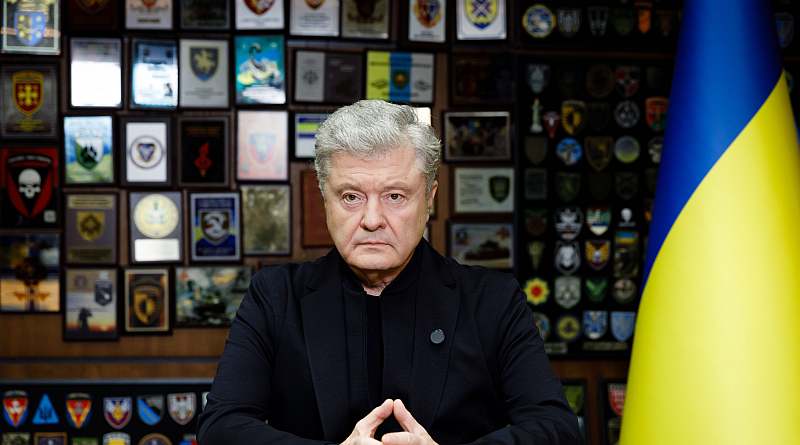
This morning I was on the Southern Bridge.
The country is unable to cover itself with anti-ballistic protection or effectively stop rocket drones. Every day and night, objects of “Epicenter,” “Rozetka,” “Nova Poshta” are being destroyed.
We need to talk about peace. But it is possible only under six key conditions.
First. Ukraine must not be a supplicant at negotiations. To go to negotiations, we need a strong negotiating position based on strong Armed Forces. We need a strong military budget and military economy, not the rubbish currently submitted to the Verkhovna Rada for consideration.
Second. We must destroy not only Russian weapons but also Russia’s ability to produce them. For this, we need offensive weapons—both our own and jointly produced with our European partners.
Third. We need to take away Putin’s main ally—time. We cannot allow Ukraine to be erased. Therefore, an alliance with partners and internal unity is needed, based on a coalition of national unity, not the absent parliamentary majority.
Fourth. Sanctions against Russia with automatic consequences, applied by all our partners, are necessary.
Fifth. A truce must include not only a start date but also a punishment mechanism for violations, including our NATO membership, and until then, the deployment of UN peacekeepers.
Sixth. Russia must finance the rebuilding of what it has destroyed.
This plan can certainly ensure a European and happy future for Ukraine.
* * *
Ukraine today needs real peace. Not the hundred-thousandth round of negotiations that everyone uses for PR but provides no results. And not proclaimed points about everything good against everything bad. Not peace summits with “family photos,” but an algorithm of steps that will help stop the war.
Our team knows how to ensure peace even against Putin’s will. We understand the weight of these words. Ukrainians have heard enough promises of peace. Therefore, we must explain how exactly our plan will work.
Our plan consists of six points.
The first step is to strengthen Ukraine to enhance its negotiating position. At the negotiating table, it matters what backs up your words.
Our words must be backed by well-equipped Defense Forces. Production that meets the front’s needs, including joint production with partners, is important. The state must fulfill its obligations to the military and their families on time. Readiness to implement this point should be reflected in the military budget, not in a populist PR election document that does not strengthen the Armed Forces nor bring us closer to peace, but promotes corruption and, consequently, weakens the state. A strong army gives diplomacy a chance to achieve a peace that the country can defend.
The second point of the plan is to weaken Russia’s very ability to wage war. The Russian war machine has specific needs: components, supplies, financing. Our task is to consistently deprive it of these opportunities. Legitimate strikes on key military targets must be combined with cutting off the technological and financial channels that fuel aggression. Funds should go not to a fake pink company, but to our “Neptunes” and partners’ “Stormshadows” that hit targets now, not with the irresponsible promise that it might happen in the next decade.
The third is to break Putin’s calculation on time. Putin hopes to exhaust Ukraine, to exhaust Europe. To wait until our societies are tired, quarrel, turn away from each other. Therefore, we need long-term defense agreements with Europeans, so that the result of his war is Ukraine deeply integrated into Europe’s defense.
The fourth is to make the continuation of the war disadvantageous. Sanctions should work as a clear mechanism with definite conditions. Continue aggression—receive new restrictions. All these conditions need to be agreed upon in advance. So that after another Russian violation, the world does not start a months-long discussion about whether to react somehow. At the same time, we must create a long-term interest for partners in Ukraine’s security. This includes investment participation in the modernization of our gas transportation system and the development of new energy capabilities while maintaining Ukrainian strategic control.
The fifth point is to ensure control over the ceasefire and inevitable consequences for its violation. We must stop the fire along the line of demarcation. The agreements must not leave blank the most important line: “What happens if Russia opens fire again?”
The best guarantee is Ukraine’s future NATO membership. This is real. And do not believe those who say it will never happen. Until then, we propose an international peacekeeping mission with a clear UN Security Council mandate. Even before the start of the truce, it must be determined: who establishes the fact of violation, who identifies the responsible party, how long the verification takes, and what measures are triggered afterward. Russia must know the consequences before it orders to fire.
The sixth is reparations and the rebuilding of a country where people want to live. Russia must pay for the damage caused. For this, an international reparations mechanism is needed, including thanks to frozen Russian assets. Our reconstruction plan starts with people. First of all, we must do everything to ensure that Ukrainians return home.
We must not restore the old economy, but build a new post-industrial, modern, European technological Ukraine. With modern energy that is harder to destroy. Protected infrastructure. Education that opens up opportunities.
We must stop this war in such a way that our children inherit from us a protected country. And the freedom to choose their future.
