
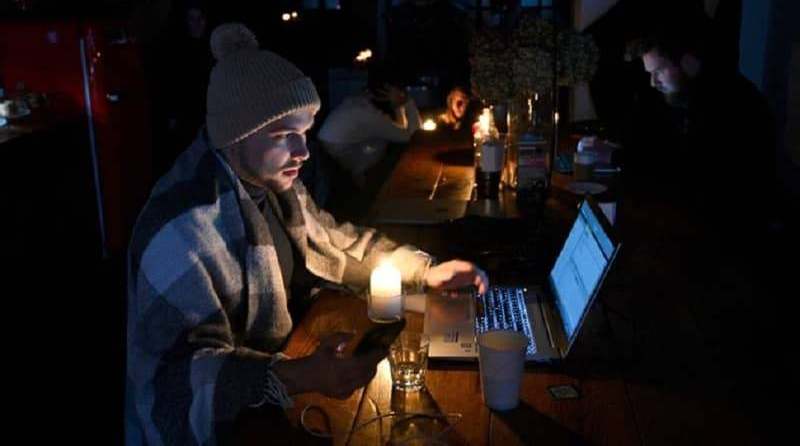

Without the war, time seemed like a continuous river, smoothly carrying us from morning coffee to evening rest. Today, our lives have completely lost this continuity. It has become discrete.
This practice of discrete life may help after the war, or it may drain someone. Some people panic, while others learn discipline and extreme time management.
In fact, we are undergoing the most expensive and intensive time management training in the world. A course of extreme efficiency, which none of us signed up for, but which we all must ace.
What skills do we acquire in this forced course?
– Hyperfocus (the skill of “achieving in 180 minutes”):
Previously, we could stretch one task over the whole day, distracted by coffee and social media. Now, when the lights come on, the superhero mode switches on. Procrastination (the constant postponement of important tasks in favor of something more pleasant, easier, or less significant) disappears as a phenomenon. The brain knows clearly: there are three hours to accomplish priority #1, priority #2, priority #3… Period.
– Extreme logistics:
We have learned to calculate movement trajectories and timings with minute-perfect precision. Enter the store, pick up the package, get water, and make it to the elevator before the switch clicks off. And if you don’t make it, the “cardio training with two six-liter bottles to the 7th or even 14th floor” module activates. This is planning at the level of top managers of international corporations.
– Managing energy, not just time:
We learn to live like modern smartphones. When there is “external power” – we instantly update all systems, work, and run. When darkness falls – we switch to energy-saving mode: focusing on the internal, communicating, reading, resting, or simply accumulating strength for the next sprint.
This time management is jerky, heavy, and discrete. It’s not about pretty planners and colorful stickers. It’s about survival under limited resources.
But the main result of this training – we understand that our efficiency does not depend on ideal conditions. We learn to manage chaos. When the system becomes continuous again, this habit of squeezing the maximum out of every available minute will make us simply invincible.
Let such an intermittent existence today be truly exhausting, but our inner core remains strong. As long as circumstances test us, and we do not panic – everything can be endured. The main thing is that we know how long, for whom, and for what. And we do know.
Photo: Yurko Dyachyshyn
