
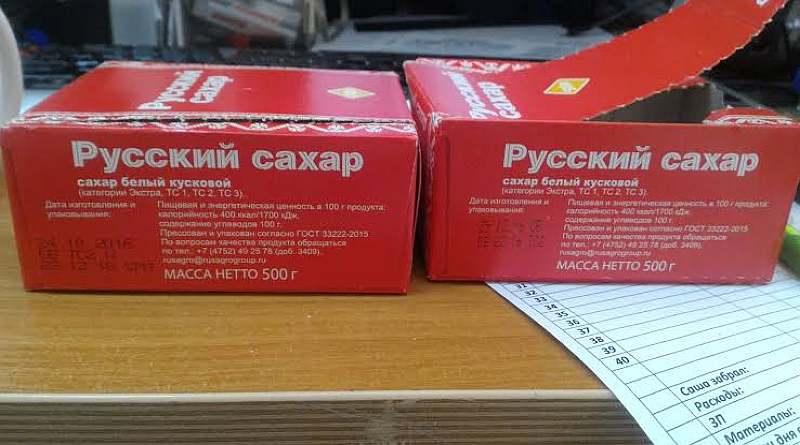

Attempts by Russian authorities to curb the rapidly rising prices of a basic product—sugar—have faced challenging economic realities, as officials in 47 regions of the country were forced to sign special agreements with entrepreneurs to fix costs.
The Federal Antimonopoly Service reports the readiness of major retail chains to limit trading margins to a modest 5–10%, while the Ministry of Agriculture attributes the situation to seasonal factors. Meanwhile, sugar prices in stores have steadily risen by 22% since the beginning of the year. The growing consumer rush and the desire to stock up only increase the burden on logistics infrastructure and provoke local shortages.
The main causes of the current sugar crisis lie in the deep deformations of the entire national economy, where the ongoing fifth year of Putin’s “special military operation” draws valuable labor resources from civilian sectors to defense factories and the front lines. Farms and processing plants face an unprecedented shortage of mechanics, truck drivers, and general laborers, forcing business owners to rapidly increase personnel payments, inevitably embedding the rising payroll into the final cost of finished products.
The situation is exacerbated by the critical dependence of the domestic agricultural sector on foreign technologies, as seed breeding of sugar beets, modern plant protection products, and complex components of European equipment for factories still lack full local equivalents.
International sanctions imposed on Russia due to Putin’s “special military operation” against Ukraine have forced domestic sugar processors to develop incredibly expensive schemes of parallel imports through third countries, where complicated currency conversion and soaring prices for components threaten to push processing to the edge of profitability.
An astonishing symptom of trade system degradation is the phenomenal gap between wholesale and retail prices, where, despite a 9% reduction in factory selling prices, retail managed to jump by 22%. This anomaly proves that the key driver of the inflationary wheel is not the raw material component, but the colossal costs of intermediate middlemen along with retailers, who are forced to compensate for rising transportation costs, driver shortages, and expensive commercial loans by preemptively inflating prices on socially significant goods.
The tight monetary policy of the Bank of Russia, which seeks to quell the inflation ignited by Putin’s “special military operation” through a high key interest rate, paradoxically only pushes the cost of sugar upwards. Agricultural producers critically depend on short-term commercial loans for sowing, fuel purchases, and equipment repairs; however, the reduction of state subsidies through the Ministry of Agriculture and escalating loan rates compel farmers to shift the financial burden onto end consumers to maintain their businesses.
In an effort to reduce costs, factories are beginning to massively introduce cheap chemical sugar substitutes, artificial sweeteners, and low-quality preservatives, which significantly lowers overall food industry standards and poses health risks for the population.
The price surge of one of the most widely consumed food products hits the purchasing power of citizens, among whom the most vulnerable are the low-income segments of the population.
In conditions of overall inflation, the additional withdrawal of funds for basic food decreases the remaining family budget after paying for utilities, as the economic policy of the authorities effectively shifts the consequences of the systemic crisis onto the shoulders of the most vulnerable Russians, forcing them to significantly cut even minimal daily needs.
