
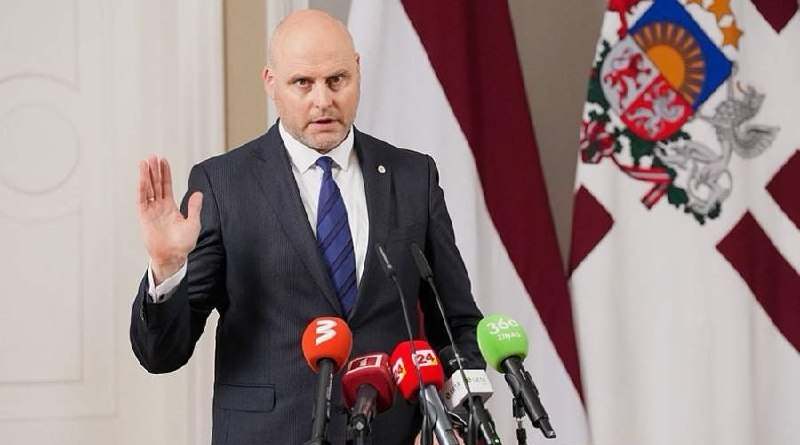

The statement by Latvia’s new Prime Minister Andris Kulbergs regarding the intent to completely sever trade ties with Russia signifies that Riga is moving to a qualitatively new stage of countering Russian hybrid influence. Instructing the Minister of Foreign Affairs, Baiba Braže, to develop legal and economic mechanisms for ending both exports and imports with the aggressor country is a forced radical step in bilateral relations. This is also a long-term strategic decision that changes the security landscape in the Baltic region.
Prime Minister Kulbergs’ initiative clearly indicates that Riga views economic relations with Russia solely through the lens of national security. In light of the Kremlin’s hybrid war against Europe, any, even minimal, dependency on the aggressor state can be used by Moscow for political pressure, economic blackmail, or extending its influence within the European Union.
The Latvian leadership proceeds from the understanding that the financial interests of individual companies, lobbying networks, and attachment to specific sales markets inevitably turn into channels of hidden influence, which Moscow traditionally uses to weaken European unity. The complete trade break is aimed at eliminating these vulnerabilities at the root.
Riga’s current tough stance is neither a spontaneous nor a situational reaction of the new government. It logically continues and deepens the strategic course formed after Russia’s full-scale invasion of Ukraine in 2022. Latvia has consistently supported Kyiv with military, financial, and humanitarian aid and has advocated on the international stage for the imposition of the most severe anti-Russian sanctions by the EU. Latvian foreign policy is based on the firm belief that containing Russia is a matter of security for all of Europe.
The intention to fully block trade flows demonstrates a further strengthening of Latvia’s policy of containing the Kremlin. After many years of systematic battle against Russian propaganda and strengthening defense capabilities, Latvia offers the European community a ready model of maximum economic distancing from a state engaging in subversive activities against European democracies and attempting to reshape the collective security system by force.
Latvia’s uncompromising approach notably contrasts with the positions of some European Union countries that are still seeking opportunities to maintain or gradually recover trade-economic and energy relations with Russia. This difference in priorities creates a hidden dividing line within the EU. On one side are the countries of the eastern flank, which directly feel the Russian military and hybrid threat at their borders, and on the other are countries where economic benefits often still outweigh security risks.
Under these circumstances, Latvia’s policy can serve as a convincing example for other European countries that are still wavering between economic interests and security issues.
Riga’s experience clearly shows that long-term resistance to Russian influence requires not only military deterrence and strengthening of defense lines but also a systematic, uncompromising reduction of economic dependence. As long as these ties are maintained, the Kremlin will continue to use them as a tool of pressure, undermining the stability of European institutions from within.
A full trade boycott by Latvia is symbolic and valuable as an example of a decision aimed at complete de-occupation of its economic space from the toxic influence of the Russian aggressor.
