
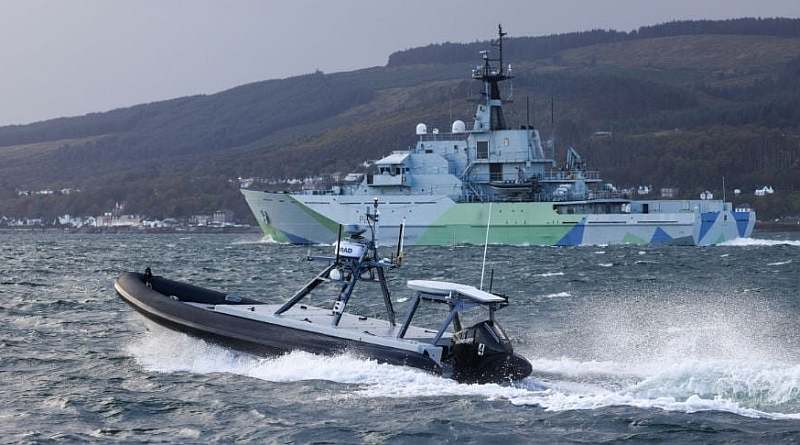
Ten years ago, naval warfare was associated with large ships, carrier groups, and flag displays in distant seas. At the beginning of February in Gothenburg, the commanders of the navies of Sweden, Denmark, Finland, and the head of the Navy Development Department of the United Kingdom painted a very different picture at the Navy Tech & Seabed Defense 2026 conference. Less visible, more distributed, technological, and importantly, much closer to reality. Industrialists and representatives from Kongsberg (Norway) and BAE Systems (UK) joined the discussion.
What do the commanders of our partners’ fleets say?
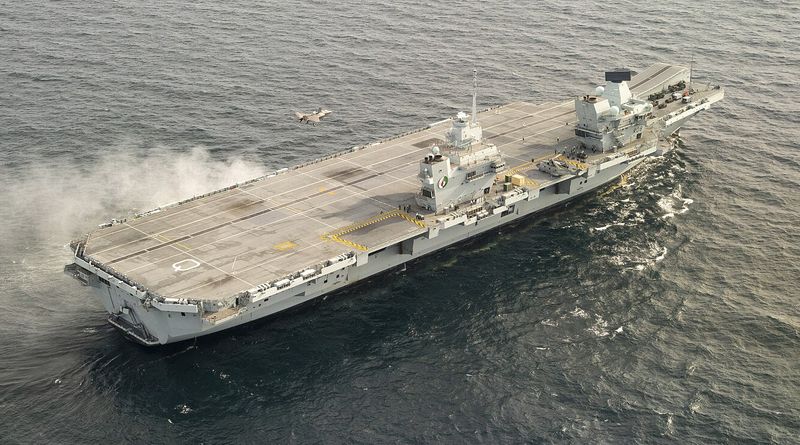
So, we can assert that the sea is no longer “blue”.
The navies operating in the North Atlantic, North Sea, and Baltic Sea speak about the abandonment of the classic division into “peace” and “war.” Almost everyone claims that the sea is now a gray zone where in the foreseeable future hybrid fleets will operate:
• attacks will occur without a declaration of war;
• the adversary will act using civilian ships, drones, contractors;
• key targets will be infrastructure, data (information), and trust, not ships.
The sea is no longer seen as a separate theater of warfare. It becomes part of a multidimensional space, where fleets, aviation, cyber units, space systems, and coastal services operate simultaneously.
Small Fleet — Big Efficiency
The second common trend is moving away from the cult of large platforms:
• unmanned surface and underwater systems;
• modular ships;
• distributed sensor networks;
• autonomous or semi-autonomous solutions.
The logic is simple — it’s better to have many “eyes” and “hands” than a few expensive and vulnerable ships. This is especially evident in Scandinavian countries, where geography (skerries, narrow straits, shallow waters) literally forces asymmetrical thinking.
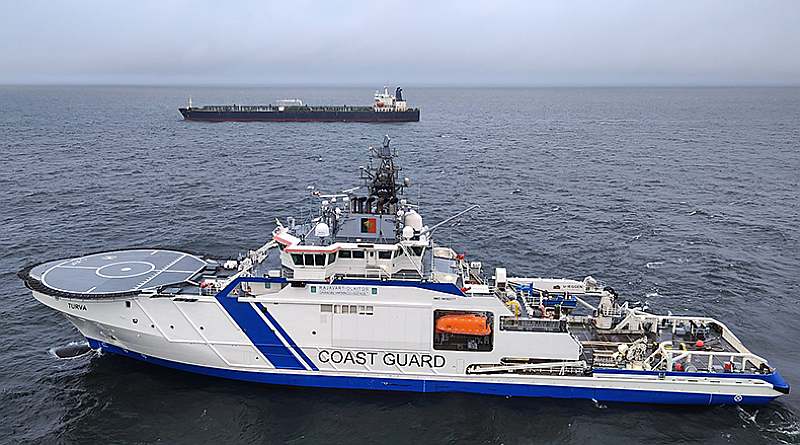
Northern Approach: Survive and Deter (Denmark, Finland, Sweden, Norway)
Northern countries share a common idea: the navy exists not to demonstrate strength but for survival and deterrence.
Key focuses:
• protection of own waters and ports;
• control of narrow maritime areas;
• rapid response, not long-range voyages;
• close integration with the coast guard and civilian structures.
Swedish Navy Commander Rear Admiral Johan Norlen noted that the task of future navies is not to dominate the sea but to ensure stable maritime traffic.
Particularly striking are the Swedish and Finnish approaches: the coast guard is not a law enforcement agency, but effectively becomes part of the defense system. In the grey area, it is often the first to encounter threats — from sabotage to infrastructure sabotage.
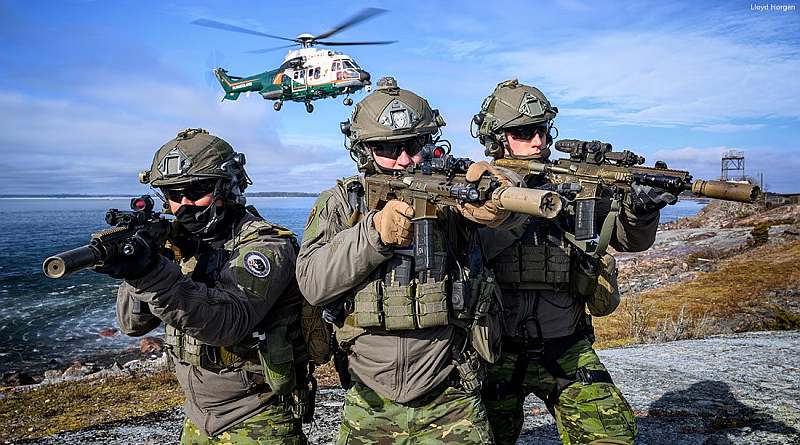
Norway and the Netherlands: Strike as Part of the System
In this context, the approach of Norway and the Royal Netherlands Navy stands out. Here, the focus is on strike capabilities, but not in the classical sense.
It’s not about massive attacks, but about:
• targeted strikes;
• deep integration with allies;
• using the navy as an element of overall NATO deterrence.
The fleet is considered part of a complex mechanism, where it does not fight alone but complements the air, land, and informational components.
British Model: Hybrid Fleet
The most conceptually formed approach is demonstrated by Great Britain, which uses the term Hybrid Navy.
This fleet:
• constantly operates below the threshold of war;
• combines military, technological, and informational tools;
• collaborates with the private sector and allies;
• prepares not for one large war, but for constant competition.
The British approach is closest to the idea of managing conflict rather than resolving it by force.
Multidomain: War as a System
Multidomain warfare (armed conflict in multiple dimensions simultaneously) is an important shift in thinking. War is no longer perceived as a sum of operations. It is a single system where:
• sensors are more important than platforms;
• information is more valuable than firepower;
• decision-making speed determines the outcome.
In this logic, the fleet is one of the network nodes, not a self-sufficient force.
What Does it Really Mean?
The analysis of what has been heard allows for a simple conclusion: European fleets are preparing not for a major naval battle but for prolonged, subtle, and exhausting struggle.
This is a struggle for:
• critical infrastructure;
• maritime communications;
• informational superiority;
• control over escalation.
In this logic, unmanned systems, coast guard, and hybrid tools become more important than the tonnage of ships and the number of missiles on board.
Instead of a Conclusion
The naval warfare of the future will not start with a massive missile-air strike by a carrier group. It will start with a strange incident, a damaged cable, an anonymous drone, and a belated political decision. And it seems that European fleets are already preparing for such a war.
