
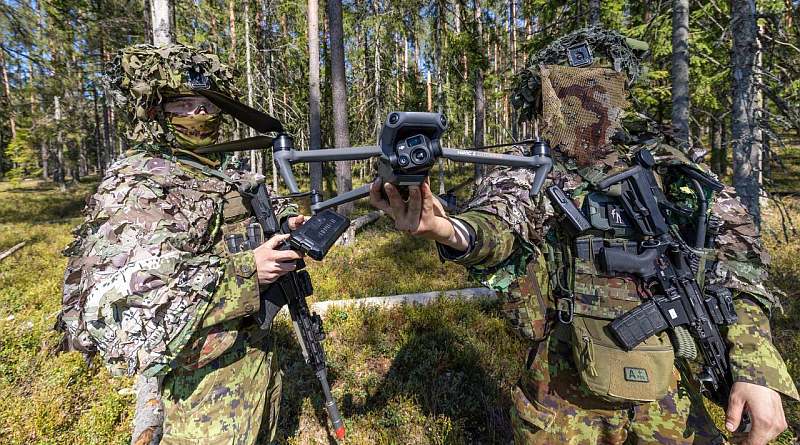
The results of the exercises, published for the first time, revealed serious tactical shortcomings and vulnerabilities of NATO forces.
Russia and Ukraine have shown the world the future of war — and America and its allies are not ready for it. This is the conclusion reached during large-scale exercises conducted by NATO countries in Estonia last May, writes Jillian Kay Melchior, a member of the editorial board of The Wall Street Journal.
The events of these exercises, details of which are being published for the first time, revealed serious tactical shortcomings and vulnerabilities in the conditions of intense combat using drones.
The exercises, dubbed Hedgehog 2025, involved over 16,000 troops from 12 NATO countries, training alongside Ukrainian drone specialists, including fighters drawn from the front lines. They simulated a “contested and overloaded” battlefield with various types of drones. This tested soldiers’ ability to adapt during combat.
In Ukraine, the front has mostly stabilized, but Hedgehog simulated a battlefield where tanks and infantry can still maneuver. During one of the scenarios, a battle group comprising several thousand troops, including a British brigade and an Estonian division, attempted an advance. However, during the advancement, they failed to consider how drones had rendered the battlefield transparent, according to several sources.
The NATO battle group “was simply moving without camouflage, setting up tents and armor,” recalls one participant who played the role of the adversary. “Everything was destroyed.”
During Hedgehog, the Ukrainians used Delta — a modern battle management system. It collects real-time intelligence, employs artificial intelligence to analyze large volumes of information, identifies targets, and coordinates strikes between headquarters and units. This provides a rapid “kill chain”: see — transmit — destroy, within minutes or even faster.
A team of about 10 Ukrainians, playing the adversary, conducted a counterattack against NATO forces. In roughly half a day, they conditionally destroyed 17 armored units and carried out about 30 “strikes” on other targets.
Overall, the results were “terrible” for NATO forces, says Aivar Hanniotti, coordinator of unmanned aerial systems of the Estonian Defense League, who now works in the private sector as an expert in unmanned systems. The adversary forces “managed to eliminate two battalions in a day,” so that “within the exercises they were effectively unable to continue combat operations.” The NATO side “did not even detect our drone teams.”
As the publication notes, the Estonians forced NATO partners to confront their own weaknesses. Hedgehog also served as an example of how Ukrainians can strengthen Europe’s overall security. Former commander of the Estonian Military Intelligence Center, Sten Reimann, who helped involve Ukrainian experts, notes: watching videos or reading about the war does not provide a complete picture of reality. According to him, the results of the exercises were a “shock” for military leaders and soldiers.
Hedgehog showed how visible the modern battlefield has become — and how vulnerable it makes everything that moves on it. NATO will have to change tactics and find better ways to protect tanks and armor.
Several sources recall one commander who said after the exercises: “We are screwed.”
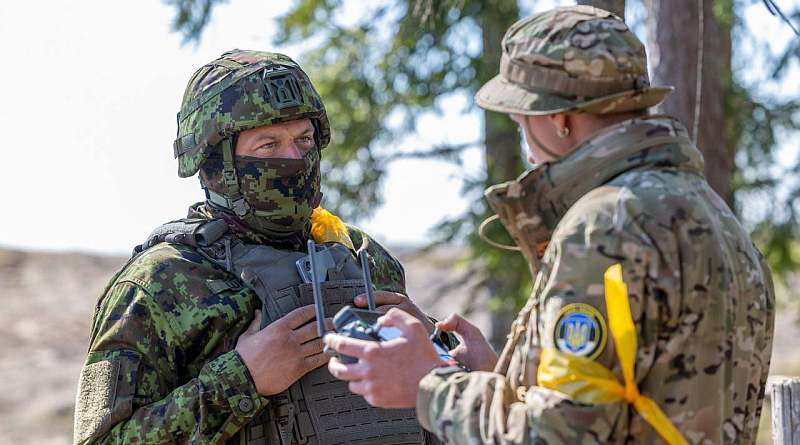
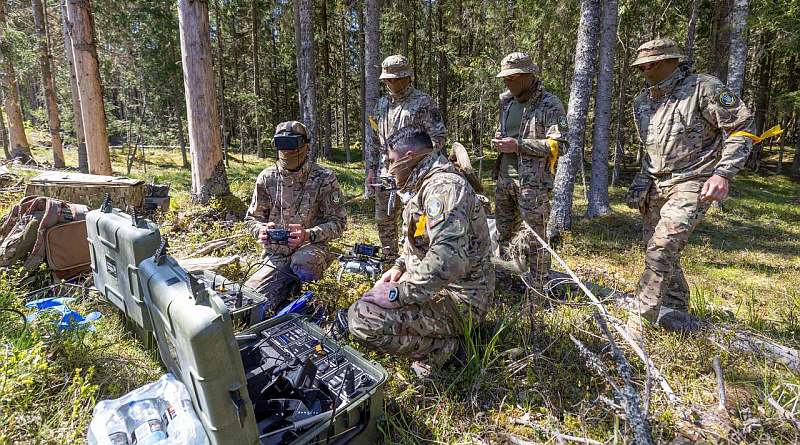
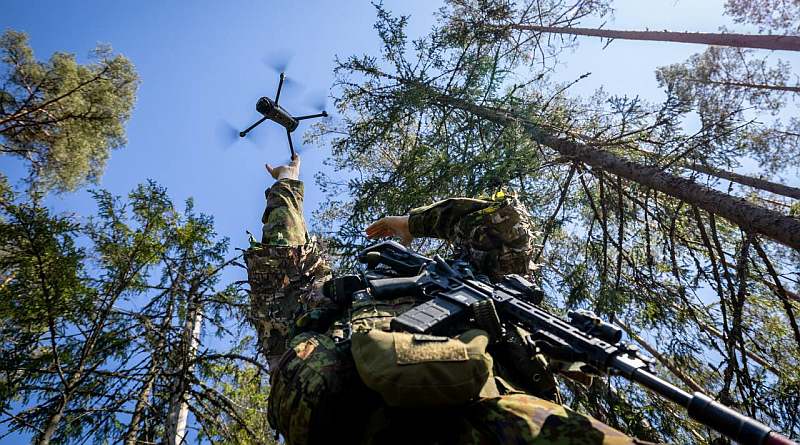
Photo: Estonian Ministry of Defence
