
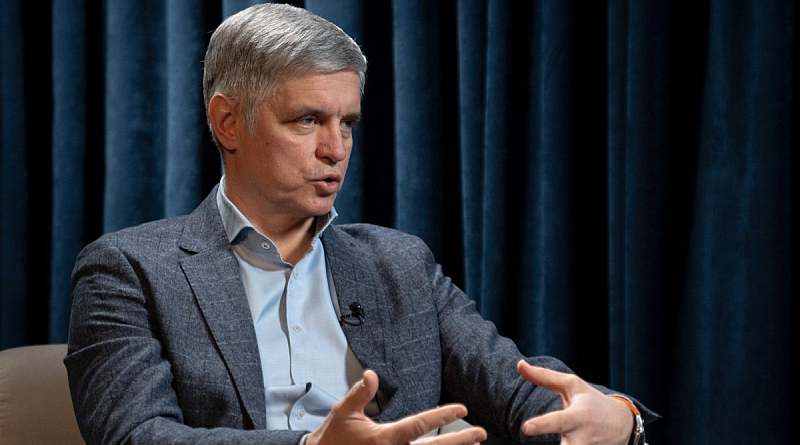
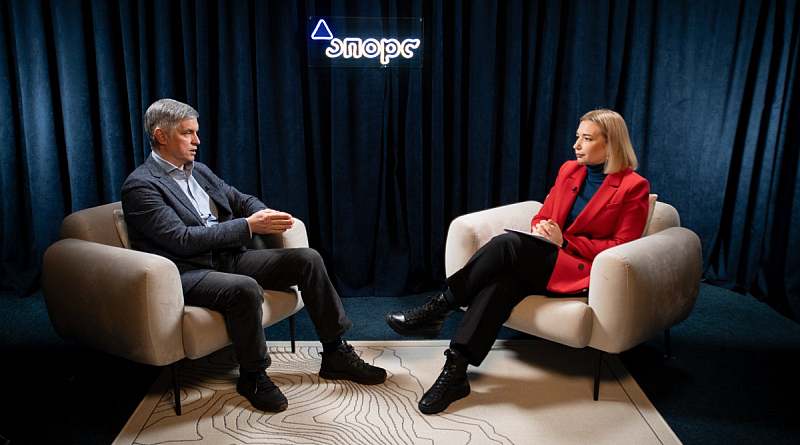
Is Europe ready to take responsibility for the continent’s security if the US changes course? Can security guarantees for Ukraine be effective? How long can the Russian economy finance the war? These topics were discussed by the head of the board of the Civic Network OPORA, Olga Aivazovska, with diplomat Vadym Prystaiko in the framework of the video project “The Power of Choice.”
The Germans allocate more money for weapons than anyone else
Europe is maturing at a strategically intensified pace. Is Europe ready to move from declaring the need to strengthen defense capabilities to actual arms production?
When I participated in the Munich Security Conference in February as a representative of the Ukrainian arms industry, we were very interested to understand whether there are any actions, budgets, and readiness to procure behind all these discussions about Ukraine and defense tech, or whether political declarations have turned into something practical.
This is most evident with the Germans. They have reached incredible numbers, allocating more money for weapons than anyone else. However, it was important to understand whether they already know how this money should be spent. One thing is the issue of appropriations, and another is whether they are turning into real procurements.
Can these procurements conclude that the countries’ armed forces are being strengthened? If they are being strengthened, then how — are they purchasing old, extremely expensive platforms, mostly from the Americans, or has someone realized that they will have to rely either on their factories or on what the Ukrainians have invented — drones?
We are stuck somewhere in the middle. The money has appeared, but there is still no understanding that it needs to be spent wisely, and not just, so to speak, to silence the critics.
When the Ukrainian energy sector was hit by devastating Russian strikes, it was partly because the enemy apparently knew about the shortage of anti-aircraft missiles. Is the missile deficit a market problem or a political one?
You’ve given an example that requires a specific answer: there is a dependency on “Patriots”, which are either in the United States or produced by another ally under a United States license.
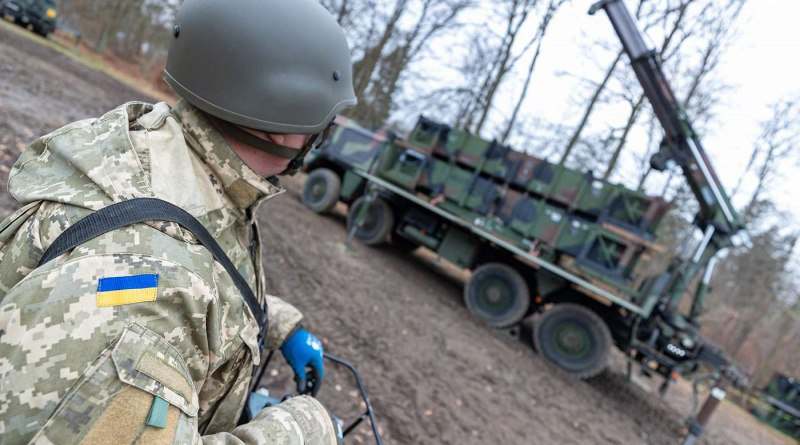
To say for certain whether we (in January 2026 – Ed.) didn’t receive the “Patriots” because the Europeans didn’t gather the funds, or because the Americans didn’t find the strength to hand them over to us, is difficult. The ratio needs to be known.
Moreover, each missile costs us from 1 to 3.5 million dollars. This is both a market problem and an organizational one.
I have the impression that the desire to bring Ukraine to the negotiating table with a more flexible position can be realized by not providing us with missiles at the right moment.
When the German foreign minister comes out and says that we have exhausted all the “Patriots” that were in Germany, the question arises: do we really have to talk about this every time? So that the Russians know exactly: they can start hitting the Ukrainians, because their capabilities are limited. Why this is being done is unclear, but it would be possible to find the strength not to intrude into the public space every time.
Upon joining NATO, we will not only receive protection – we will also become a member of the Alliance and defend others
Is the transfer of our experience to partners being discussed in the West, or is Ukraine perceived as a separate fighting outpost?
If we want to become a member of NATO, we should not forget that we are taking on obligations. Because every Ukrainian thinks that NATO should come and protect. No, we will also become a member of the Alliance and defend others.
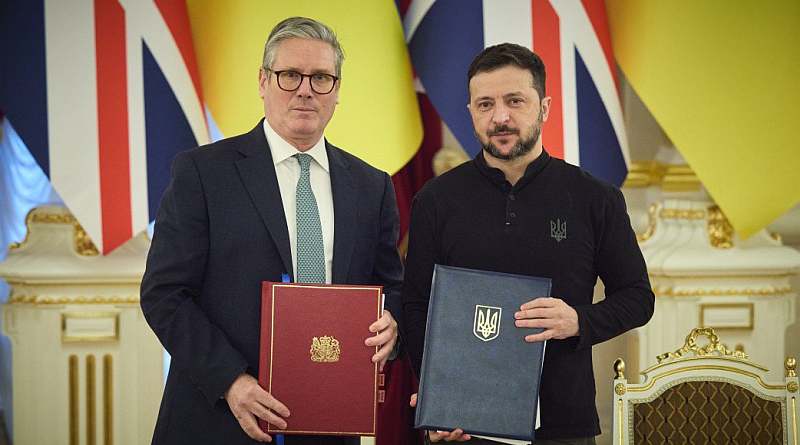
With the British, we signed an agreement on so-called guarantees (“Agreement on the Century Partnership” between Ukraine and the United Kingdom, which provides for long-term cooperation in defense, economic, scientific, and cultural fields, was signed on January 16, 2025 – Ed.). It states that Britain also counts on Ukraine. This is very important for our understanding.
Everyone realizes that such a large and trained army as ours is not going anywhere. If we manage to end the war soon and most of these people survive, those who are in good health will be ready to defend both themselves and everyone else. The military highly values experience — it is sacred to them.
There is already a noticeable difference between whether we are a stronghold supported and sustained by all, metaphorically sending food and water, and, as I recently read in an article by my colleague Volodymyr Ohryzko, Europe has realized: Ukraine is not an external stronghold, but the last European stronghold.
Europeans should understand that discussions about the criteria for joining the European Union and NATO should be forgotten. It is necessary to find a way to meet these criteria, to somehow help Ukraine fulfill the tasks.
Ukraine must become a member of the Alliance just as Turkey and Greece did in the past. These countries had to be in the Alliance. Obviously, at that time Turkey was far from democratic norms, but its strategic location and importance as the largest land army of NATO were so great that no one even questioned it.
Now, despite the future tragedy of NATO’s relations with Russia, Europeans should tell themselves: “Ukrainians are ours, this is dogma. We were expecting them.” Agriculture will cry, farmers will cry that such a giant has entered the European Union, but there is no other option. Europe will not survive otherwise.
The Maidan and subsequent Russian aggression against us occurred due to joining not NATO, but the European Union
The so-called peace plan for Ukraine proposed by Americans includes the ambition to join the European Union by January 1, 2027. How realistic is this vision, and is there readiness among European partners?
This is a multi-layered problem with many players. If you think about it: why would Russia agree to Ukraine becoming a member of the European Union?
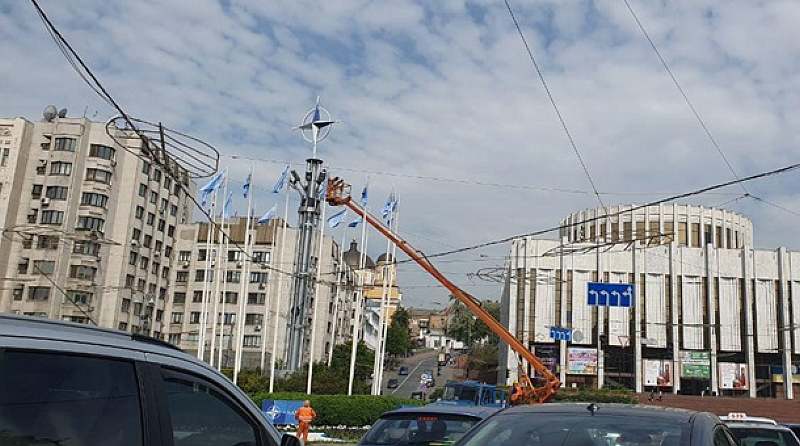
I remember endless discussions about how Ukraine should not become a NATO member, but could join the EU, because Russia approves. I want to remind you that the armed confrontation on Maidan and subsequent Russian aggression against us happened due to joining not NATO, but the European Union.
We have moved closer not just to an organization with a certain name, but to a moment when we can finally thank Russia for years — or not thank — and quietly retreat to live in the European home. This is the biggest problem.
Did the Americans include this, assuming that the Europeans have to fulfill their part of the task?
Or did the Russians include it? Deliberately nodding that it suits them, as long as there is no NATO and military aid, as long as Ukraine remains neutral and vulnerable next time.
Or did we include it? I read that joining the European Union is the best security guarantee for Ukraine. I don’t know. Why then would EU countries be concerned if mere membership in the European Union is a guarantee? Honestly, that’s not true. How the European Union card is played here is very important, but for experts.
In a citizen’s understanding, the mere fact that we will defend ourselves, live in peace, and also gain membership in the European Union is wonderful. The question remains how true is what is being stated now. Or is it done to sweeten the bitter pill, because all the previous 19 points are very complex?
This is a very complex game, still unclear until now. The Americans are working with the Europeans, asking them not to discard, asking them to at least nod at some point that yes. Orban apparently thinks this is a great moment to “cash in” his golden share, to say: “Oh no, never.” To silently step out for coffee at the last second for some concessions. Everyone has their small goal.
Our task is to learn to play this game at least at the master level so as not to lose.
Ukraine needs to be turned into a porcupine, with the cost of an attack on it being exorbitantly high even for Russia
In your opinion, what could be the guarantees for Ukraine from the American side — through the lens of NATO membership, the possibilities of Western countries, the approaching elections in the USA?
This has been discussed a lot, starting with the example of an excellent agreement for Israel, where it is clearly stated how much money is transferred each year to support the defense industry and the army. A specific figure included in the United States budget allows people to understand exactly what is being promised. Because all words are pleasant, but there is no exact figure.
The second layer of these possibilities is the concept of a steel porcupine, which former British Prime Minister Boris Johnson began talking about. Ukraine needs to be turned into a porcupine, with the cost of an attack on it being exorbitantly high even for Russia. This seems to be a sort of guarantee, rather than 24 hours, 72 hours, 172 hours.
I can accurately describe the attitude towards previous guarantees. When I sent a letter to the UK Foreign Office demanding consultations according to the Budapest Memorandum, there was no reaction at all — not demonstrative, nothing. Everything written on paper is shattered by the political situation and reality right now.
Undoubtedly, what will be recorded matters. It will matter within our country for the people to understand that there is some chance of emerging from the war, a safe future for some time. However, experts still understand that such promises have been made many times, so no specific effective agreement can realistically be imagined.
People often refer to the agreement between the United Kingdom and Poland, which forced the British to enter the war against the Nazis after the attack on Poland. If you read Polish sources about the same event, a completely different picture emerges — how dissatisfied they were with such a reaction. Although it might seem to us that the arrival of actual armed forces in our territories is the extent of our expectations. We can’t even consider this right now.
Is the ratification of security agreements by parliaments mandatory, particularly by the American Congress?
Firstly, I’m afraid it’s optional. Secondly, I want to remind you that the North Atlantic Treaty is ratified by each parliament, and the accession of each new member is ratified by each parliament anew.
Does this reassure Estonians, all the Balts, Poles? Does it help Hungarians and Slovaks to understand that they don’t need to grovel before the Russians, but can rely on the weapons of all who will come to everyone’s defense if anything happens? The simple answer is no.
I don’t believe that ratification is a decision that will allow us to say: “That’s it, now for sure.” Moreover, for example, in the British system, ratification is insignificant, almost automatic, because the government making the decisions includes parliamentary leaders. If we want to reassure ourselves that this time the treaty is definitely ratified, since the Budapest Memorandum was not ratified…
The treaty between Russia and Ukraine is also ratified. I want to remind you: it recognizes our sovereignty, territorial integrity, borders. But this did not stop Putin from saying: “We didn’t even sign the Budapest Memorandum with that government. We did not sign with this government.”
As for the value of the paper that someone signed, I won’t even repeat Bismarck — everyone knows it.
If the USA provides guarantees, they will have to uphold them. And if Russia, which is quite likely, violates the terms of the peace treaty?
It’s better than nothing, but it seems to me that the so-called Paris Agreement with South Vietnam was also ratified. Within a year, North Vietnam attacked again — and no one came to the defense. The Americans were busy with something else.
I understand that you’d like to add more optimism to our conversation, but our optimism should be like this: we highly value the efforts of those who try to negotiate and bring the best possible document. However, we must not forget that in parallel we need to strengthen the army and seek opportunities to become a steel porcupine.
In the Minsk negotiations, we learned that European forces are insufficient
During negotiations held earlier, particularly in the “Normandy format,” the United States was not present — then the Europeans took on the role of negotiators. Now Europe is not at the negotiation table, but there are European commitments. What is the role of the USA in future negotiations and should Europeans insist on participation?
I must remind you that before the “Normandy format” there was “Geneva,” when the Americans were at the table. However, the next time, for many reasons, they were allowed not to be present.
In the “Geneva format,” Crimea was still involved, and the first sanctions packages were associated with Crimea. At that time, Europe somehow believed that based on Sarkozy’s grand agreement regarding Greece— I don’t know why, but the French believed they were effective and successful— the previous Russia could be convinced to retreat by European efforts alone.
I recently listened to another statement from Madam Merkel, in which she said she tried with all her might to give Ukraine the opportunity to arm itself and reform, while extending negotiations. With all due respect, this isn’t entirely true, because she sincerely believed (by the way, I don’t know why she doesn’t mention this) that they would manage to bring peace to Ukraine. It wasn’t an attempt to buy time. They sincerely believed that somehow, through a special status for these territories (temporarily occupied — Ed.), through changes in the Ukrainian political system, Russia would let go of this piece. They were mistaken.
Indeed, there was an attempt not to bring the Americans to the negotiation table, and they themselves quite liked not being at the table.
Ukrainian delegates understood that internationalizing such a dialogue always carries danger. That your partners, who support you, will dictate terms. There are many hands on the steering wheel of negotiations you hold, and often they are stronger than yours and steer not quite in the direction you would like.
Those who naively think that Americans at the negotiating table will necessarily be on our side— no, they are on the American side. There is this side too. How to balance and how to allow for some political risk in involving such a large partner as the United States? Only if you understand that it can’t be achieved by other forces. We learned at the “Minsk negotiations” that European forces are not enough.
Europe finally understood what the French were saying: we need to rely on our own geopolitical capabilities
According to a recent POLL by POLITICO, 57% of respondents in Canada, 50% in Germany, 44% in France, 39% in the United Kingdom believe that the US can no longer be relied upon as a NATO ally in the context of a shared security belt. Does this indicate a systemic change, living in different realities?
Here, it is worth paying attention to the Canadians. If Europeans still have their good old relationships, certain pan-European ideas, Canada has one grand problem. Canadians have always told us it’s quite safe to sleep with an elephant in the same bed, but you need to be aware of the moment when it is going to turn over.
For us Europeans, the United States is a huge partner, but still, we have our own capabilities, though not as grand.
I liked the words of Radosław Sikorski (Deputy Prime Minister and Foreign Minister of Poland — Ed.) that if Russia attacks, our European partners will come to aid—without the Americans, mind you—and then the Russians will lose. This change in rhetoric suggests that Europeans have long been slow to act, and now they have no other choice.
Regarding the Americans — certainly, it’s desirable to have a partner on your side whose military budget equals that of ten countries combined, but Europe has finally understood what the French were saying: we must geopolitically rely on our capabilities and assess them.
By the way, this could have a negative effect if Europeans conclude that they have no chance against Russia. Then, they or their political successors might look to make peace with Russia rather than arm themselves to the teeth and meet the Russians with something better than Kalashnikovs when they come.
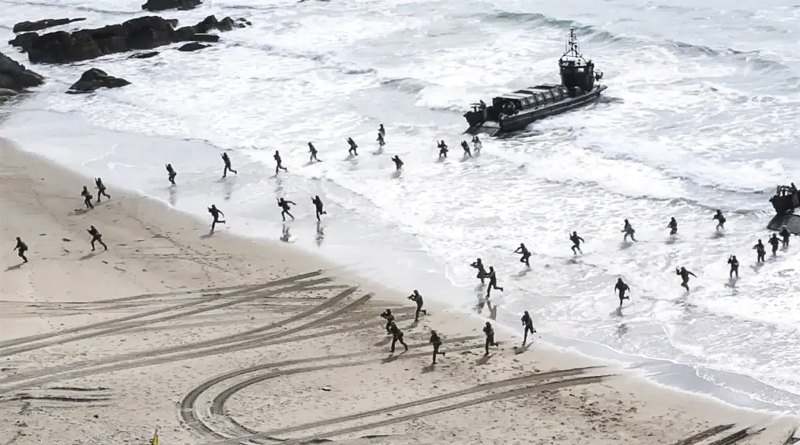
The expression of such neutrality and reluctance to increase defense capabilities in the face of a potential threat from Russia is the Prime Minister of Hungary, Viktor Orban. Can such rhetoric be effective in practice when Ukraine, a neighboring country, is defending itself?
The simple answer is no. Once, before World War II, Belgium declared its neutrality, and the Germans marched through their territory three times.
There was a case when a small town was captured by two Germans on a motorcycle — they simply got lost, stopped on a bridge, and announced they had captured the town. If you don’t arm yourself, there will be two motorcyclists who will capture your town.
How realistic are our allies, NATO experts, in assessing and forecasting resilience in the face of a threat? I recently learned that out of 18 different American intelligence agencies and departments, 17 gave us three days, one gave us up to three weeks.
It’s very difficult to predict anything, especially the future. No one is capable of doing this. The Soviet Union collapsed, and Sovietologists failed to foresee this moment.
I’m more inclined to the 21-day deployment assessment because I heard it before while working at NATO.
Don’t forget, there were initiatives like “30 – 30 – 30,” where 30 brigades, 30 squadrons, and 30 ships had to be ready to engage in 30 days because someone has to withstand the first battle.
This has always been the case; no better military planning exists. As they joke: until the cavalry arrives, we must hold on. The cavalry is long gone, but the saying remains. It’s a common planning method for military and political logistics, deployment, etc. Nobody sits and says that considering Ukraine held out, we will too — that’s not how the conversation goes.
We always say that even if the Russians sign something, they will come back again. This is part of our narrative: you have to help us now so that it’s not just a temporary ceasefire until the next elections in the United States, because we’re not sure we’ll survive another war in the near future, even if we have a year or two of respite.
How to convince partners of the need to invest? We need to explain that allies have invested so much political capital, not only missiles and money, and have alienated the Russians to such an extent that there is no way back, we need to finish this.
It’s better to finish off that state in its current state. If this maximum program is unattainable, we have to do everything to close this issue for the next decade.
Let the Europeans demand from the Americans to support sanctions, and in exchange, we’ll be accepted into the EU, as the Americans demand
Can this happen through the destruction of the economic potential of the Russian Federation? Now in the European Union, they are talking about the 20th package of sanctions, some of which require US support, but the States have taken a “peace track” and try not to make abrupt moves. How to make progress on this issue?
I have a creative idea for a discussion about who supports whom: let the Europeans demand from the Americans to support sanctions, and in exchange, we’ll be accepted into the European Union, as the Americans demand.
They want an agreement signed, right? For this, Ukraine wants to gain EU membership. And the Europeans want the sanctions to be effective. For this, they need American support. We can cleverly, diplomatically “sell” this idea. Sorry for the joking tone, but it always becomes a matter of bargaining.
Putin has fooled the Americans four times already when he thwarted ideas of hellish sanctions. By agreeing to come to Istanbul and not coming — he didn’t even bother. The trip to Anchorage was to prevent the Americans from allowing the transfer of Tomahawks to us. This happened more than once.
During a year of staying in power and the turmoil around Ukraine, even the new Trump administration learned a lot. They understood that during the distribution of carrots and sticks, more sticks should be shifted to this side, and maybe give Ukrainians a bit more carrots.
For now, the fate of 300 billion dollars of frozen Russian assets remains unresolved. Do you see a positive perspective in this direction?
I think that when politicians are pressured at some point, political will will immediately emerge, and European lawyers will find a way to do it. We see different ideas: using these funds to cover interest, cover insurance, cover this or that, pay Ukraine, use it as a reparations loan.
Russia will not agree to reparations demonstratively. We are conducting these negotiations because they need to be conducted. But it is obvious that Russia will not do this. Do we expect them to say, “Yes, yes, take our money for reparations”? That’s not how it works.
They can only be taken. The best option is a conditional “food for oil” program, like the one in Iraq. Certain tariffs were set on oil sales, and with that money, necessities were supplied, and Kuwait was rebuilt, and so on.
All these complex forms are possible once the will is there, and it seems to me it will emerge from one simple question — when these politicians have to explain to their people where the money for rebuilding Ukraine is coming from.
It will easily be explained that we all understand who ruined Ukraine, so why can’t we take this money? And concerns about the image of the banking system will be outweighed by the political necessity to be re-elected. You can’t simply explain to people why you have to keep Russian money intact, so other dictators won’t invest in your banking system. Will you take money from your budget and give it to Ukraine, or will you take Russian frozen money? The answer will be quite quick and simple.
Mechanisms in the Russian economy are expected to be set in motion by around August 2026 that cannot be stopped, even if the war stops in September
For two years now, the Russian economy has been predicted to fall due to sanctions. To affect the course of the war, this fall must be shocking. What is the limit of its resilience today, and what phenomena can we orientate to?
I enjoy listening to what Russian economists have to say: those who have already fled abroad and those who remain in Russia. There is a layer of factory directors and company owners who sometimes participate in such discussions, so you’re not only listening to the head of the Russian Central Bank but also to those people who, in conditional Norilsk, are forced to produce aluminum, titanium, or something else. And there are many very interesting indicators there.
We can say that we have finally equated the number of neutralized Russians on our territory with their mobilization resource. A very interesting indicator is how much the regions lag behind in meeting mobilization requirements and how much their payments lag — they will now be receiving, conditionally speaking, dumplings instead of “Ladas.” These are all very interesting data for experts.
When speaking about a sudden collapse, the situation with the largest Russian housing developer, a company with the strange name “Samolyot,” is quite intriguing. Their information spread strongly across the system in Russia and abroad, stating that two-thirds of the housing they built is unsold, so they are no longer able to operate, completely exhausted.
They approached the government with a proposal to buy them out. Can you imagine, the largest company proposing to nationalize itself? This letter allegedly leaked to the media by accident. I understand that this company bargained as much as it could, used every opportunity, but the budget is so depleted that they had to go public — and it became clear to everyone that one of the leaders of the Russian market is no longer able to operate. People who were supposed to buy these apartments can’t, and banks are no longer able to finance them — such incomes are no longer there.
At the same time, it’s always important to understand how seriously one specific character named Putin perceives the situation. He may see that the economy is in shambles and continue to throw everything into the furnace of war.
Does the decline in living standards, the lack of money for comfort, not mean that the war budget is exhausted?
No. The question is how much money is left in the funds, whether they have exhausted their gold reserves, how many diamonds they sold this year compared to the previous one.
It is believed that by around August 2026, mechanisms will have been launched in the Russian economy that cannot be stopped, even if the war is halted in September. They have reached this point.
Unlike them, we are supported by a number of countries that have created what is called strategic depth for us. Russia does not have that.
Is the restoration of Western business in Russia possible after the end of the war in Ukraine and the lifting of Russian sanctions?
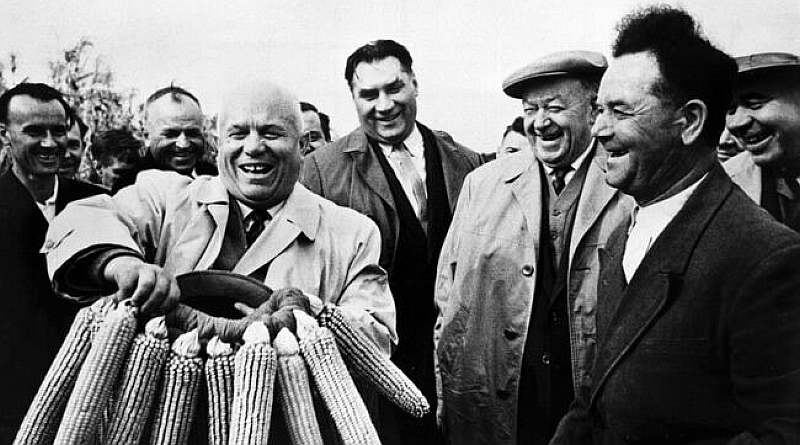
Khrushchev also traveled to the USA and brought back corn, which was then planted everywhere. How much money was invested in the restoration of the Soviet Union after the war? This has been done so many times before that, to be honest, I don’t believe in such projects. I’m afraid that the current American administration thinks they came up with it for the first time — they like it, they believe in grandiose numbers, they talk about some tunnels in Kamchatka. This has all happened before.
There was the grand space program “Soyuz” – “Apollo” (a program of joint experimental flight of Soviet and American spacecraft, approved by an interstate agreement on May 24, 1972 – Ed.). At that time, it was believed that it would open incredible industrial opportunities. Unfortunately, the Russian inability to prioritize economic interests, particularly those of their citizens, over political ones, always disrupts these projects. I am confident that the same will happen in this case.
Our task is simply to survive until this moment and not lose ourselves while the next American administration looks into Putin’s eyes and, besides dollar figures, sees nothing else.
At the beginning of February, the term of the New START treaty between the USA and Russia on non-proliferation of nuclear weaponsexpired. President Donald Trump expressed the opinion that such agreements without China would not have global significance. The situation creates a sense of uncertainty. Is such a trilateral agreement possible in the near future?
China’s position is not liked by anyone, but it is very clear: you have built thousands of warheads, and we have not. Although China does not say directly how many warheads they have, as it is not and has never been part of the verification process.
The United States has reached such a moment, by the way, by canceling all other treaties. But this is part of the process that we observe in NATO and Europe. Americans simply do not notice how, focusing on their national interests, they harm their true geopolitical interests. Once again, they cannot understand that their happiness is in the fact that the entire global system built by them works for them. It was obvious that in the absence of a policeman, national interests would begin to grow.
The issue of limiting nuclear weapons lingered. It is clear that when the war ends and the time for agreement comes, no one will want to raise, shake, and sign it again.
On the cover: Vadym Prystaiko. Photo: Yevhen Yeshchenko
