
Is it worth speaking? Saying anything at all, writing, filming, drawing? There are several questions in one here. Is it worth speaking if you’re not sure your opinion matters? Is it worth speaking if you suspect you’re audaciously claiming a piece of someone’s invaluable resource—the attention of those who are currently uninterested in you? Is it worth speaking if you’re not being heard? I admit, the very formulation is cunning, especially for those for whom speaking and writing are professional duties and simultaneously a way of maintaining a fragile livelihood. But this doesn’t close the issue.
Recently, I stepped into foreign territory both literally and figuratively: I shared thoughts on social media regarding recent dramatic, but very far away events in a very distant state of Minnesota. It was about a killing, just to remind, by federal agents either of a demonstrator or a passerby who defended a woman. I allowed myself to express an opinion only because in the publications available to me, I didn’t find mentions of several important accompanying circumstances, of the context and backstory, although digging up all these details online could be done, as they say now, in one click. I dug them up. Such “success” in quantitative terms I haven’t experienced before: hundreds of passionate opponents, thousands of likes—not what I dream of generally and particularly not today, but it’s telling. Of course, about fifty percent of the responses were from fake interlocutors with empty profiles—network realities have not been canceled—but there were also direct reactions from real people.
I had to confirm once again that in a conditionally unregulated public space, no arguments work. None. You have no chance to convince anyone of anything. Your thoughts are not heard, clarifications are not read, references to facts are ignored. The fact that this is done aggressively, with personal attacks, should neither surprise nor offend—it’s just the melody of life today. However, the substantive slice of communication makes one scratch their head: is it just today, on the brink of “end times,” or has it always been like this, and we just think we are unique?
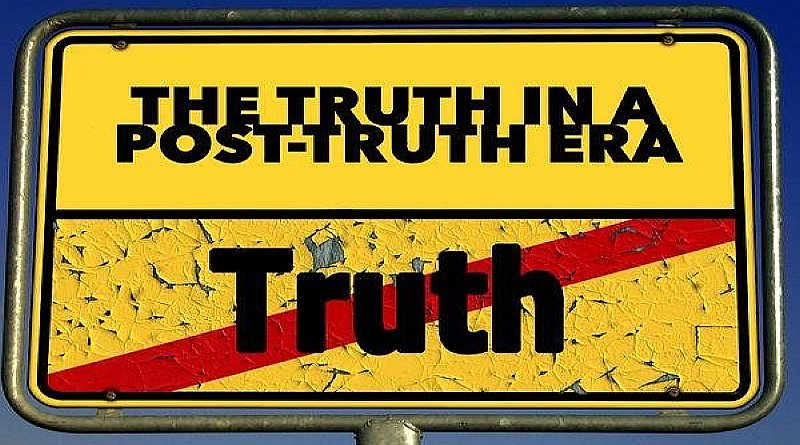
Well, it depends on how you understand “today.” Ten years ago, the great Oxford English Dictionary recognized the phrase “post-truth” as the “word of the year” (post-truth, in my penultimate book there’s a whole chapter on it, forgive the advertisement). The lexicographical bible of the English-speaking world defined it as “circumstances in which objective facts are less influential in shaping public opinion than appeals to emotion and personal beliefs.” “Circumstances” in this case is a delicate designation of established customs, generally accepted norms, atmosphere. The concept of “post-truth” itself did not mean the denial of the existence of truth as such, but merely sadly acknowledged its irrelevance for a significant portion of our contemporaries. In other words, “post-truth” is not the absence of truth, but the disregard of it.
The news is not the syndrome itself, but its clear diagnosis: finally. Beliefs instead of knowledge, confidence instead of fact-checking — such features of human behavior were observed a hundred and even five hundred years ago. If there is anything new here, it’s only the contrast between established procedures of understanding and unprecedented opportunities for verification or self-verification. You can delve into dozens of encyclopedias without getting up from your chair, download terabytes of documents and video testimonies, or consult universally recognized authorities. Why did I choose a relatively (relatively?) minor reason for such broad generalizations? Because a local and brief incident of confrontation in a once-beloved country was reliably documented and powerfully mediatized. The reliability of the documentation is unquestioned by anyone: here are the shots from different angles, here are the identified participants, here are the procedural frameworks, and the legal, administrative, historical, political, and even demographic background — enough data to add two and two together. It turns out it doesn’t work that way.
Instead, the well-known phenomenon of so-called prepared perception (= perceptual readiness) is at play. We only see what we are prepared to see, and we interpret what we see in a way that fits our worldview. If my worldview corresponds to the perspective of ancient Greeks, I will see the angry movement of Zeus in a flash in the sky; if it’s more modern, I’ll recognize it as a downed drone. If I’m inclined to sympathize with the Republican Party’s current agenda, the victims in Minneapolis are primarily leftists who came out to defend outsiders and idlers, resisting federal agents, and it will be hard to convince me otherwise. If, on the contrary, I lean towards Democrats, I will hate the former real estate speculator who stubbornly implements elements of fascism and will likely ignore real problems with migrants, crime, parasitism, bureaucracy, and the anecdotal excesses of wokeness along with “Free Palestine” advocacy, which he supposedly promises to fix, albeit with crooked hands. Reconciling these two perspectives is extremely difficult, and discussions take place in a “you’re the fool” mode, as I have found.
In fact, such conclusions don’t require addressing issues on the opposite side of the planet. The same happens right under our noses; it’s just that our press isn’t as advanced, legal mechanisms aren’t as refined, and politeness isn’t polished, but otherwise, it’s the same. Try discussing Yushchenko or Poroshenko in some passionate company, touching on Prytula, Shabunin, or Sternenko, and you’ll get such a 180-degree turn that even Euclid wouldn’t dream of.
When it comes to certain characteristics of the modern age, it’s more meaningful to focus on simplification as a way of being. Simplification has always existed, but it was natural and unnoticed. Today, with minimal effort, you can obtain a comprehensive dossier on any issue in five minutes—or three with practice—along with detailed explanations and instructions as if for dummies, even without consulting AI. From one side, from the other, from a third, in profile, in depth. And if you’re bored or lazy, you’re programmed for a quick verdict, “just to get by.” “Barterer.” “Beekeeper.” “Grant-eater.” “Zelensky-bot.” “Soros-child.” And your opponent is an idiot, and besides, he writes “каф’ярня” instead of the correct Ukrainian “каварня,” and doesn’t use feminatives (or vice versa). The reason is not stress, outages, or burnout, but the lack of desire to pause and listen. It’s a habit, a default protocol: if something’s not my way—“it annoys me!” Everyone repeats: “critical thinking, critical thinking.” In my opinion, before starting to think critically (which in practice mostly comes down to nitpicking minor details), it’s worth learning to simply think.
Yes, the familiar world is falling apart before our eyes. And no, life on its own is not built on rational foundations. Only each of us, in every separate second, can give it meaning. Therefore, speaking and writing is necessary. Perhaps, instead of chasing likes and clicks, start by appealing to narrower circles. Step down from the podium and disable comments for outsiders. Kindred spirits will find each other naturally. We take pride in our horizontal connections, often confusing them with cronyism, but it wouldn’t hurt to cultivate understanding, at least among people with the same blood type. Don’t look for traitors among friends and allies; instead, group based on a set of values and, apologies a hundred times, aesthetic preferences, that works too. Forget about calls for broad societal dialogue, fully aware that in our latitudes, “broad” automatically means “mess.” Move towards understanding in narrow micro-societies, developing listening skills, and in this way gradually expand the platform. Anyway, don’t argue with the stubborn. Don’t argue at all—there’s enough to worry about, whom to care for, whom to hate. Turn down the outrage; it won’t warm you. Master yourself and leave the search for enemies to the SBU and NABU. At least until March.
The inhumane are trying to divide us, doing so in a hybrid, technological, and persistent manner—let’s not give them such satisfaction. We have countless examples of incredible solidarity, interaction, and endurance. If you absolutely can’t take it—have some valerian or adaptol. Go to a philharmonic to hear Mozart. Bring someone extra coffee at a warming point. I know we can.
