
Phillips P. OBrien / Translation Texty
The American historian and war researcher Phillips O’Brien, in his blog, writes that Ukraine has developed a new approach to warfare, and last week’s record losses for the Russians confirm its effectiveness. Texty.org.ua provides a translation of the expert’s key conclusions.
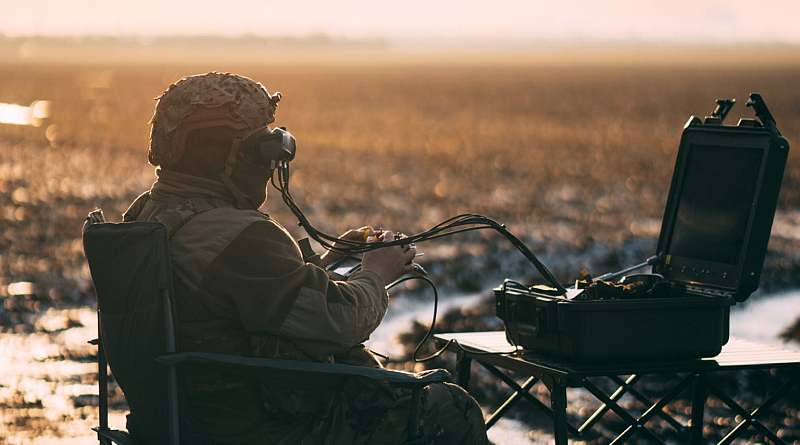
In the ground war, there is increasing evidence that Ukraine is capable of inflicting growing and devastating losses on the Russian army without relying on an ever-increasing number of infantry on the front line. Instead, the Ukrainians talk about their forces relying on machines, mainly UAVs, to destroy the occupiers.
So far, this confirms the correctness of their chosen approach to warfare. Of course, we will soon see a real test of this method of combat, as reports suggest that the Russians have launched a major spring offensive.
While the Ukrainians continue to be very effective in their medium-range attacks, last week they carried out what was possibly the largest long-range attack of the entire war. This certainly deserves attention.
Last week, Russian losses, according to Ukrainian data, sharply increased. Ukraine reported almost 10,000 Russian military losses—and among them were the two bloodiest days for the enemy in the entire war. On March 17, Ukraine reported 1,710 losses—a record at that time, and by March 21, this figure was exceeded, reaching 1,760 Russian losses.
The Evolution of Ukrainian Defense
These losses indicate both that the Russians are intensifying their attacks and how Ukrainian defense has evolved. One reason for the increase in losses is that it seems the Russians have started a new phase of offensive operations. The Institute for the Study of War, in its review dated March 21, concluded that Russian forces are transitioning to such a spring-summer offensive.
Last week, larger Russian units were recorded in the attacks, sometimes involving a certain amount of armored vehicles. This differs from the last few months when Russian troops mostly conducted small-scale infiltration assaults along the entire front line.
One of the main reasons for these record losses, according to the Ukrainian side, was the effectiveness of units using UAVs. Overall estimates suggest that Ukrainian drones accounted for over 50% of Russian losses last week.
This also indicates how the Ukrainian way of waging war has evolved. As military expert Nolan Peterson aptly noted, this is not the result of Ukrainians merely adding drones to existing units—they have reimagined the very organization of their military and created entire units based on drones.
These drone specialists have a wide range of unmanned aviation capabilities at their disposal. This gives them the flexibility to detect, track, and destroy the enemy in various ways. In a notable strike last week, Ukrainians claimed to have destroyed an entire battery of six Russian “Grad” rocket launchers near Pokrovsk.
Furthermore, the Ukrainian Defense Forces (UDF) have seemingly begun deploying fiber-optic drones with increasing range at the front. Last week, a successful strike with such a drone was carried out 50 kilometers deep—already on Russian territory. This is an incredibly long cable.
Ukrainian Deep Strikes
Last week, the UDF were striking deep into Russia almost daily, hitting targets at distances from 500 to over 1,000 kilometers from Ukraine.
This indicates that strikes on the Russian military economy are intensifying. Attacks on chemical plants, explosive manufacturing facilities, and oil refineries over the course of one week at least show that Ukrainians are identifying and targeting key elements of Russia’s economy.
Of course, caution is needed when drawing conclusions about the scale of the damage inflicted, as we do not yet have an exact post-operational analysis of what exactly was destroyed or damaged.
Nonetheless, one of the interesting outcomes of these attacks has been Russia’s admission that no part of the country can be considered unreachable for Ukrainian strikes anymore. Sergey Shoigu, a long-time associate of Putin, acknowledged there are currently no “safe” places in Russia, and specifically highlighted the vulnerability of the Urals—a region located up to 1,500 km from Ukraine.
It is worth noting that the Russian authorities are not resorting to one of their usual tactics—downplaying threats. If they admit this is the new reality, it means they expect further developments in such attacks.
Photo: 411th Separate Drone Systems Regiment “Hawks”
