
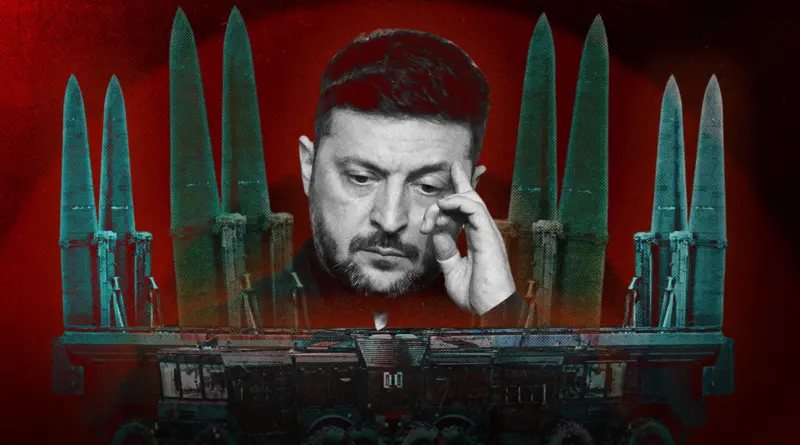
Oleh Chernysh / BBC News Ukraine
The missile program is one of the most classified topics, which people try not to discuss publicly in the Kyiv governmental offices. There have been too many loud promises and predictions in previous years. However, a program for developing missiles in Ukraine does exist, and a key part of it is dedicated to creating Ukraine’s own ballistic missile.
The importance of having its own missile arsenal for Ukraine is hard to overestimate. The ability of the Armed Forces to strike far, powerfully, and accurately could become one of the key levers of pressure on the Kremlin, compelling it to stop its aggression against the neighboring state.
At the start of the full-scale invasion, the Armed Forces of Ukraine approached the situation with only small stocks of old Soviet operational-tactical ballistic missiles “Tochka-U,” with a range of up to 120 km and a warhead weight of 160 kg to half a ton. These stocks are now depleted.
From Western partners, Kyiv received batches of British-French Storm Shadow/Scalp EG cruise missiles and American ATACMS between 2023-25. However, these supplies were quite limited, and the ability to select targets for use on Russian territory was restricted.
In these conditions, Kyiv had no choice but to intensify its own developments, including ballistics.
President Volodymyr Zelensky publicly announced the corresponding decision at the beginning of May 2025.
“The task is to accelerate the creation of Ukrainian ballistics as much as possible. Our long-range capability is a clear and effective security guarantee for Ukraine,” he stated.
Following this, work accelerated.
The current state of Ukraine’s missile program
To begin with, one should understand what Ukraine’s missile program is.
Domestic manufacturers managed to create a certain know-how – “missile drones.” President Zelensky announced the appearance of this new class of weaponry during Independence Day celebrations in Ukraine in 2024.
In practice, it turned out that “missile drones” are a certain hybrid of a drone and a small cruise missile. They have significantly higher speed due to a jet engine and an increased warhead compared to a regular drone.
Both state and private enterprises in Ukraine are working on creating these products.
Among the publicly presented “missile drones,” one can mention “Palyanytsya,” “Peklo,” “Ruta,” and “Bars.”
All of them visually resemble small cruise missiles, carry a warhead of about 50-100 kg, and have small jet engines (external or built-in), allowing them to reach speeds of 700-900 km/h.
For comparison, the speed of a “standard” cruise missile, such as the British Storm Shadow, is about 1000 km/h, while the Ukrainian “Neptuns” and FP-5 “Flamingo” is 900-950 km/h.
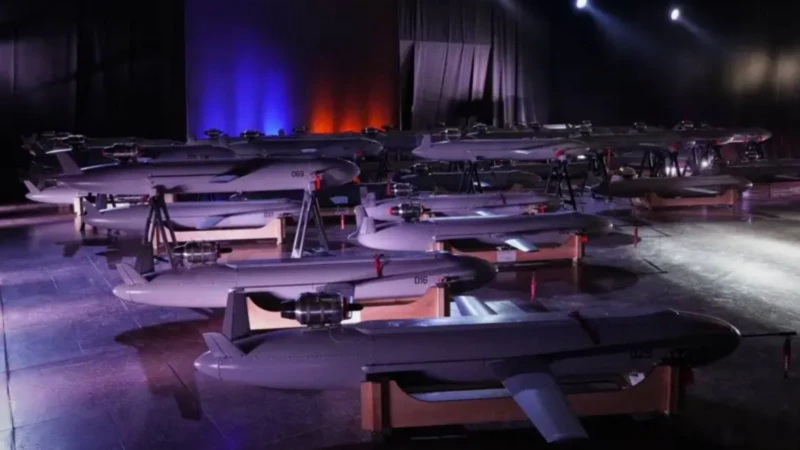
The latter remain virtually the only full-fledged cruise missiles from Ukrainian manufacturers (“Neptune” is produced by the state KB “Luch”, and “Flamingo” by the private company Fire Point). They began to be mass-produced and used the year before last and last year.
A new modification of the “Ruta” (Ruta Block 2) from the Swiss company Destinus, headed by opposition Russian businessman Mikhail Kokorich and former Ukrainian Finance Minister Oleksandr Danylyuk, has also approached the parameters of a powerful cruise missile.
According to the company’s website, this missile is capable of flying at low altitude, penetrating multi-layered air defense, and has AI-guided targeting.
There is currently no information about its use by Ukrainian forces.
As for “Neptune” and “Flamingo”, they have already been used multiple times in combat conditions. There is photo and video evidence of their accuracy.
However, there is some skepticism in expert circles about the real effectiveness of the “Flamingo” and the manufacturer’s ability to reach the declared production rate (200 missiles per month). At the end of last autumn, General Staff representative of the Armed Forces of Ukraine Dmytro Lykhoviy called the FP-5 “an experimental weapon with large declared tactical and technical characteristics and great development potential.”
Overall, the Ukrainian government has been reporting a multiple increase in missile production for the third year in a row, although specific figures have not been disclosed.
At the end of 2024, the then head of the Ministry of Strategic Industries, and now head of “Ukroboronprom”, Herman Smetanin, mentioned an eightfold increase in missile production, and in July 2025 noted that “cruise missile production capabilities have increased tenfold.”
It should be noted that Zelensky publicly set the task of producing 3,000 cruise missiles in 2025.
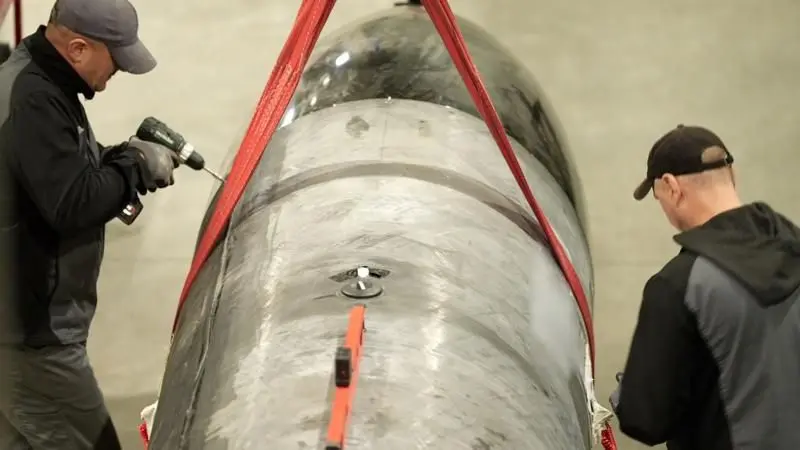
In January of the current year, head of the Defense Procurement Agency (a Ministry of Defense enterprise that supplies the Armed Forces with weapons and ammunition) Arsen Zhumadilov, at a meeting with the media, informed BBC News Ukraine about a “significant increase” in the amount of missile weaponry purchased by the state for 2025. He refused to specify exact figures.
“We purchase rockets manufactured in Ukraine. Foreign ones are mostly acquired through international military assistance… The missile program is actively developing and expanding not only in volume but also in the number of nomenclatures and manufacturers. It’s not just one manufacturer,” emphasized Zhumadilov.
However, he added that some manufacturers still prefer to classify their products as “unmanned aerial vehicles” rather than “missiles.”
The same nuance was highlighted by Fire Point leaders at a press conference in November 2025. They explained that their rockets are coded as “UAVs” since it makes passing all necessary bureaucratic and regulatory procedures easier.
Arsen Zhumadilov is confident that the issue is not only about simpler procedures but also about product quality control.
“It’s not just because it’s easier to classify a drone than a missile. It’s also a matter of quality control. Manufacturers who code their products as missiles have a more conservative view on these things. But both approaches have the right to exist,” added the head of AOZ.
Ballistic Efficiency
However, in this list of achievements of Ukrainian rocket production, the main element is missing – an indigenous ballistic missile.
The course of the Russian-Ukrainian war has shown that this weaponry is arguably the most effective long-range means of striking deep into enemy territory. Plus, it is extremely difficult to shoot down, intercept, or deflect from its target.
This explains why ballistic missiles, primarily the “Iskander-M,” are predominantly used by the Russian army for attacks on Ukrainian energy infrastructure during the winter period.
Only during December and January of 2025/26, Russia launched about 130 ballistic/aeroballistic air assault means, including the “Oreshnik” medium-range ballistic missile. Only a third of them were shot down or suppressed.
These are data from the daily reports of the Air Force Command of the Armed Forces of Ukraine.
No other missile or drone weaponry of Russia has such effectiveness.
The main secret of ballistic “success” lies in its speed, altitude, and power.
The same “Iskander-M” flies at a speed of 7500 km/h, which can increase to 9300 km/h when approaching the final segment of its flight. This is almost 8 times the speed of sound.
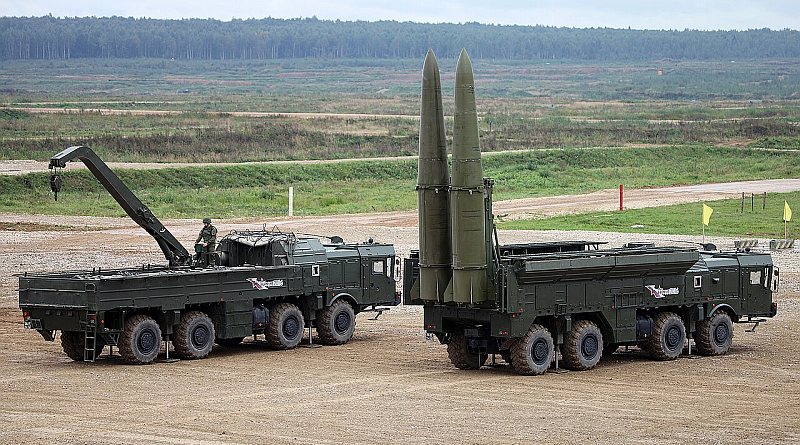
This missile has a large warhead weighing almost half a ton. The specified deviation from the target of the “Iskander” is minimal and is likely up to 10 meters. This is facilitated by the presence of an optical homing head.
During the acceleration phase, the missile can reach significant altitudes – figures of 50 or even 100 km are mentioned – and then begins to gradually descend, dropping down parabolically.
Unlike a cruise missile, a ballistic missile is launched upwards, quickly accelerates thanks to a powerful solid-fuel engine, then flies almost horizontally due to the acceleration provided and attacks the target vertically in the final phase. At the same time, it can actively maneuver and release countermeasures, leaving very little chance for air defense to intercept it.
Only the American PATRIOT system and the Franco-Italian SAMP/T can handle this task. However, according to preliminary data, the latter performs much worse than the American SAM.
Among Russian anti-aircraft missile systems, the S-400 “Triumph” and S-500 “Prometheus” systems can work against ballistic missiles.
Where is Ukrainian Ballistics?
Ukraine has long been considering plans to create its own ballistic missile.
In the early 2000s, the development of the “Sapsan” operational-tactical missile system (OTRK) was announced, which was to effectively become an analogue of the Russian “Iskander”.
The Ukrainian complex was also supposed to hit at a maximum range of up to 500 km and have a warhead of 480 kg. The missile’s speed was also comparable – 8,280 km/h.
The OTRK development project was abruptly halted during Viktor Yanukovych’s presidency in June 2013.
However, in 2016, it became known about the revival of “Sapsan”, albeit under the export name “Grim-2”. Ukraine resumed the creation of this weapon, but in an export version with a range of up to 280 km, commissioned by Saudi Arabia.
In February 2021, Defense Minister Andriy Taran stated that “Sapsan” was 80% ready and “the last step needs to be made” to complete the first sample. As of the beginning of the full-scale war, it was already at the stage of readiness and product release.
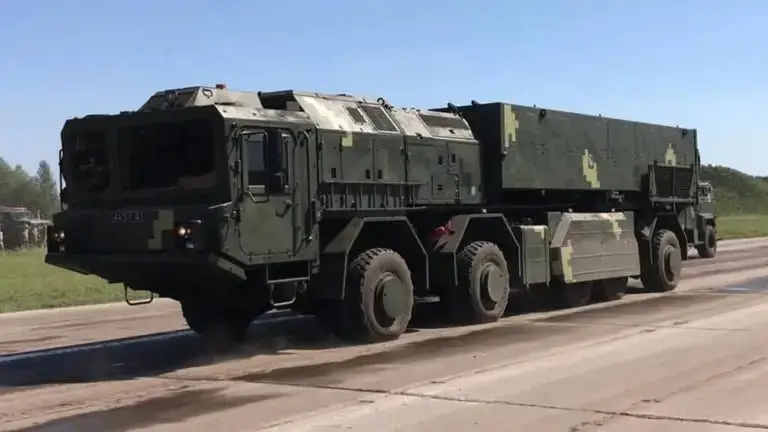
It is likely that at the start of the major war, Kyiv only had two OTRK launchers and a small number of engines for these missiles.
At the end of August 2024, President Zelensky announced the first successful test of Ukrainian ballistic missiles, and in December 2025 declared that “Sapsan” had already “started to be used.” He did not provide any other details about the application and effectiveness of Ukrainian ballistic missiles.
The former head of the Department of Military-Technical Policy, Armament, and Military Equipment Development of the Ministry of Defense of Ukraine, Oleksandr Liev, revealed details on this issue on his Facebook page.
He wrote that in August 2022, the ministry developed and signed the first state contract for the procurement of the 1KR1 “Sapsan” operational-tactical missile complex.
According to Liev, its first combat use was in 2024, and by 2025, production became serial and the complex reached “systematic use,” whatever that means.
The former official emphasized that for this type of weapon, this is a “tremendous pace.”
In addition to state enterprises, the previously mentioned private company Fire Point is working on the creation of ballistic missiles. At least, its management has publicly announced such plans.
They took a slightly different approach and instead of creating a completely new product, they based their ballistic missiles on the Russian anti-aircraft missile used in the S-300 and S-400 complexes.
As explained in an interview with BBC News Ukraine by the co-owner and chief designer of Fire Point, Denys Shtilerman, his company managed to independently create the most complex elements of the ballistic system: the engine, solid fuel for it, and servos (electromechanical devices that allow certain elements of the missile, such as aerodynamic rudders, to be automatically controlled based on sensor information).
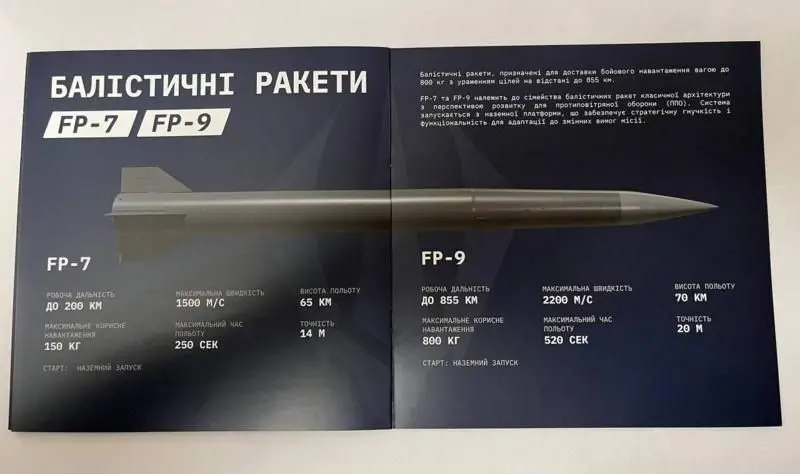
Their first ballistic missile, the FP-7, was expected by company leaders to be codified, or approved for use in the Ukrainian Armed Forces, by the end of 2025.
As the BBC was informed by the company, as of the end of January, this process is still ongoing and has not yet concluded. Fire Point did not provide details or reasons for the delay.
Similarly, the Ministry of Defense refused to provide data on the codification of Ukrainian missiles in response to a BBC request. They called it information with restricted access.
“Disclosure of generalized or detailed quantitative indicators on this issue poses risks to the state’s defense capability, particularly by allowing the enemy to analyze the nomenclature, dynamics, and priorities of the development of the Armed Forces of Ukraine’s weaponry in conditions of ongoing armed aggression,” explained the agency.
However, even if Ukraine succeeded in serially producing ballistic missiles, it is unlikely that we will see a rapid increase in the launches of this type of missile in the near future. The problem is that there are objective difficulties with the production of key components, which are almost impossible to resolve in the short term.
What is the main difficulty
When talking about the “serial production” of Ukrainian “Sapsans,” one must understand the main issue – how many ready-made engines for the OTRK the country already has and how many it is capable of producing, explains military analyst Mykhailo Zhirokhov.
“The issue of missile armament hinges on the engines,” he summarizes.
According to his data, at the start of the full-scale Russian aggression, “Pivdenmash” managed to create only four solid-fuel single-stage engines for the Ukrainian “Sapsan.”
The Ukrainian specialized publication Defense Express reported that significantly more were produced – 12 missile engines.
However, the expert’s greatest skepticism is caused by the current real ability of “Pivdenmash” to produce these engines after several devastating airstrikes by Russia. In particular, on November 21, 2024, this enterprise in Dnipro became the main target of the Russian medium-range ballistic missile “Oreshnik.”
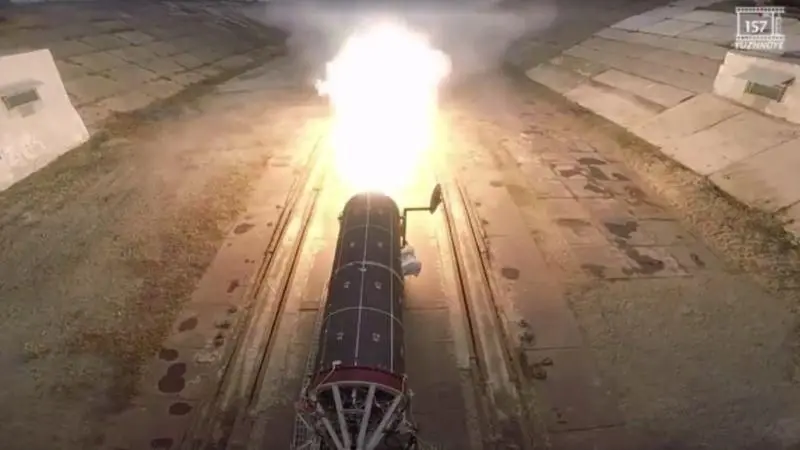
“Does Yuzhmash still have the capability to manufacture these engines? This is a big question. The attack by ‘Orieshniko’ in November 2024 was not without reason. According to some reports, the strike hit exactly the workshop tied to engine production,” says Zhirohov in an interview with BBC News Ukraine.
Therefore, in his opinion, when talking about the “launch into series” of Ukrainian ballistic missiles, the authorities most likely mean that all training and combat tests of the few “Sapsan” units, for which rocket engines were already ready, have been completed.
Apart from the engines themselves, there is a significant problem with their fuel. Back in Soviet times, the technologies and chemical components of solid rocket fuel were classified, and the process of its creation is quite lengthy, costly, and dangerous.
Previously, it was produced at the Pavlograd Chemical Plant (PHZ) in the Dnipropetrovsk region. During the years of war, this enterprise has been hit by Russian airstrikes dozens of times, and as of early 2026, the front line has approached it to a distance of 70 km.
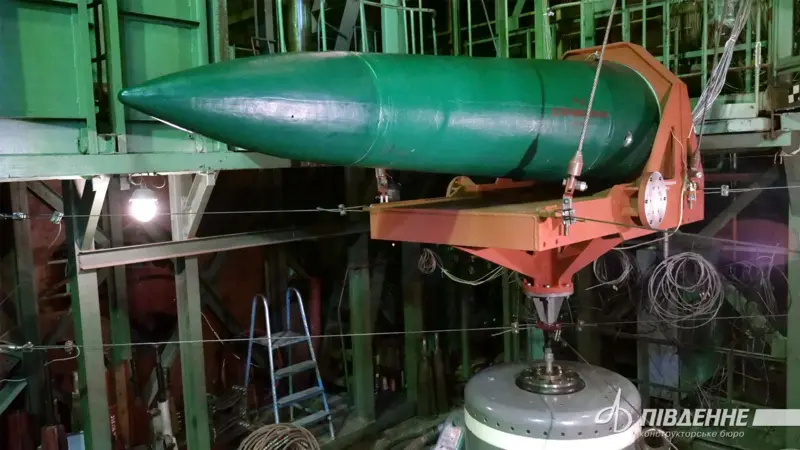
For the creation of rocket fuel, access to large volumes of special chemical products is essential. In particular, to ammonium perchlorate – an inorganic toxic compound in the form of small colorless crystals, which is the main oxidizer for solid rocket fuel. It essentially ensures the combustion reaction.
According to research by the American analytical center CSIS (Center for Strategic and International Studies), China significantly assists Russia in the mass production of ballistic “Iskanders”. Experts have established that nearly 70% of ammonium perchlorate for the Russian defense industry is supplied from there.
In recent years, global demand for this chemical compound has been rapidly increasing. Chinese manufacturers are among the leaders in its production and import.
At the same time, producing this particular chemical is extremely dangerous. For example, in May 1988, a major accident occurred at the PEPCON plant, which produced ammonium perchlorate, in the American city of Henderson near Las Vegas (Nevada). A fire broke out in the warehouse, followed by an extraordinarily powerful explosion. Two workers were killed and nearly 370 were injured.
There is no production of this chemical in Ukraine. However, there are studies indicating the possibility of obtaining ammonium perchlorate by leaching from the residual rocket fuel of Soviet intercontinental ballistic missile engines. These are still stored in Ukraine, have already served their term, and are subject to disposal. As of the beginning of the full-scale war, there were about 1800 tons of such “expired” fuel at PHZ.
Defense Express reported that Ukraine, due to problems with its own production, allegedly approached the US authorities requesting solid fuel from old ATACMS missiles for its ballistics but was refused. There is no official information about this request from Kyiv.
Meanwhile, the head of Fire Point, Denis Shtilerman, assured the BBC that several companies in Ukraine are already making solid fuel engines, including his own company.
Furthermore, FP began constructing a solid rocket fuel plant in Denmark at the end of last year.
According to the company’s director’s optimistic scenario, FP’s series production of ballistics could begin by the middle of this year.
“If there is demand and funds, mass production of missiles could start from May — by the hundreds per month,” Shtilerman said in an interview with BBC News Ukraine in December 2025.
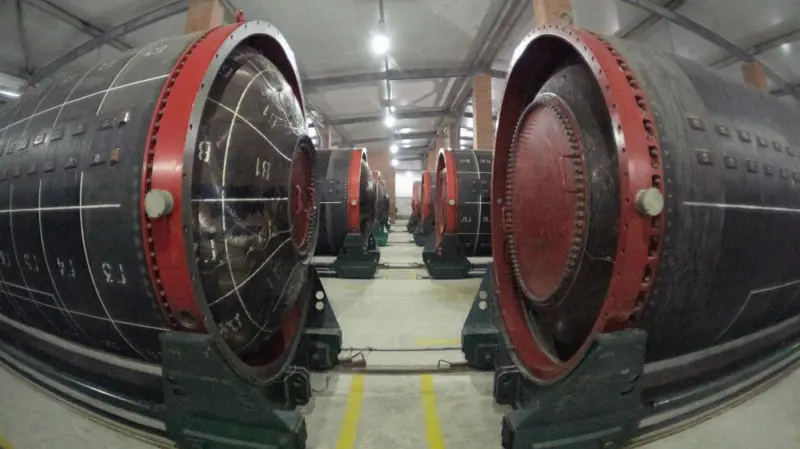
Not only Ukraine faces significant difficulties in producing this type of missile, says the editor-in-chief of Defense Express, former employee of “Ukroboronprom,” Oleg Katkov, in a conversation with the BBC.
He noted that no European country had and has its own serial ballistic missiles, except for France.
“When we talk about ballistic missiles, even solid-fuel ones, we are talking about technologies from the second half of the 20th century. But now, in Europe, the only country that has its own solid-fuel missiles is France. And that’s it,” Katkov emphasizes.
Moreover, the development and production of ballistic missiles that would be effective on the battlefield, and not just could fly a certain distance and altitude, is an extremely painstaking and lengthy process.
Even Russia, having powerful Soviet-era achievements, spent almost twenty years and billions of dollars to create the “Iskander” and still continues to improve it.
“Yes, everything is in the textbooks. But there is a big difference between a textbook, practice, and the actual ability to produce. And there is a huge gap between the concept, the prototype that goes to testing, the prototype that completes them and is ready for serial production, and the actual serial missile. Between each of these stages, there are also huge gaps in time and money,” says Katkov.
He also added: there are justified doubts that the UK government’s announced NightFall project, which involves creating ballistic technology for Ukraine, will have results in the near future.
“When will this missile be ready? If in a year it is only ready for testing, then the tests will last for another year. In fact, it will take even longer. Because it needs not only to fly but also to hit, and to hit under electronic warfare conditions. It is more complex, much more complex,” the expert emphasizes.
But despite these difficulties, experts are confident that Ukraine should continue its work on developing its ballistic technology, particularly in cooperation with Western countries.
This weapon is of strategic importance for the state and its defense capabilities.
Starting in November 2024 and throughout the summer-fall of 2025, the Russian Ministry of Defense reported several times about strikes on Ukrainian enterprises involved in the production of the “Sapsan” operational-tactical complexes.
In a statement from August 30, it was noted that as a result of these attacks, design bureaus, workshops for the production of warhead elements, control systems, and rocket engines for Ukrainian ballistic technology were destroyed.
Cover image: Ukraine creating its own ballistic missile — an analogue to Russia’s “Iskander” — could become a breakthrough moment in the war. Collage: Angelina Korba/BBC
