
Phillips P. OBrien / Translation iPress
The renowned historian and war researcher Phillips O’Brien in his traditional weekly review asserts that after four years of full-scale war, the picture for some of the audience is beginning to clear up, and it is strikingly different from what has been imposed on us for years. Ukraine is not losing, negotiations are a theater of the absurd, and the USA is openly lobbying for Putin’s interests. The media have been afraid for too long to call things as they are, but the reality is becoming increasingly difficult to silence. Now, as the lies are falling apart, it’s time to look at the war as it truly is.
It seems that more and more people are beginning to understand the reality of what is happening. Ukraine is not suffering defeat (first point), and the Trump administration is not “negotiating” a peace deal between Ukrainians and Russians. Over the last 14 months (and considering the stories about Ukraine’s defeat – even longer) most war reporting, in my opinion, has been based not on reality but on lies and distortions, many of which were intentional.
The narrative of defeat was ruthlessly pushed by the analytical community and the Trump administration, who tried to claim they knew what they were talking about, even though it wasn’t true. Unfortunately, the narrative about negotiations was supported by the press, which was too afraid of Trump to report the truth. And the truth was that we are seeing an attempt by the US government to force Ukrainians to give Putin what he wants, and in return, it seems, bribes were meant to go to the USA. The failure to report honestly on this is disgraceful. Both of these stories will be covered in this weekly update.
Additionally, there will be a topic about Ukrainians using several FP-5 “Flamingo” missiles to strike an important Russian strategic factory. This is certainly worth watching.
But before diving into these stories, I would like to note that this week marks the fourth anniversary of Russia’s full-scale invasion. Having started on February 24, 2022, this invasion has changed the world we live in, though naturally, its deepest impact has been on Ukraine. To mark this event and discuss the course of the war, I will be hosting a live stream on Substack this week with Andriy Zagorodnyuk. Andriy was the first Minister of Defense under President Zelensky and now works at the intersection of Ukrainian defense industry and grand strategy. He gave this interview on Substack back in June and regularly writes for publications like Foreign Affairs. He is as insightful and knowledgeable a commentator on the war as one could imagine.
I have made the previous interview publicly available so that everyone can read it before our discussion. Enjoy the reading.
Ukraine has liberated hundreds of square kilometers. What could this mean?
This story has a small twist at the end. Late last week, reports began to circulate that Ukrainians were pushing Russians out of certain areas in southern Ukraine. President Zelensky even made specific statements about such developments in a very candid interview with AFP. The interview was brief, but what he said was significant (much more significant than a comment on liberation). Here are the main excerpts of the text.
First, Zelensky specifically indicated the area of liberated territory – 300 square kilometers.
“I won’t go into details,” Zelensky said about the successes, “but today I can congratulate our army, first and foremost all defense forces, because 300 square kilometers have been liberated today.”
If the Russians had done something similar, we would face numerous articles about how Ukraine is in a crisis with human resources and about to collapse. Well then.
Zelensky also addressed how the war is generally progressing. He dismissed the idea of crisis/defeat. He clearly emphasized that Ukraine is not losing at the moment, and the real question is whether Ukraine will win.
“You can’t say we’re losing the war. Honestly, we’re certainly not losing, that’s for sure. The question is whether we will win.”
Finally, Zelensky also spoke about the state of negotiations between the Ukrainians and Russians, which we are told are being mediated by the US. I don’t want to spoil the pleasant impression you may get from what follows, but Zelensky completely refuted this idea and said that in reality, the “negotiations” are not such. They are a process through which Trump and Putin are trying to force Ukraine to give up more territory to satisfy Russia’s needs. According to Zelensky, the US and Russia act in full unity.
“Both the Americans and the Russians say that if you want the war to end tomorrow, leave the Donbas.”
More on this in the next section.
Returning to the state of the war and the liberation of part of the territory by Ukraine, this can be interpreted in different ways. One option is that it was a direct liberation, with Ukraine reclaiming a large part of the territory that was occupied and controlled by the Russians.
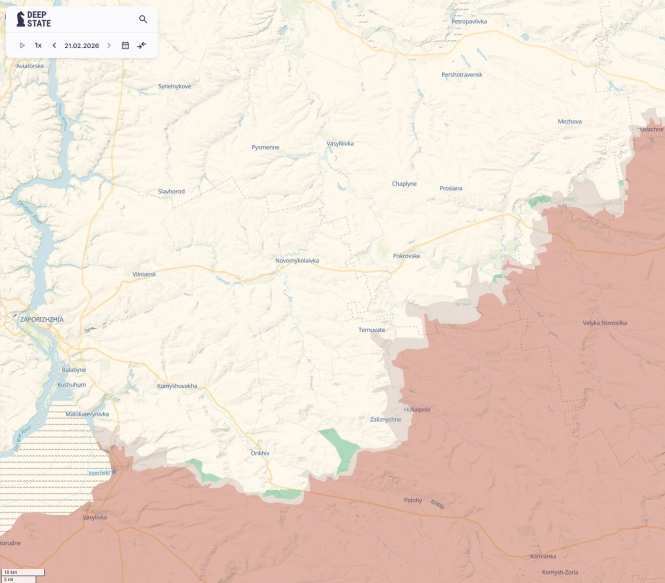
This version was supported by those who claim that the loss of Starlink by Russian forces changed the course of the war. I’m not sure about this and believe something more interesting happened. Firstly, it is not entirely clear where exactly the liberated territory is. If you look at Deep State (which still remains the gold standard for mapping the war in Ukraine), you can see that in the last 10 days, the Russians have been pushed out of some contested territories on the southern front, but this cannot be called a major counteroffensive operation. Here is the most current Deep State map.
And here is the same perspective 10 days ago.
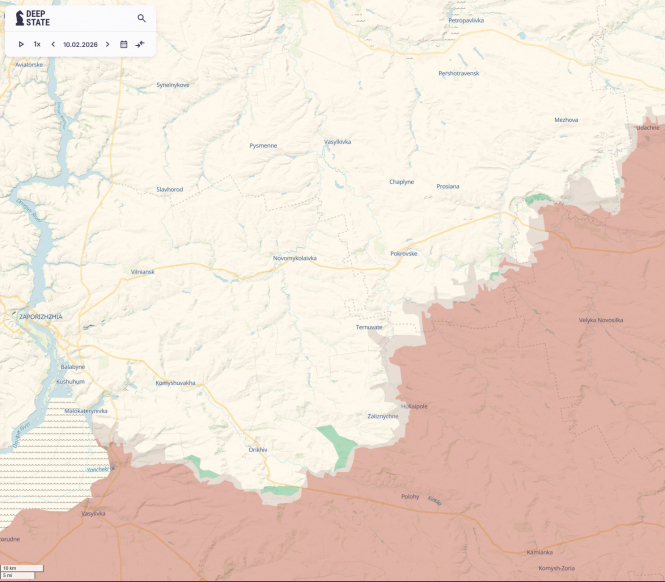
Yes, the front line has moved to the south and southwest of the city of Pokrovske (not Pokrovsk) in favor of Ukraine, but the changes seem smaller than Zelensky hinted at.
So what happened? I spoke with Ukrainians I trust, and they believe the Russians were pushed back in this area, as Zelensky claims. They say that the maps may not yet reflect all the changes because Ukrainians (and Deep State) do not always record their successes on maps until they secure their positions under control. Ukrainians do not want to give any indication of where they are focusing their efforts.
So, perhaps the maps will be adjusted fairly soon.
On the other hand, there is one explanation with a twist—and it can clarify a lot. Perhaps the Russians never really controlled the entire territory that, according to the Ukrainians, they recaptured. It’s not that the Russians didn’t have troops there; they simply consisted of small sabotage units (one, two, or three soldiers) that the Russians constantly moved along the front line.
Thus, the Russians did have troops there, but they didn’t control the territory, and the Ukrainians drove them out. This is the telling point. Previously, the Russians claimed they had made significant progress in this region, and likely the Russian military reported just that to Putin. The Russians regularly claim greater successes than they can actually demonstrate, and they even claimed to have captured towns they clearly did not—remember how they “conquered Kupiansk“?
Well, perhaps Putin was once again given an overly optimistic picture of what his military is doing and how the Ukrainians are resisting. He regularly behaves as if the Ukrainians are on the brink of collapse, while the Russians are steadily advancing.
In essence, the Ukrainians are somewhat trolling the Russians with this. Yes, they pushed the Russians back, but it happened that the boasting and dishonesty of the Russians led them into trouble. In this case, the most telling thing is the lack of honesty regarding the state of the war being reported up to the Kremlin.
And it would make sense. It’s frustrating that Zelensky has to say in an interview that Ukraine is not losing the war. As I’ve often said, the Russian military campaign by most standards should be considered a bloody failure. The Russians have lost over a million of their soldiers—in fact, this figure seems to be approaching 1.5 million. Their successes are minor, and the economy is suffering. Typically, the conditions would be favorable for Ukraine’s victory, and if the US hadn’t changed sides, we would likely be witnessing just that.
So the real story of this area might be that the Russians never controlled it as much as they claimed, and the Ukrainians drove them out. It’s just that such a story doesn’t fit into the narratives of many people.
People Stop Taking Negotiations Seriously. That’s Good
You might have missed the news, but last week there was another meeting of the Ukrainian and Russian negotiating teams, organized with the assistance of the US government. The two-day talks took place in Geneva, Switzerland, and initially, the participants had to pretend they were genuine.
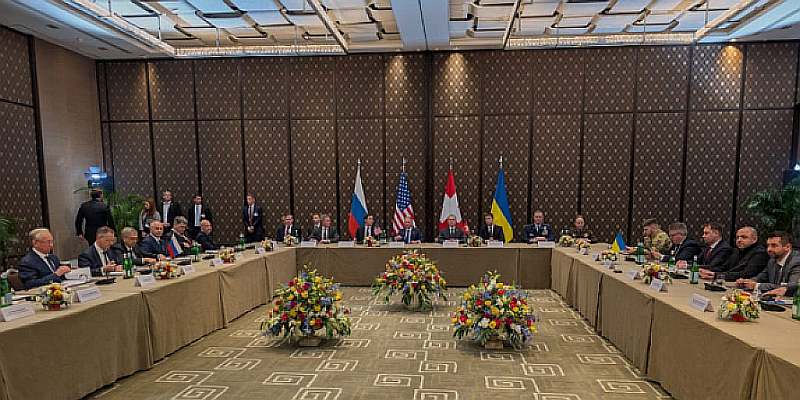
However, on the second day of talks it seemed that the participants lost the desire to continue the act, and they dispersed after just two hours. Publicly, the talks were described as “complex”. However, in reality, they were almost certainly pointless.
This is because the process is not serious, at least not as sincere negotiations through mediation. It seems that the following is happening. The Ukrainian and Russian delegations gather in a large hall with flags, and then the US representative who chaired (Steve Witkoff in the photo above) tries to negotiate how much more land Ukraine should give to Russia. Ukrainians refuse to succumb to pressure, and the talks break down.
By the way, this is not something new. This has been a key element of the process throughout the year, as the US has consistently pressured Ukraine to give up more and more of its territory and people to Russia. However, the situation is changing now, as Ukrainians no longer pretend that the US can be trusted. Like Zelensky in the aforementioned AFP interview, Ukrainians are increasingly openly admitting that the US is indeed lobbying for Russia’s interests and that Ukraine cannot trust this process.
To be honest, the US is also becoming more upfront about this. Steve Witkoff, who chaired the talks this week, gave an interview to Fox News on the state of US foreign policy. You can watch the full interview here. I recommend you do so, as it is enlightening in its nauseating sense. The nature of Trump’s propaganda becomes clear, for example, through the immense praise for the president for creating the Council (on peace) on corruption issues.
Regarding the Russian-Ukrainian war and the state of the talks, Witkoff doesn’t even hide that he sympathizes with Putin and helps him. Witkoff begins speaking about the war at the 5th minute and, importantly, presents the Russian invasion not as a conflict between aggressor and victim but as a morally neutral issue. He describes it as a “meaningless” war over meaningless territory.
Witkoff then confessed (around 6:40) that he knows what Russia’s red lines are, and that Putin has always been completely open and honest with him.
“He has always been frank with me. I say this and get criticized for it, but it’s a truthful statement. He told me what his red lines are”.
It is obvious that the American delegation sympathizes with Putin and his war crimes and is trying to secure the best deal for Putin. As I mentioned earlier, the publication of this interview is a good thing, actually even refreshing.
Undoubtedly, Europeans are increasingly speaking the truth. Whereas European leaders previously attempted to pretend that Trump actually sought peace and not a Russian victory that would be devastating for Europe, they now no longer openly lie about it. Europe’s reaction through the EU to this week’s negotiations has been noticeably tougher. They stated that the negotiations were not serious, that Russia does not want a deal, and now they insist that the European side be represented at the negotiating table in the future. Here’s a quote from an EU spokesperson’s statement.
“We see that Russia continues its relentless attacks on Ukraine. This shows that Russia is not ready for peace. We still do not see real signs that Russia is seriously striving for peace…
Even this week, on the eve of peace talks, Ukraine suffered another massive rocket and drone attack, according to Ukrainian authorities…
As long as the bloodshed continues, we will continue to put pressure on Russia…
Nothing can be decided about Ukraine without Europe at the negotiation table.”
Of course, all this talk does not mean that we will end all these games. We will undoubtedly see more when negotiations resume in a few weeks. However, if European leaders begin to exert more pressure to try and help Ukraine, and if the open nature of the Trump-Putin alliance is recognized, then negotiations might take place in a more honest atmosphere.
This is not an attempt by the USA to bring peace. It is an attempt by the Trump administration to get the best deal for Putin and likely receive historically large benefits in return.
Oh, yes, there were reports this week about economic incentives that the Russians are also offering the USA. This is, so to speak, the last piece of the puzzle. More on that later.
“Flamingo” in Action
The strategic air war continued last week, with the most interesting events happening on the Ukrainian side. The Russians continued to attack Ukrainian energy and civilians. On the night before, they launched another major strike. The main targets appeared to be Kyiv and Odesa, but many other Ukrainian cities were also affected. The number of systems involved in the attack has not yet been confirmed, but apparently, there were hundreds. Here are the first photos released by Ukrainians showing some of the damage around Kyiv. Following their practice, the Russians executed a double strike to destroy rescuers who were assisting injured civilians.
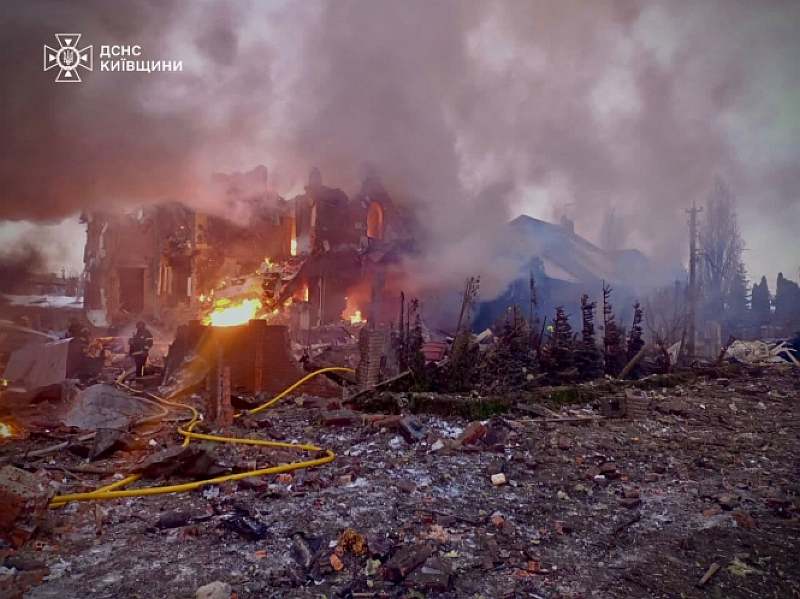
According to Ukrainian sources, overall this week, the Russians have launched 1300-1400 drones and missiles as part of their long-range campaign. They are throwing everything they can into the battle as winter winds down and they want to do all they can to freeze Ukrainians and disable their energy system.
Currently, the Ukrainian system is (for now) holding up, but the damage remains very concerning.
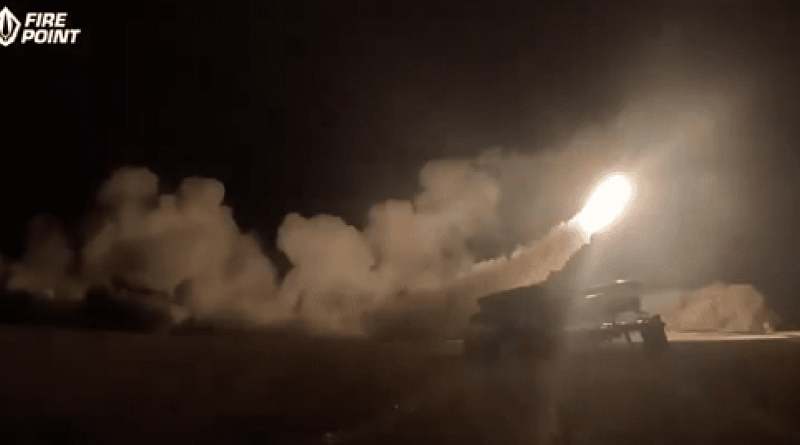
If the Russians continue to act as they have, the Ukrainians have stated they will conduct a noticeably different attack. On the evening of February 21, Ukrainians stated they used a range of systems, including some of their FP-5 “Flamingo” missiles, to attack one of the most important factories producing long-range Russian weapons. Here is the Ukrainian version of that attack and some key details.
Reports indicate that on the night of February 21, Ukrainian “Flamingo” cruise missiles struck the Votkinsk plant in the Udmurt Republic of the Russian Federation, targeting a facility known for producing ballistic missile systems, including the “Iskander” and “Oreshnik”…
The Votkinsk plant is one of Russia’s key facilities for the production of solid-fuel ballistic missiles. The enterprise produces the RS-24 “Yars” intercontinental ballistic missiles and previously produced and continues to service the “Topol” missile family. It also produces RSM-56 “Bulava” ballistic missiles launched from submarines…
Located approximately 1300 kilometers from the Ukrainian border, the Votkinsk plant is considered one of the main missile production centers in Russia.
Currently, we do not know the exact damage to Russian missile production, but it is clear that some buildings were damaged. We hope to learn more soon.
Three main points should be considered. First, the “Flamingo” missiles are being used in large numbers. Until now, Ukrainians were somewhat cautious about the production and use of the “Flamingo.” It was obviously more challenging than expected to produce FP-5 on a large scale, and there are credible reports that the Russians have struck “Flamingo” production facilities. Ukrainians hoped to launch mass attacks using the “Flamingo” a few months ago but encountered difficulties. Now, at least, they have some quantity of these missiles.
Second, the “Flamingo” was able to strike at a great distance (1300 kilometers from the border means they were launched from a much greater distance) – probably somewhere between 800 and 1000 miles. Moreover, the “Flamingo” at least breached Russian air defenses and struck close to their targets. Earlier-generation slower long-range Ukrainian weapons were intercepted with high frequency. The “Flamingo” has better chances of survival.
Thirdly, Ukrainians have targeted Russian missile production. This should not be a surprise, but it is worth noting. It is better to slay the archer than to intercept the arrow. Since Trump intentionally deprives Ukrainians of missiles and Patriot systems, Ukraine must find another way to limit Russian attacks. If they can use their own systems to damage Russian missile production, it will be much more effective than using their limited supply of very expensive Patriots for this purpose.
Definitely something to watch.
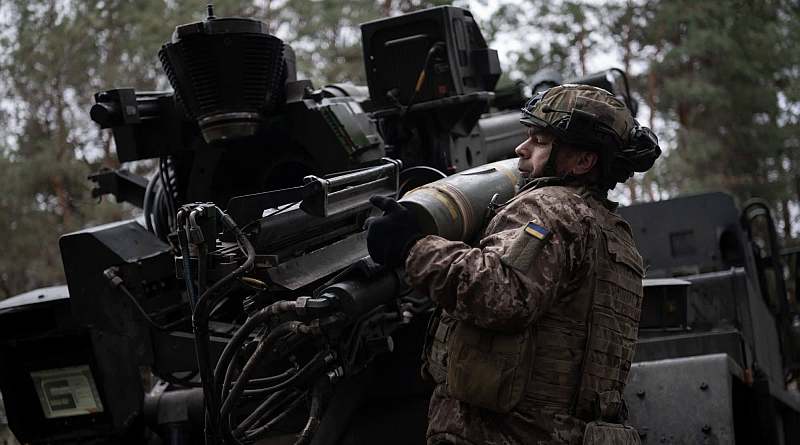
Cover photo: 148th Separate Artillery Brigade of the Zhytomyr Airborne Forces of the Armed Forces of Ukraine
