
Oleh Chernysh / BBC News Ukraine
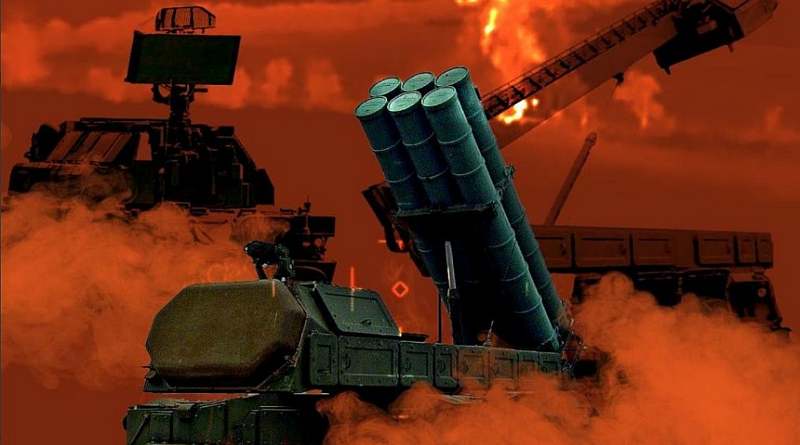
Ukrainian Defense Forces units have started a real “hunt” for Russian air defense systems. The number of destroyed anti-aircraft missile systems (SAM) and radar stations this year already exceeds last year’s figures. How and why is the Ukrainian Armed Forces creating a “gap” in the airspace of Russia and in occupied territories?
According to the General Staff of the Armed Forces of Ukraine, during the winter of 2025/26, they managed to hit 55 Russian air defense systems. This includes SAMs, radars, surveillance stations, and other specialized equipment.
Commander of the Drone Systems Forces, Robert Brovdi (“Madjar”), announced on March 16 that in the first half of the spring month, 23 more air defense objects were hit. He called this the “Spring Air Defense-cide.”
In total, during the winter and the beginning of spring, Russia has lost, according to Ukrainian estimates, almost 80 air defense means.
For comparison, the international OSINT project Oryx, which calculates destroyed military equipment, visually confirmed the destruction of 100 Russian air defense systems (77 anti-aircraft missile systems and 23 radars) throughout 2025.
What is happening?
For the attacks, Ukrainians mainly use domestically produced middle-strike drones, such as the FP-2 from Fire Point.
They are guided via satellite communication, making them almost invulnerable to Russian electronic warfare and capable of flying complex trajectories to the target, as the operator controls the UAV online.
The drone’s warhead, which can reach 100 kg, is usually enough to inflict significant damage or completely destroy large objects like radars or launcher-charging vehicles of SAM systems.
Russian complexes are detected by Ukrainian low-observable reconnaissance UAVs or electronic reconnaissance systems, which record the radiation of radars.
The significant increase in the Ukrainian Armed Forces’ strike work on air defense equipment recently has been noted by both Ukrainian sources and Russian military observers.
For example, the large Z-channel “Dva Mayora” (nearly 1.2 million subscribers on Telegram) points out that unlike Ukraine, Russia does not receive guided anti-aircraft missiles for SAM systems from partners on a regular basis. This means they may face a shortage.
“The enemy is not just targeting air defenses and working with British/American missiles on our border. Kyiv is merely the first ram against our military potential, which the Ukrainian Armed Forces are trying to weaken before something bigger,” the channel states.
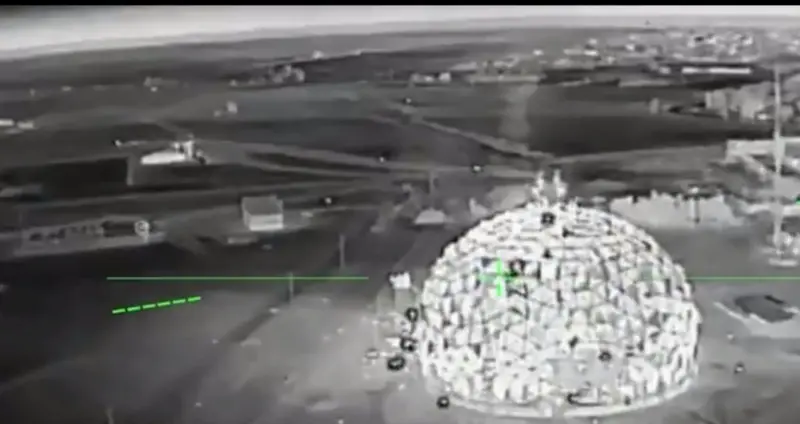
Another major Telegram channel “Military Informant” (616,000 subscribers) predicts that Russian air defense in Crimea could collapse within the current year.
“There’s a feeling that if nothing is developed to counter the mass Ukrainian drones on “Starlink”, then within a year at least in Crimea, the air defense system will either fail or start pulling more and more SAMs and radars from other regions, exposing them”, the post reads.
An expert on Russian armed forces, Senior Fellow at the Jamestown Foundation (USA) Pavel Luzin says that Russia’s losses are “very sensitive”, but it’s difficult to determine how critical they are.
“The only thing one can be more or less confident in is that the scale of Russian losses in air defense forces is very sensitive and these losses are very hard for Russia to compensate. From this, one might assume that Russia is forced to redistribute the existing air defense systems to cover the gaps that are forming”, he told BBC News Ukraine.
Destruction of SAMs
The largest number of air defense targets in recent months was destroyed in the southern direction, particularly in Zaporizhzhia, Kherson, southern Donetsk, and Crimea.
Thus, in January, Ukrainian military strikes with UAVs managed to destroy the “Tor”, “Tunguska”, and “Osa” SAMs in the occupied territories of the Zaporizhzhia region.
These are short-range anti-aircraft missile systems for tactical battlefields, intended to protect airspace around specific targets. The engagement range is up to 15-20 km.
They are primarily designed to fight enemy drones, helicopters, and aircraft.
Throughout February and March, the Ukrainian Armed Forces reported strikes on strategic-level SAMs such as the S-300VM (attacked near Mariupol), “S-400 Triumph” (hit in Crimea), S-300V (attacked in Luhansk) and S-300 (attacked in Kherson).
They are capable of covering territories at ranges of up to 200-250-300 km and can shoot down not only aerodynamic but also ballistic targets. According to Russian sources, the latest S-400 Triumph air defense system is capable of attacking a target even at a distance of 380 km.
In addition, Ukrainians managed to hit several “Pantsir-S1” SAMs, which in Russia are the main means of combating Ukrainian drones.
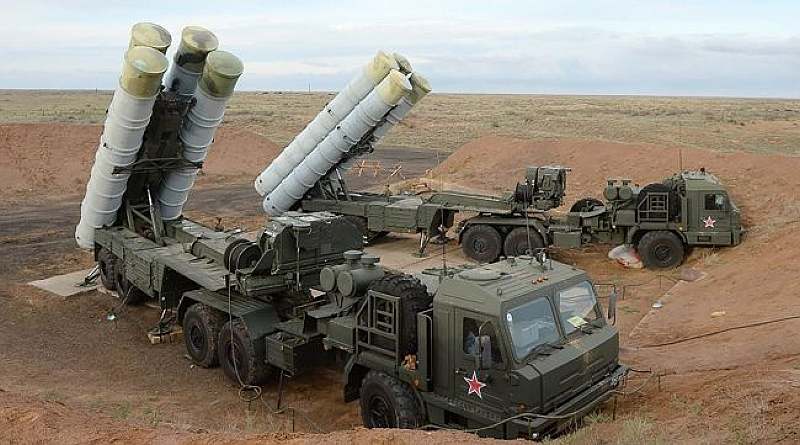
This air defense system has two powerful rapid-fire guns designed specifically to shoot down small UAVs.
One of the Ukrainian SBS units, namely the 429th Brigade “Achilles”, reported that in February alone, it hit five Russian “Pantsir-S1” complexes in the Belgorod direction.
According to Ukrainian intelligence services, Russia can produce about 30 such systems per year.
The Kremlin’s problems are linked not only to the destruction of this expensive equipment but also to the systematic destruction of its “eyes” – the radar systems.
These are technically complex and costly objects designed to monitor airspace over hundreds of kilometers and to detect potential threats, such as aircraft, drones, cruise, and ballistic missiles, in advance.
Most of the attacked Russian radars are modern systems with phased array antennas (PAA). These are antennas that scan the space without mechanically rotating the radar, instead directing groups of emitters.
A representative of a Ukrainian manufacturer of electronic intelligence and radar systems told the BBC that the production or repair of PAAs is a complex high-tech process. According to him, Russia is already facing significant difficulties and a lack of component base to restore its damaged radars.
Without “eyes”
Since the beginning of 2026, Ukrainian troops have managed to hit almost as many Russian radars as in the entire previous year.
According to official reports from the General Staff of the Armed Forces of Ukraine and individual Defense Forces units, about 22 radars have been destroyed since the beginning of the current year, most of them in Crimea.
“The systematic destruction of radar stations and UAV control points weakens the enemy’s ability to control airspace, coordinate drones, and cover their troops,” explained the General Staff.
Determining which specific radars were attacked gives insight into a potential shortage of these systems in the Russian army.
In particular, the Main Intelligence Directorate (MDI) reported in February about the destruction of an “Sopka-2” air target detection radar in Crimea.
This powerful radar began production in Russia only 15 years ago and was intended to operate in Arctic conditions. Accordingly, it was in service with those military units in Russia responsible for monitoring airspace in the far North, but certainly not in Crimea.
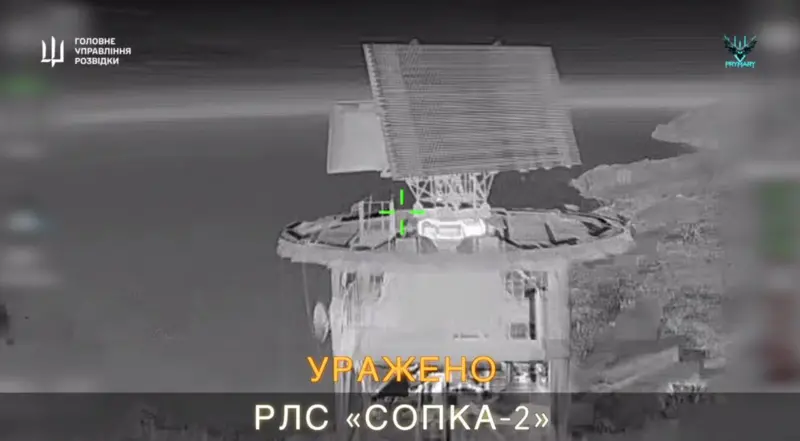
The most logical explanation is that the “Sopka-2” was moved to the occupied peninsula due to a shortage of other radar stations, which Ukrainian forces had destroyed previously.
Moreover, on March 9, Special Operations Forces released a video of the strike and reported the destruction of four large Crimean radar stations, one of which was the 5N84A “Oborona-14.”
This complex was created almost 70 years ago and, accordingly, is not a reliable means of detecting aerial targets in modern conditions. Therefore, it is likely that the Russians employed it for monitoring only due to the deficit of newer systems.
However, analysts suggest that Russia might have conducted significant modernization to make it meet current requirements.
Another destroyed radar station is the 64N6 (designated by NATO as Tombstone).
Its destruction in March was reported by SBS Commander Robert Brovdy. This complex is an important component of the S-300PM and S-400 air defense missile systems.
It allowed the Russian army to monitor the airspace in the south of Ukraine to a depth of up to 300 km, tracking up to 200 targets simultaneously.
In the past weeks, Ukrainian forces destroyed such powerful and modern Russian radar complexes as “Protivnik-GE,” “Terek,” “Podlet,” “Nebo-SVU,” “Nebo-M,” “Nebo-U,” “Kasta 2E2,” and “Yastreb A-V” using long-range drones.
They cost from a few dozen to hundreds of millions of dollars and are produced in limited batches at Russian enterprises.
Corridor for Missiles and Drones
The obvious plan of the Ukrainian command is to create a “corridor” in the Russian radar field, allowing long-range missiles and UAVs of the Armed Forces of Ukraine to fly deep into Russian territory.
It is no coincidence that Crimea and southern Ukraine were chosen for this plan’s implementation. This region has had complicated military logistics for Russia for a long time—due to the damaged Crimean bridge, regular attacks on ferries, and railway connections.
All this creates objective difficulties for replacing and repairing air defense systems. Meanwhile, the Kremlin cannot afford to completely leave the occupied peninsula defenseless.
Therefore, they have to move radar systems here from distant northern areas or deconserve old Soviet ones.
At the same time, the large water expanses of the Black and Azov Seas surrounding Crimea create additional challenges for monitoring the air situation and detecting enemy objects, especially if they fly low over the water.
Russia itself often uses this feature to route its cruise missiles and strike drones over riverbeds during attacks on Ukraine.
Ivan Kyrychevskyi, a serviceman of the 413th SBS “Raid” regiment, says that he already sees signs of the “limitations” of the Russian airspace coverage system. His unit destroyed three “Tor” surface-to-air missile systems in the past five days, the latest of which was in the south of the Zaporizhzhia region. They were destroyed at a significant distance from the front line.
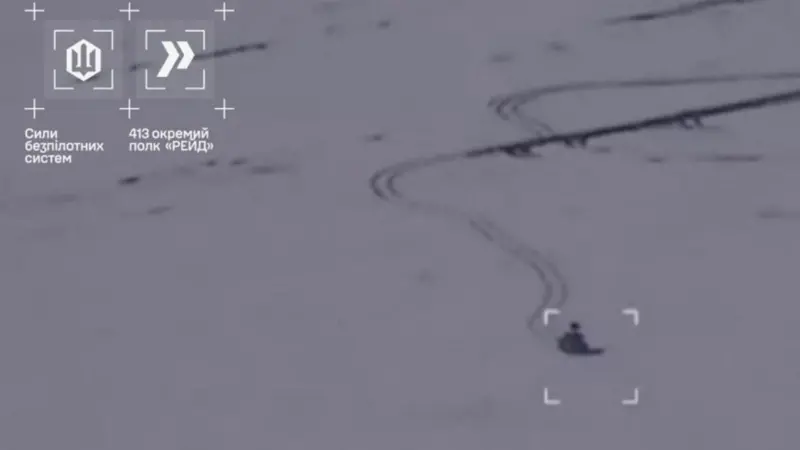
“In my opinion, there’s already a pattern emerging that they (Russian forces – Ed.) now have to switch from a complete airspace coverage line to an object-based principle, meaning they only cover important logistical communications or facilities,” he tells BBC News Ukraine.
He also believes that in this situation, Ukraine has rather enhanced its strike capabilities than Russia has weakened its air defense.
According to Kyrychevskyi, the intensification of the Armed Forces of Ukraine’s strikes on this military equipment is part of the General Staff’s “strategic plan,” which may be connected with events directly at the front, rather than deep in enemy territory.
“No one attacks this equipment for pleasure. Clearly, some strategic plan is being prepared. It is obviously deeper than just taking out all Russian air defense… Air defense is just an element of support. Likely, the main goal may be to undermine the Russians’ capabilities at the front,” says the “Raid” serviceman.
Anatoliy Khrapchynskyi, head of a company producing electronic warfare means and a former Air Force officer, says that creating “gaps” in the Russian radar space solves several strategic tasks for Ukraine. In particular, Ukrainian military aircraft can now fly closer to the front line without fear of being detected early by Russian radars.
“It solves a complex task. It is done both for striking deep into Russia and the occupied territories and at the same time enhancing the capabilities of certain operations by Ukrainian military aviation, for example, for dropping guided bombs or launching cruise missiles,” he said in an interview with the BBC.
According to him, the shortage of air defense means in Russia existed not now, but even before the beginning of the full-scale invasion. The Kremlin, he is convinced, was not able to ensure the production of such a number of radar means and SAMs to close the country’s airspace even before the war.
What’s next?
However, the targeted strikes by the Armed Forces of Ukraine on this equipment, as well as on Russian microelectronics factories, are rapidly exacerbating this problem.
Khrapchynskyi says that Russia is already receiving help from China and Belarus, which are supplying it with their products and components for radars.
The use of Chinese mini-radars by the Russian army was also reported by Defense Minister’s adviser Serhiy Beskrestnov (“Flesh”).
Additionally, from 2024, the Russian authorities are gradually launching the latest airspace control system (СКВП).
“It involves deploying various towers and sensors, additional radar equipment, to detect and counter any aerial threats. In this area, China can actively assist Russia, producing certain elements of radar systems, namely antennas and detection systems,” says aviation expert Khrapchinsky.
However, he notes that it is currently impossible to “completely blind” Russia, as it receives intelligence from space, including from Chinese and Iranian satellites passing over Ukraine.
Nevertheless, the Defense Forces have already made significant progress in implementing this ambitious plan.
Over four years of full-scale war, not only frontline air defense systems have been attacked and damaged, but also specialized equipment such as over-the-horizon radars and long-range airborne warning aircraft. Moscow does not have the capacity to quickly replace or procure these systems from partners.
“They are already blind in one eye,” describes the situation figuratively in a conversation with BBC by a head of a Ukrainian defense enterprise. “This allows us to launch drones and missiles that they simply do not detect in time. There’s more to come.”
