
The war with Iran demonstrated a truth that is always understood only after the struggle begins: military actions are always practice, not theory. The United States developed a plan for an air attack and the destruction of the military potential of the Islamic Republic, but in the first days of the war spent millions of dollars fighting Iranian “Shahed” drones — the same drones that Ukrainians “met” in the first months of Russia’s war against Ukraine, and which continue to terrorize our country for the fifth year.
And, by the way, back in 2022, I wrote that Iranians supply drones to the Russians not just for money. Ukraine turned out to be a real testing ground for Iran to practice future wars in the Middle East. Iranians helped their Kremlin ally — while also learning themselves.
And now these new wars have begun, and it turned out that Iran’s opponents were unprepared and fell into not only a security but also a financial trap. The appeal to Ukraine for help in fighting Iranian drones is a good proof of this.
Four years of the Russian-Ukrainian war — an important experience for both armies. And we can say that today modern warfare is being practiced in both Moscow and Kyiv. Only Russia plays for a different team. It helps Iran and North Korea, conducts joint military exercises with China, and is interested in destabilizing Europe. Russians will help Iranians target American goals, rather than explain to the American military how to protect themselves from enemy attacks.
So today the civilized world has only the experience of the Ukrainian army — and that is invaluable experience. Because the Ukrainian army did not just learn modern warfare and create modern warfare over these four years. It also worked on the experience of counteracting a smaller opponent against a larger one, so Ukrainians can understand Iran’s tactics. And Ukrainians can explain how to defend against Iran and force its regime to abandon aggressive actions towards its neighbors — actions that are already destabilizing the global economy and can quickly lead to an unforeseen collapse.
Yes, the US and Israel’s war against Iran could lead to many risks for Ukraine. This includes rising oil prices, which could give Putin the opportunity to replenish the Russian budget with new petrodollars. And a possible missile defense shortage, if drones are shot down with “Patriot” missiles, this shortage will be felt in the coming weeks. And let’s not forget how many countries are currently “hunting” for missile defenses.
But at the same time, the necessity of joint actions to counter authoritarian regimes is becoming obvious. Of course, one can ignore Russia’s true intentions, but that is like ignoring an elephant in the room. Sooner or later, President Trump’s administration will simply have to agree with the simple conclusion: without Ukrainian experience, it is impossible to ensure the security of American military facilities in the Middle East (and beyond) and to understand the logic of modern warfare.
And this means the necessity to help Ukraine repel Russian aggression, not to nurture dangerous illusions about understanding with Putin.
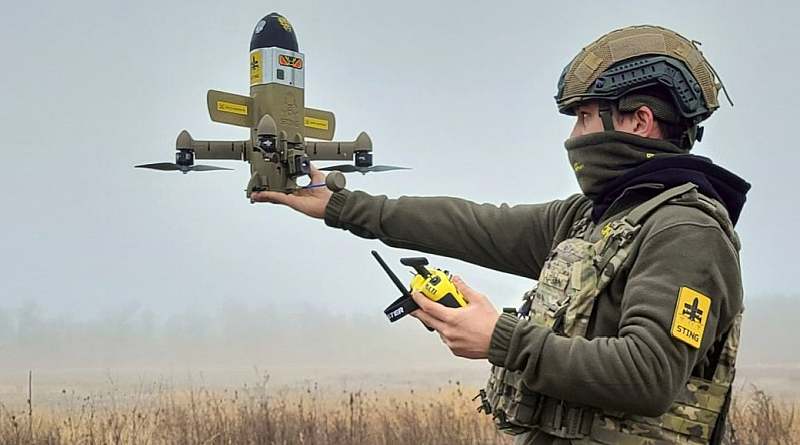
Pictured: Testing of the Ukrainian interceptor drone Sting. Photo: X/wilendhornets
