
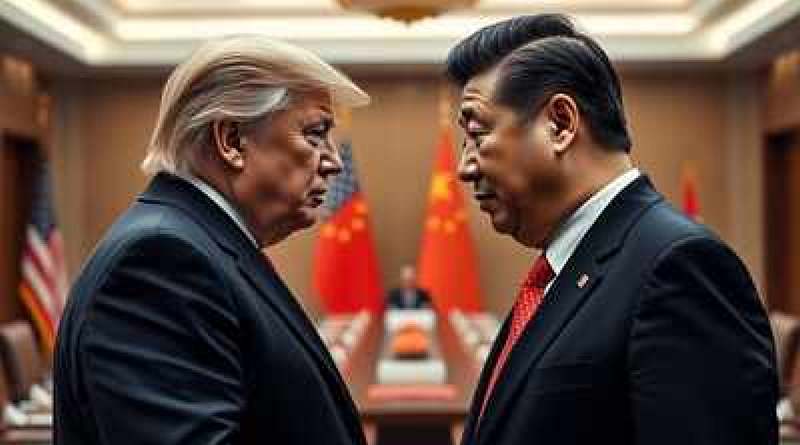

Extensive comments within the specified range appear every 10 minutes or even more frequently. Moreover, it becomes clearer each day that the assessment is based on emotional attitudes towards Trump rather than any grid of criteria.
Let’s look through the direct – military-political-oil – prism and restore the right names.
1. Any war contains subordinate military and dominant political components. Accordingly, there are military (army, defense questions, etc.) and political (power questions) goals.
In military terms, everything is more or less clear. Implement a strategic disarmament of Iran. “Demilitarization.”
To crush its missile program, undermine the capability to produce serious weapons, destroy or at least delay the uranium enrichment program for some time. And also clear Iranian proxies that create security issues.
All this more than fully aligns with Israel’s interests. For Israel, the aforementioned is a self-sufficient goal. The military aspect is instantly transformed into the political. Since the war with Iran for Israel is “existential,” literally a matter of survival.
Therefore, Israel is now conducting an infinitely successful war with a worthy political outcome.
It seems (just seems) that Israel has signed up a strong ally for this campaign and is systematically destroying Iran’s military potential. Bringing more order to its perimeter, and one can record profits at this stage. Indirect damage in the form of attacks on Jewish objects in conditional Holland and Belgium only plays into Netanyahu’s hands.
In other words, right now Israel has undoubtedly won. Every day it gathers additional bonuses. The term “Israel’s war with Iran” fully corresponds to what is happening.
Only one thing is unclear – where are the USA in this?
2. The USA conducted a brilliant military operation in the summer of 2025. Back then, everything was organic: they showed extreme military dominance and the ability to act practically anywhere in the world alone.
Why break into Iran again? What are the goals?
These questions are primarily heard in the United States itself. Israel’s success looks simply provocative, so it has started to be mentioned less often in media loyal to the Trump administration. Because Washington’s position, in the context of publicly sounding slogans, doesn’t look as good.
Did the USA have such military goals in Iran as to lead a fleet halfway across the world, deploy aviation, and bomb on a large scale? Did Iran existentially threaten America? The question is debatable even within the American military community.
For clarity, the term “USA’s war with Iran” is about the same as “Russia’s war with Volchansk.”
Russia achieved an unconditional military victory over Volchansk. The city was wiped off the map, many residents perished, and the rest are seeking refuge wherever they can. If viewed from a single point, this is a triumph of the Russian military machine. Yet, strategic military factories and oil infrastructure are burning in Russia, and Shoigu complains about the threat to the Urals—how does this align with the victory over Volchansk?
The term “Russia’s war with Volchansk” doesn’t capture the situation and creates a misleading object. Just like “U.S. war with Iran.”
The generalizing construct “U.S. and Israel’s war with Iran” only provokes subversive thoughts about inconsistencies.
4. Washington’s current activity only slightly concerns military objectives in Iran. The (un)success of the U.S. lies outside of Iran and beyond purely military grounds.
European leaders are well aware of this, though they cannot say it out loud.
For example, Merz says: we want to hear from the U.S. what their military (!!!) goals in Iran are to understand the boundaries of resolution.
Were you planning to sink the Iranian fleet? It’s at the bottom. Destroy the missiles? It’s claimed that only a few percent remain, and the ability to produce them is lost. Does this mean a few more days, and the end of hostilities? Isn’t that right?
Then why do you need help from NATO or individual countries—from Japan to France? To catch two mines in the Strait of Hormuz if Iran hypothetically throws them? And can’t the U.S. handle it alone?
What can Trump answer in the military sphere? Essentially, just one thing: uranium, they need to take it.
But without uranium, the ayatollahs are definitely finished, and they won’t give it up just because of bombings. And a German corvette with a French minesweeper won’t help here.
Some escalation is needed to create additional motives. And this can only be done with some form of ground operation, which is extremely unpopular ANYWHERE.
A potential scenario arises: German ships come to catch a couple of mines, escalation begins (which Europeans do not control) or some treacherous Iranian missile hits an American target, and there are casualties… And that’s it. There’s no turning back.
Therefore, Europeans try to manifest: what’s really happening? What are we truly needed for there?
The answers are on the surface. They just sound politically incorrect and slightly humiliating for Europe.
5. If we replace the false term “U.S. war with Iran” with the correct one “U.S. war with China in the Persian Gulf,” everything falls into place.
The word “Iran” is a harmful disguise. Mentioning the U.S. and Iran in one sentence diverts from the essence. Try using “Persian Gulf” instead of “Iran.” It immediately becomes clear that Israel did not lure the U.S. anywhere. They have different motivations and different levels of war, although they act together.
And objective criteria emerge for assessing U.S. motivation and success. This is not driven by slogans but by numbers.
6. According to average data from various sources, China consumes about 765 million tons of oil per year. There won’t be an exact figure due to varied manipulations. But the scale is such. The trend: transportation begins to consume less, petrochemicals more.
About 25-28% of consumed oil (215-220 million tons) is produced by China itself. The dynamics of Chinese production are small, with cosmetic growth.
China imports about 72-75% of its oil. Figures may vary year by year based on internal consumption indicators. But the conclusion is clear: ¾ of consumed oil, or about 570 million tons, is imported by China. This is significant, a substantial dependency.
There are two levels of influence on China through oil:
• Through price manipulation;
• Through control over volumes.
The structure of China’s oil imports looks like this.
The main supplier is Russia: ~105-110 million tons, or about 19-20% of imports (~14% of consumption). The volume increased in 2025.
The second is Saudi Arabia: about 82 million tons (~15% of imports or ~11% of consumption). The volume slightly decreased.
Iraq steadily supplies about 60-65 million tons (~12% of imports and ~8.5% of consumption).
Next, opaque magic begins. According to open data, about 150-155 million tons are supplied by Iran, “Malaysia,” and Venezuela. Malaysia produces some itself, but also serves as a major hub for transshipment of sanctioned and various “gray” oil. Together, these three positions account for about 20% of China’s oil consumption.
Iran’s share is somewhere between Saudi Arabia and Iraq.
Other major suppliers include Brazil, Oman, UAE, and Kuwait.
If structured a little differently, it turns out:
• Persian Gulf oil (excluding Iran) accounts for about 45-50% of China’s imports.
• Oil from sanctioned countries (Russia, Iran, Venezuela) is about 35%.
7. Two logics emerge.
First. China buys sanctioned oil at a large discount. The goal is to make it pay more, removing China’s economically unjustified premium. This means lifting the sanctions on these countries, which entails changing political regimes or finding formulas for deals with the devils. Legal oil entering the market could increase prices for China and decrease them for everyone. The winner has to be calculated.
Second. Physically taking control of China’s oil import sources. This has already been done to some extent with Venezuela.
But even the complete expulsion of Venezuela and Iran would only affect about 15% of China’s consumption. This will impact prices (for everyone). However, this volume can be compensated on the market. OPEC+ would gladly pick up the slack. Some might compensate immediately with oil products.
So Beijing will face added challenges and losses. But this by no means guarantees putting China in a subordinate position or pressuring it on any fundamental issues. Plus, indirect damage could negate all the advantages.
Therefore, “Iran” in this context is not enough. Even if plugging all Ayatollah wells with corpses.
But “Persian Gulf” (including Iran) makes up 55%+ of China’s imports and nearly 40% of consumption. About 300 million tons of oil. Disrupting the entire Persian Gulf would have a non-trivial effect.
For Trump, in the grand scheme, it doesn’t matter — China won’t get all the Iranian or half the Iranian, plus half the Saudi oil with supplements from Iraq and UAE.
But you know what’s the paradox?
The share of Gulf oil in EU imports has dropped significantly. The core suppliers are Norway, the USA, and Kazakhstan. The EU shifted dependency from Russia and the sheikhs to ties with Washington and Astana.
The main Gulf suppliers to the EU are Saudi Arabia and Iraq. In terms of share, their supplies approximately match Iran’s share in China’s imports. Some flow can even pass through the oil pipeline to the Red Sea.
This volume isn’t critical enough to consider participating in a war. For Europe now, it’s scarier if Trump starts threatening them with U.S. oil disruptions under the pretext of ensuring the domestic market.
That is, if the main weapon against China is volume, then against the EU it is global prices. And to shift prices, you need… uncertainty.
Which is exactly what we are seeing.
8. Europe is not motivated to physically control anything in the Strait of Hormuz due to the small volume of oil consumption there. But Trump’s message is different: if you want certainty, bring your ships here.
The horror of this proposal is that certainty will need to be maintained ALWAYS. European ships and their accompanying contingents will have to be permanently stationed in the Persian Gulf. This is a mirror of the approach to Ukraine: war in Europe—let Europe help.
In summary: Trump’s political goal in this war is to reformat the flow of all oil from the Persian Gulf to be disadvantageous to China.
The additional challenge is to simultaneously pressure the EU and create grounds for confrontation between Europe and China. Trump is trying to stretch the EU—either align with America or with Beijing, choose.
European leaders understand this more than well. Therefore, they will fend it off with an axe.
As Israel eradicates everyone it can reach, the USA, China, Iran, and the EU enter a position of strategic patience. One of the main fronts is who can better manage price shocks. And only after some stabilization can a Trump-Xi summit take place.
Therefore, reports of successful bombings, as well as Iranian attacks on Dubai, are all well and good. But everything will be measured in terms of control over the overall flow from the Gulf. And in the price balance.
9. In this context, a possible operation to seize Iranian oil infrastructure is double-edged. U.S. control means more certainty, more responsibility. Therefore, for some time, the logic “if we want—we’ll bomb, if we want—we’ll leave it as is” may work…
Naturally, oil and gas are not self-sufficient reasons. But looking through industry lenses reveals interest groups that support different scenarios.
Illustration generated by AI
