

Many of my Ukrainian readers and viewers are asking today what I based my warning on when I said that if the Russian-Ukrainian war is not stopped within four years, we would witness—and participate in—a new major confrontation. Some simply insist it was a coincidence, that the United States and Israel would attack Iran anyway, and the Russian-Ukrainian war is irrelevant to this.
This perception of reality reminds us again how difficult it is to grasp the logic of real processes even for those at their epicenter, let alone observers. In Israel, Russia’s war against Ukraine was immediately declared “not their war.” This was told to my face by my colleagues, informed Israeli diplomats, and journalists in the first weeks after Putin’s major attack. My reminders that Iran is supplying Shaheds to Russia, that Ukraine is turning into a testing ground for Iranian military, convinced no one. Even on October 7, 2023, no one was convinced, although Iran, which remained allied with Russia, was evidently behind the attack on Israel and subsequent events.
The turn has now come to Ukraine, where they might confidently see the war between the United States and Israel against Iran as “another war,” which even distracts the world’s attention from Ukraine. There is no denying it: it obviously distracts. And it might create a dangerous shortage of air defense systems. And help Russia replenish its budget through oil revenues.
Yet it is still one war—the war of the world’s main powers for influence and power. Russia, having lost the “Cold War” and forced to accept the independence of its former possessions, tries to take revenge by brute force, reclaim its dominant role in Europe, and maintain its influence in other world regions, particularly the Middle East. China, which became an economic superpower thanks to the “Cold War” results, seeks political influence matching its weight, as seen by the leadership of the Communist Party of China. The United States, which has been the vanguard of the collective West for decades, tries to use this role to contain China and enhance its influence. Meanwhile, China and Russia wish to expel America.
Under such circumstances, clashes are inevitable, and attacks on those who are either allies of the West or aspire to be are unavoidable. Back in the 1990s, I warned that if Ukraine tried not just to declare independence but to become a “real” independent state with its own foreign policy, its conflict with Russia would not be far off. And I was not the only one warning: the Kremlin made a corresponding statement on Ukraine’s Independence Day!
With Israel, it’s also transparent: from practically the day it was formed, it has been an illegal, illegitimate state for the entire Arab world and nearly the entire “global South.” Influential countries like Saudi Arabia, Pakistan, or Indonesia have yet to officially recognize it.
This means attacks on countries whose disappearance from the political map of the world should not provoke strong emotions. Israel, for its enemies, is merely an illegitimate formation on Palestinian land. Ukraine, for those willing to turn a blind eye to Russian ambitions, is simply a piece of Russia that inexplicably declared independence.
You can look at the world map yourself and find new “vulnerable” countries. For example, an attack on Taiwan: nearly no one doubts China’s legitimate claims, so if Xi Jinping succeeded in a blitzkrieg, the response would be a mere shrug.
But no blitzkriegs, as you see, are happening or will happen, because in a global powers’ war, this is almost excluded. The paradox is that the same American president who understands Iran’s goals regarding Israel is not ready to grasp Russia’s goals regarding Ukraine and China’s true ambitions, which assists both Iran and Russia. And this total misunderstanding creates opportunities for the United States to lose in a global confrontation, regardless of its potential.
To win, or even to survive, it is necessary to change the optics of the war.
Original in English on the The Times of Israel website
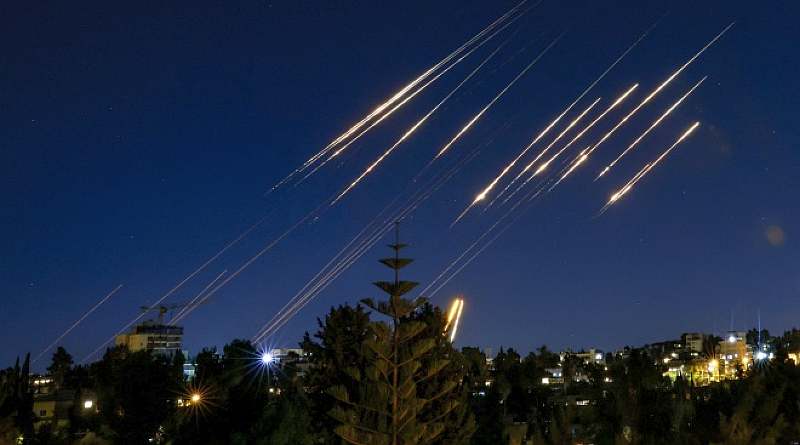
Illustrative photo from open sources
