
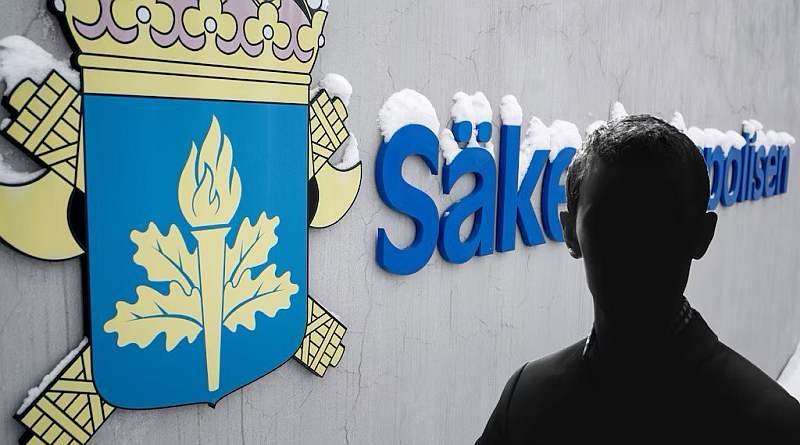

Recent years’ events have cemented Stockholm’s status as one of the key targets in the Kremlin’s aggressive expansionist strategy. Therefore, it is no surprise that, according to a report by the Swedish Security Service (SÄPO) published on March 18, 2026, Russia is officially recognized as the main external threat to the kingdom. The activities of Russian special services have shifted from “cold surveillance” to a phase of open, multidimensional confrontation.
SÄPO’s head, Charlotte von Essen, emphasizes a troubling trend in her report: Moscow’s actions are becoming increasingly risky and aggressive. According to her, the current stage of Russian interference is characterized by “covert influence activities” aimed at internal destabilization of Swedish society.
Where Russian intelligence previously acted cautiously, today the Kremlin is ready to engage in open conflict, disregarding diplomatic consequences. This indicates that Moscow’s behavior is becoming increasingly illogical and unpredictable.
The absence of rational restraints turns Russia into a “black swan” in global politics, whose actions are dictated not by national interests, but by a paranoid drive for revanchism.
Another SÄPO representative, Fredrik Hallström, revealed details of what specifically interests Russian agents. He called the Kremlin’s need for information “boundless.” The main focus of Russian intelligence now concentrates on three areas. Moscow conducts mapping of objects, i.e., documenting critical infrastructure, military headquarters, and communication nodes significant for Sweden’s defense.
This is followed by cyber sabotage in the form of permanent attempts to conduct destructive attacks on state registries and energy management systems.
Finally, one cannot forget the hybrid presence of Russians who do not shy away from using civilian ships and commercial structures for technical intelligence in Swedish territorial waters. This is essentially not just about data collection but preparing the battlefield for potential sabotage in the event of further escalation.
It should be understood that Moscow’s hybrid aggression against Stockholm is not a local incident, but part of a global, multi-level confrontation between Russia and NATO member states.
Following Sweden’s accession to the Alliance, Russia intensified efforts to undermine Europe’s political unity.
Information operations, sponsoring radical movements, and provocations on religious grounds are the tools with which the Kremlin seeks to weaken the internal cohesion of Swedish political elites. The goal is to create a zone of political turbulence within the EU and NATO that paralyzes the process of making quick collective decisions.
Information from SÄPO shows that by 2026, traditional counterintelligence methods are no longer sufficient. To ensure the security of Western democracies, stringent measures of economic hygiene need to be implemented.
Firstly, restricting Russia’s access to sensitive sectors of the Euro economy, namely dual-use technologies, energy infrastructure, and telecommunications.
Secondly, monitoring investments is crucial, and any Russian capital in Europe today should be considered a potential tool for special services influence.
Sweden finds itself at the forefront of defending democratic values.
The SÄPO report serves as a serious warning for all of Europe: the hybrid aggressor no longer plays by the rules. The only response to Moscow’s “boundless” thirst for information and destructive influence can be full transatlantic solidarity and uncompromising isolation of Russian influence agents in all areas: from cyberspace to the real sector of the economy.
