
Vitaly Portnikov / Obozrevatel
The real tool for ending the Russian-Ukrainian war, regardless of the consultations or negotiations being held, remains pressure on the Putin regime, not Witkoff’s consultations during the talks in Moscow.
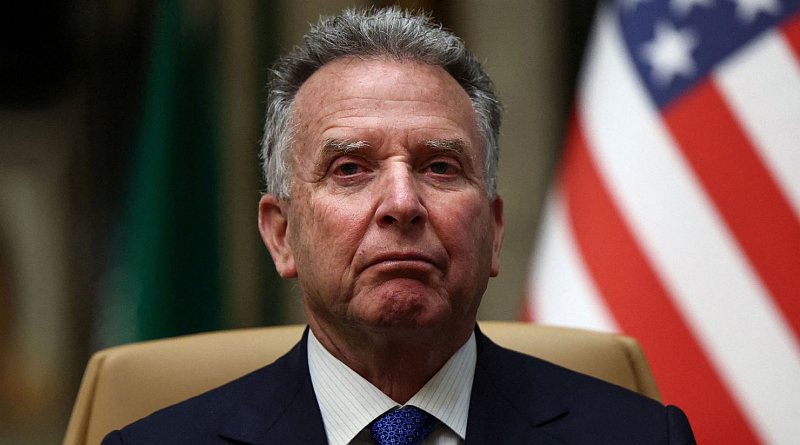
The special representative of the President of the United States, Steve Witkoff, arrived for negotiations between the Russian and Ukrainian delegations in Abu Dhabi, which will take place on February 3–4. Previously, as is known, the US Secretary of State Marco Rubio excluded the possible presence of Steve Witkoff and Jared Kushner at the negotiations planned for February 1. Marco Rubio explained that negotiations between the Russian and Ukrainian delegations would take place without the presence of American special representatives.
From this, one could conclude that Americans do not expect any serious results from these consultations, and Witkoff and Kushner do not see the necessity of being present. Now, as we can conclude, the situation with the American approach is changing.
It is also quite interesting that Volodymyr Zelensky, who discussed further negotiations with members of the Ukrainian delegation, emphasized that it is essential to focus primarily on contacts with the American side. From this, it can be concluded that Kyiv does not yet expect anything serious from talks with the Russians and may realize how much the Russian delegation is interested not so much in finding ways to end the Russian-Ukrainian war but in buying time.
Therefore, contacts with American representatives are indeed important for us to discuss joint pressure on the Russians to force the Russian president to think not about buying time but about ending the Russian-Ukrainian war. This indeed seems quite an important moment in terms of the further negotiation process. If Americans and Ukrainians coordinate their actions and intentions during the negotiations, and Moscow realizes that they will not be able to delay time for long without serious concessions from Putin, that is one story. But if the United States interprets Russian intentions as demonstrating the Kremlin’s desire to end the war, it is entirely different.
Well, it’s worth recalling that during the last visit to Miami by the special representative of the Russian president, Kirill Dmitriev, Steve Witkoff praised him and emphasized his positive attitude toward Russia’s desire to end the Russo-Ukrainian war. Let me remind you that it was Dmitriev, presumably together with the Russian Federation’s assistant to the president for foreign policy, Yuri Ushakov, who came up with the 28-point plan that Witkoff and Kushner initially reviewed, and which was later disclosed to all readers of American media with the details.
So, I do not rule out that Dmitriev’s important function now is to convince Americans of Putin’s peacemaking desires. Perhaps it is for this reason that Witkoff, indeed convinced of these desires during the meeting with the Russian representative, changed his intentions and now decided to visit Abu Dhabi to directly participate in consultations between the Russians and Ukrainians.
Just a question, though. Whom will Witkoff pressure more during these consultations? Who will be the real ally of the American special representative during the negotiations – the Russians or the Ukrainians? Will Washington continue to insist that Ukrainians must leave that part of the Donetsk region currently under the control of the legitimate Ukrainian government? As if saying that this should be the real opportunity to end the war. Do the United States understand that the president of the Russian Federation uses the Donbas story to prolong military actions and continue the confrontation with Ukraine?
These are, I would say, the main questions of the current negotiation process.
Because if we agree with the logic of the U.S. Secretary of State Marco Rubio, who believes that everything is focused on the territorial issue, and all other issues are indeed resolved, we won’t notice how the United States will attempt to pressure Ukraine together with the Russian Federation, and if theoretically they do press on, they will face new tough conditions from Russia.
Well, recently we have heard, for example, that any form of peacekeeping contingent presence on Ukrainian territory is unacceptable. We heard from the Russian foreign minister that Europeans are hindering the peace process organized by U.S. President Donald Trump. Instead, the Russians themselves are supposed to negotiate with the Americans without European involvement.
In other words, many wishes and proposals can be formulated, which, even after the so-called territorial issue is supposedly resolved, will allow Putin to continue to harass Ukraine and conduct his war of attrition.
Therefore, yes, the most important issue is pressure on Russia. From this point of view, I find it positive that at least from an economic standpoint, the President of the United States has not forgotten about this pressure, and he reported that he agreed with the Prime Minister of India that India will no longer buy Russian oil, which will help end the Russo-Ukrainian war.
Yes, of course, the less energy revenue the Russian budget has, especially now when it no longer depends on oil and gas as much as a few years ago, the more Putin will need to consider ending the war, because the further search for money in the pockets of the Russian population itself could undermine even the level of social stability that currently exists in the Russian Federation.
And this once again reminds us that the real tool for ending the Russian-Ukrainian war, regardless of the consultations or negotiations conducted, remains pressure on the Putin regime, rather than consultations in which Putin continues to feel more comfortable than on the battlefield or during economic dialogue with the West. If, of course, the sanctions pressure can be called a dialogue at all.
