

Information on current Russian losses due to sanctions as of 03/21/2026.
1. According to the General Staff of the Armed Forces of Ukraine, during an attack on the 123rd aircraft repair plant in the Novgorod region, a Beriev A-50 long-range radar detection aircraft was damaged.
– The aircraft was undergoing maintenance or awaiting modernization when the enterprise was hit. Satellite images capture damage to the hangar where the machine might have been located.
– A-50 type aircraft — so-called “flying radars” — play a critically important role in Russia’s air defense control system. They provide detection of air targets at long distances and coordination of actions of aviation and air defense systems.
– The cost of one such aircraft is estimated at approximately $300–500 million. Before the full-scale invasion, Russia had about ten such machines. Some of them were destroyed or damaged during the war. According to Ukrainian side and western intelligence estimates, no more than five A-50 and modernized A-50U type aircraft may currently remain operational.
– At the same time, restoring this fleet for Russia is extremely difficult: the production of new aircraft of this class is virtually non-existent, and repair and modernization depend on limited production capabilities and a shortage of technological components.
2. Russia lost another $2.2 billion due to China’s oil discounts.
– In 2025, Russian oil companies under-received about $2.2 billion due to discounts they had to offer to Chinese refineries.
– In 2024, losses from discounts for Chinese buyers were estimated at about $1.45 billion, in 2023 at $3.85 billion, and in 2022 at $4.44 billion. Overall, Beijing saved almost $12 billion on the purchase of Russian oil over four years.
– Discounts rose again at the end of 2025 after strengthening sanctions against the Russian oil sector. In the fourth quarter, Russian oil was sold on average 8.3% cheaper than similar raw materials from other countries.
– At the beginning of the year, the discount was about 3%, and in 2024 it mainly did not exceed 5%. Russia is forced to compensate for the sanctions risks and logistical constraints with price concessions.
– This means a loss of part of export revenue and increased dependency on one key buyer — China. As a result, the “pivot to the East” increasingly appears as a forced trade model with significant price losses: to maintain export volumes, Russian companies are forced to sell oil cheaper than world prices.
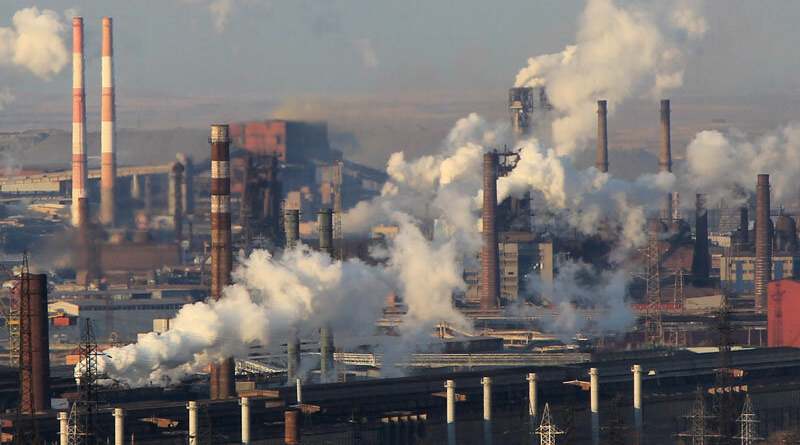
3. One of Russia’s largest metallurgical companies — Magnitogorsk Iron and Steel Works (MMK) — is reducing production and preparing for mass layoffs amid a deepening crisis in the industry.
– According to the CEO, the company’s capacity utilization has dropped to about 60%. The company has effectively halted investment programs and equipment repairs and plans to cut up to 10% of management staff.
– Production assets are already facing reductions: in early March, the “Chertinskaya-Koksovaya” mine was shut down, part of the “MMK-Metiz” units were taken out of operation, and workers at the Lysvensky Metallurgical Plant were switched to a shortened workday. The company’s management openly acknowledges a systemic problem: Russian metallurgical production capacities exceed demand by about twice, and market recovery is not expected until 2026.
– Against this backdrop, enterprises are forced to mothball equipment and sharply cut expenses. Financial indicators confirm the decline: in 2025, MMK reduced steel production to 10.2 million tons — a decade low. Revenue fell by 20%, EBITDA halved, and the company concluded the year with a net loss of 14.9 billion rubles.
– The situation indicates a deep structural crisis in Russian metallurgy, where excess capacity, falling domestic demand, and restrictions on foreign markets force even the largest players to scale down production and reduce staff.
4. The Central Bank of Russia recorded a significant deterioration in financial results for 2025 — instead of a profit, there was a loss of 184.8 billion rubles.
– For comparison, in 2024 the regulator showed a profit of 199.5 billion rubles. The decline is explained by a drop in revenues: they decreased by almost a third — from 1.3 trillion to 942.17 billion rubles.
– Despite this, even a 5% reduction in expenses (to 1.12 trillion rubles) did not prevent a negative financial result. The regulator’s balance sheet also shows weakening: assets decreased by 2.4% — to 69.2 trillion rubles.
– This indicates a gradual contraction of the resource base amidst overall pressure on the financial system. Yet, formally, a safety margin is maintained: post-tax capital of the Bank of Russia stands at 30.2 trillion rubles.
– However, the very fact of transitioning from profit to loss underscores growing imbalances in the country’s financial system.
– Collectively, these indicators point to increasing pressure on the Russian financial sector, which is forced to adapt to sanctions, international transaction restrictions, and overall economic slowdown.
5. The war in the Middle East could potentially bring Russia significant additional revenues from energy exports, but this effect directly depends on the duration of the conflict and the stability of high oil and gas prices.
– According to KSE Institute estimates, three scenarios are considered:
– Short scenario (until mid-April): Oil prices rise to about $100 per barrel. In this case, Russia could receive about $169 billion from oil exports and another $50 billion from gas. Additional income would be about $84 billion.
– Medium scenario (until the end of May): Prices briefly rise to $140 but quickly decrease after supply stabilization through the Strait of Hormuz. As a result, additional revenues could reach up to $161.3 billion, and the budget would receive about $97 billion more than expected.
– Extended scenario (until September): The most favorable option for Russia — oil prices could range from $150 to $200 per barrel. In this case, total revenues from oil and gas could reach $386.6 billion, and tax revenues — $212.5 billion.
– At the same time, these calculations have an important caveat: they are based on the assumption of consistently high prices and no new restrictions. In reality, Russian oil is sold at significant discounts, and exports are limited by sanctions, logistics, and dependence on the “shadow fleet.”
Thus, although the geopolitical crisis theoretically creates a “window of opportunity” for Russia, these revenues remain unstable and highly dependent on external factors — the duration of the war, market reaction, and further sanction decisions by the West.
6. Pessimism among Russian businesses continues to grow: over 83% of companies expect a deterioration in the economic situation in their industry over the next 12 months.
– Just three months ago, this was lower — about 79%, indicating a rise in negative expectations. Assessments of their own condition are also sharply worsening: already 75% of enterprises forecast a deterioration in their companies (compared to 57.9% in December).
– The share of those expecting improvement is only 16.7%, with another 8.3% not predicting any change. Such business sentiments point to systemic problems in the economy: declining demand, limited access to financing, and overall uncertainty.
– Importantly, the worsening expectations are occurring faster than the actual decline in indicators, which typically signals a further slowdown in economic activity.
