

Information on Russia’s current losses due to sanctions as of 08.03.2026.
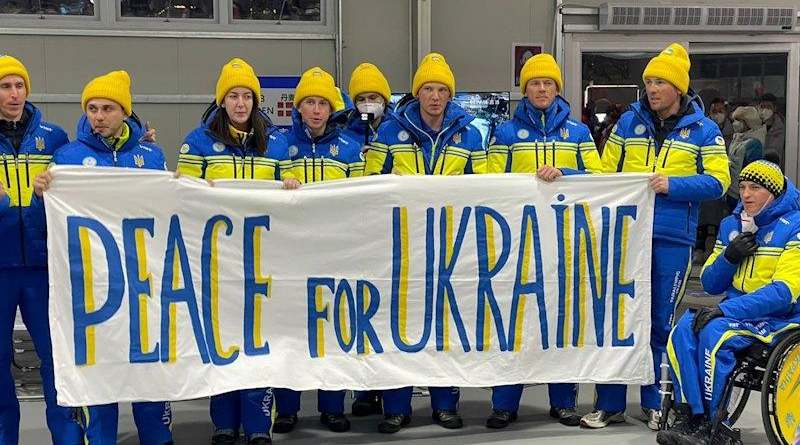
1. Boycott due to Russia’s participation: opening ceremony of the Paralympics ignored by delegations from several countries.
– The opening ceremony of the Paralympic Games in Italy took place amid one of the largest boycotts in modern history of these competitions. The reason was the decision to allow Russian and Belarusian athletes to participate. Seven countries — Ukraine, the Czech Republic, Finland, Estonia, Latvia, Lithuania, and Poland — completely boycotted the opening ceremony. Political delegations from the United Kingdom, France, and the Netherlands also refused to attend the event.
– Russia was represented at the ceremony by only four individuals — two athletes and two sports officials, which is the maximum allowed number of representatives. During the Russian delegation’s procession at the Arena di Verona, where the opening took place, there was almost no reaction from the audience.
– Certain countries limited the event’s broadcast. Polish broadcaster TVP cut out the appearance of Russian athletes from the broadcast, and the Estonian national television channel refused to show the opening ceremony at all.
– This is one of the largest boycotts of international sporting events in recent decades. Larger-scale protests were last observed during the Cold War — at the 1980 Olympics in Moscow and the 1984 Olympics in Los Angeles.
– In February, the International Paralympic Committee allowed a limited number of Russian athletes to participate in the Paralympics in Italy. In the event of their victory in the awards ceremony, the Russian anthem may be played — for the first time at such a level of competition since the start of Russia’s full-scale invasion of Ukraine.
2. War in the Middle East threatens key economic projects of Russia and Iran.
– The escalation of the conflict in the Middle East creates serious risks for a number of large-scale joint projects between Russia and Iran in energy, transport, industry, and trade.
– Nuclear energy. The General Director of “Rosatom” reported that after the start of US and Israeli strikes on Iranian nuclear facilities, the corporation lost contact with the leadership of the Iranian nuclear industry. Meanwhile, contact with the Bushehr Nuclear Power Plant is maintained — more than 600 Russian specialists are working there, some of whom have already begun to be evacuated. Previously, Russia provided Iran with about $5 billion in credit for the construction of new power units at Bushehr. In addition, in the fall, the parties agreed on the construction of a new Hormoz Nuclear Power Plant with an estimated cost of $25 billion.
– Gas. The Russia-Iran gas pipeline project through Azerbaijan, which was estimated at approximately $40 billion, is also under threat. It was planned to allow the transportation of about 2 billion cubic meters of gas per year. After the drone attack on Nakhchivan airport, Azerbaijan increased its military presence near the Iranian border, creating additional diplomatic risks for the project’s implementation.
– Transport. The conflict may also affect the development of the international transport corridor “North-South,” which is intended to connect Russia with India through Iran. A key element of the project is the construction of the Rasht-Astara railway section, 162 km long, intended to connect the railway networks of Iran and Azerbaijan. The project’s cost is estimated at approximately €1.6 billion, of which up to €1.3 billion was planned to be financed through a Russian interstate loan. Russian companies have also invested in the development of the Iranian ports of Anzali and Chabahar.
– Automotive industry. In 2026, Iran planned to launch local production of Lada cars at the Pars Khodro plant using Russian assembly kits. In addition, the localization of KamAZ truck assembly was considered.
– Grain trade. In early March, Russia temporarily suspended grain supplies to Iran due to rising freight costs and payment issues. Trade is also affected by logistical and security risks in the region. If the conflict escalates further, the implementation of several tens of billions of dollars in joint Russian-Iranian projects may be under serious threat.
3. The war in Iran has complicated the supply of luxury goods to Russia.
– The war in Iran has dramatically complicated the supply of expensive goods to Russia — cars, jewelry, accessories, and gadgets. In recent years, Middle Eastern countries, primarily the UAE, have become one of the key channels for importing premium and luxury goods to Russia.
– However, disruptions in air traffic and Iran’s closure of shipping in the Strait of Hormuz have significantly reduced this flow.
– “If the conflict lasts more than a month, the Russian luxury market will experience a shortage, leading to price increases, and sellers will have to return prepayments to customers,” stated a trade intermediary working with Middle Eastern countries.
4. Brazil has reduced the import of Russian fertilizers to the lowest level in five years.
– The import of fertilizers from Russia to Brazil in February 2026 was $152.4 million — the lowest figure since April 2021.
– On an annual basis, the volume of purchases decreased by 1.7 times. For comparison, in February 2025, the import of Russian fertilizers to Brazil was $258.7 million. In February 2026, the largest share of deliveries were mixed and nitrogen fertilizers — $63.9 million and $45 million, respectively.
5. More than half of foreign cars began to be imported to Russia through “gray” schemes.
– The share of new passenger cars imported to Russia through parallel imports exceeded the volume of official deliveries from abroad. As of January–February 2026, it was 53%.
– A year ago, “gray” channels accounted for 46% of imports, and in 2024 — less than 20%. In total, in the first two months of the year, 44,800 new cars were imported to Russia — 7% less than in the same period of 2025. Imports from China and Belarus decreased the most — by 23% and 11% respectively.
– Meanwhile, supplies through Kyrgyzstan increased sharply (by 4.1 times), Japan (by 2.9 times), and South Korea (by 2.8 times). Among the most popular brands are Japanese Mazda (4,800 cars) and Toyota (2,600 cars).
– Demand for cars from brands that left the Russian market after the start of the war increased due to the government’s plans to tighten recycling fee rules. In particular, from April 1, it is planned to cancel preferential rates for individuals when importing cars from EAEU countries — Armenia, Belarus, Kazakhstan, and Kyrgyzstan.
– One of the reasons for the popularity of “gray” schemes remains the difference in customs payments: when importing cars from China to Kyrgyzstan, they usually amount to 10–15% of the cost, while in Russia they are significantly higher. Because of this, some of the cars enter the Russian market in transit through the EAEU countries.
