

Information on current Russian losses due to sanctions as of 01/29/2026.
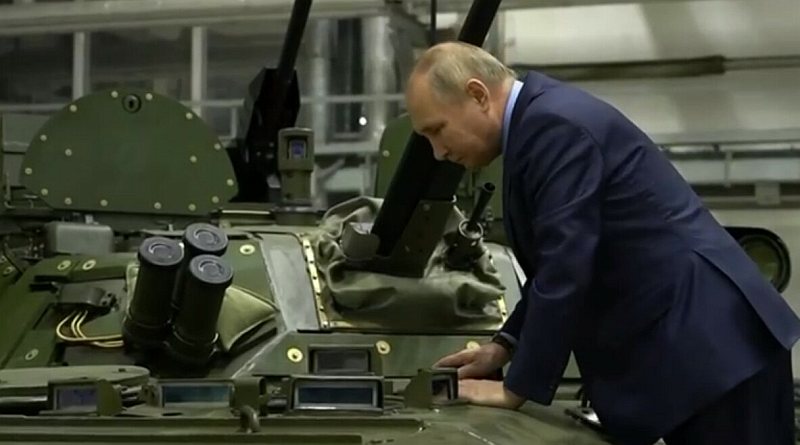
1. The Kremlin’s military machine is ready to stop due to budget cuts.
– In 2026, the Russian defense industry will sharply lose growth momentum as the Kremlin shifts priorities in favor of financial stability.
– According to the three-year forecast of the Russian Ministry of Economy, industries related to state defense orders will grow by only 4–5% per year after around 30% in previous years.
– Expenses related to the war against Ukraine will decrease by nearly 11% in 2026 after growing by more than 30% in 2025. Defense remains the largest budget item, but it’s essentially the only large category the authorities decided to cut; overall spending will grow only within the limits of inflation.
– Signs of slowing are already visible in production: in 2025, growth in the optical and electronic industry fell to 11% from 28% the previous year; in the production of military equipment — to 27% from 34%; in finished metal products (ammunition, weapons) — to 14% from 32%.
– Over the last three years, military factories have absorbed about 800,000 workers, exacerbating the labor shortage, pushing up wages and inflation, and forcing the Central Bank to keep rates at record highs.
– At the same time, budget revenues are pressured by low oil prices, wider discounts on Russian crude oil, sanctions, and a strong ruble. Liquid reserves of the National Welfare Fund have approached the minimum, and the deficit has to be covered by new borrowings.
– As a result, the Kremlin is faced with a choice between further financing the war and returning to a semi-war economy — and increasingly, signals indicate that the resource for escalating the war is being exhausted.
2. Russia’s largest mining company “Norilsk Nickel” is preparing to reduce platinum and palladium production this year.
– Palladium production could fall by as much as 11% — to 2.4 million troy ounces, platinum — roughly by 8%, to 616,000 ounces. The expected decline is particularly significant against the backdrop of global prices for both metals more than doubling over the past 12 months. The Russian monopoly is essentially losing the opportunity to take advantage of the favorable price conditions.
– Although “Norilsk Nickel,” as the world’s largest producer of palladium, is not formally under Western sanctions, restrictions have significantly impacted its operational activities.
– The company lost access to modern mining equipment from the USA, Europe, and allied countries, which already led to a reduction in copper and nickel production last year by 2% and 3% respectively.
– The decline in volumes resulted from the forced replacement of Western technologies with Chinese and Belarusian equipment.
3. Russia is forced to sell oil to India almost at cost due to sanctions and market loss.
– Russia sharply lowered oil prices for India — to $22–25 per barrel, trying to retain buyers amid tightening sanctions and a collapse in energy revenues.
– Estimates suggest that the discount of Russian oil Urals to Brent exceeded $24 per barrel, almost twice as much as in October. For comparison: in 2023-2024, the average discount was about $15 per barrel.
– Even according to official Russian government data, in December Urals was sold on average at $39.2 per barrel, but recently individual shipments for India have been dispatched at $22–25, barely covering extraction costs — excluding logistics.
– Pressure on Russian oil exports intensified sharply after the US imposed sanctions on “Rosneft” and “Lukoil”. Against this backdrop, global oil prices also remain at their lowest level since 2021, further hitting Kremlin revenues.
– As a result, Russia’s energy revenues in 2025 decreased by approximately 20%, forcing Moscow to dump prices and become increasingly dependent on a limited circle of buyers.
– A former top manager of a Russian energy company admitted that if sanctions are tightened further, Russia will have only one export option left — pipeline supplies, which will further narrow the scope for maneuver and foreign exchange earnings.
4. Russia seeks new markets for naphtha as key buyers retreat.
– Russian naphtha exports to Asia are decreasing due to US sanctions and growing buyer caution. Some cargoes have to be stored on tankers or in foreign warehouses with subsequent re-export, which pressures prices and increases discounts.
– Russia usually exports 1.4–1.5 million tons of naphtha per month, but volumes are falling due to the shutdown of the Tuapse refinery and the Taman port after drone attacks. The refinery, which shipped 150–200 thousand tons per month, stopped on December 31; recovery will take at least a month.
– In January, naphtha exports to Asia may decrease to about 600 thousand tons compared to ~800 thousand tons in December. In January-February, imports are estimated at 700–800 thousand tons — 30% less than the monthly average of 1–1.2 million tons in the first 10 months of 2025.
– Taiwan and India reduced purchases after US sanctions against “Rosneft” and “Lukoil”. As of January 22, about 350 thousand tons of December shipments declared Singapore as the destination, while over 320 thousand tons had no specified end market; some cargoes remain unsold.
– Venezuela stopped importing Russian naphtha as a diluent after the US blockade of sanctioned tankers in mid-December.
5. Another oil tanker linked to Russia lost control in the Mediterranean Sea.
– The Chariot Tide vessel was in a distressed condition and slowly passed through the Strait of Gibraltar without entering ports. The incident occurred less than a week after a similar event with the tanker “Progress,” which also lost control on a similar route.
– Both cases involve vessels engaged in transporting Russian oil products circumventing sanctions. Chariot Tide is under EU and UK sanctions for participating in Russian oil trade — previously, the ship sailed under the name Marbella Sun.
– According to the analytical company Kpler, the tanker was carrying about 300,000 barrels of diesel fuel loaded at the Russian Baltic port of Primorsk and was headed to Tangier, Morocco.
– During previous voyages, the ship also delivered Russian diesel to North African ports. A series of disruptions with vessels carrying Russian oil products heightens concerns from critics pointing to systemic safety issues within Russia’s shadow fleet.
– This concerns not only the circumvention of sanctions but also the growing environmental risks for key maritime routes in Europe and the Mediterranean.
6. Uranium trade between France and Russia continues almost four years after the start of the war.
– Despite 19 EU sanction packages against Russian energy resources, the nuclear industry has not been included in the restrictions. Nuclear fuel trade remains an exception, allowing Russia to maintain an economic presence in Europe.
– According to Greenpeace and Le Monde, from 2022 to September 2025, almost half of France’s natural uranium imports came from Kazakhstan and Uzbekistan — countries where “Rosatom” holds key positions through Uranium One.
– At the beginning of 2026, “Rosatom” remains the main foreign player in Kazakhstan’s mining sector.
– The share of Russian enriched uranium in France’s imports decreased from 67% in 2022 to 24% in 2024, but supplies have not ceased. In 2025, at least one delivery was recorded from January to September, as well as another in October through the port of Dunkirk.
– In November 2025, France resumed exporting processed uranium. This material can only be processed for reuse at one plant in the world — in Seversk (Siberia). In 2022, the French government asked EDF to suspend such deliveries, but no explanations have been provided regarding their resumption.
– The European Commission acknowledges that Russian nuclear fuel remains “the last source of energy from Russia” imported into the EU and declares an intention to replace it with European alternatives without naming specific timelines.
7. Kazakhstan hinted at Russia’s involvement in laundering $14 billion through the country.
– The President of Kazakhstan, Kassym-Jomart Tokayev, stated that approximately $14 billion had been withdrawn through one of Kazakhstan’s banks from a “neighboring country,” essentially pointing to Russia.
– According to him, the financial institution “rolled through” over 7 trillion tenge, which he called a blatant fact from the perspective of law, economics, and politics. The statement came amid increased financial control in September last year regarding Russian citizens who remotely arranged bank cards in Kazakhstan.
– The Agency for Regulation and Development of the Financial Market of Kazakhstan previously reported that in 2024 over 90% of cardholders involved in money laundering were non-residents.
– Over the year, there were 6,200 recorded cases of using “drop cards” amounting to 24 billion tenge (about $47 million).
8. In Germany, the criminal police conducted searches at Deutsche Bank’s headquarters in Frankfurt am Main and the Berlin branch as part of an investigation into potential money laundering.
– The investigative actions are related to companies that law enforcement attributes to the structure of Russian oligarch Roman Abramovich. The Frankfurt prosecutor’s office stated that the investigation is being conducted against as yet unidentified bank officials and employees.
– According to the investigation, Deutsche Bank previously maintained business relations with foreign companies that could have been used for money laundering.
– Roman Abramovich has been under EU sanctions since the spring of 2022. Deutsche Bank confirmed the fact of investigative actions and declared cooperation with law enforcement agencies, without providing additional comments.
