

Information about current Russian losses due to sanctions as of 19.03.2026.
1. Hits on Russian aviation industry: key infrastructure targeted.
– The General Staff of the Armed Forces of Ukraine and the Drone Systems Forces reported on the targeting of two important Russian aviation industry facilities — the “Aviastar” plant in the Ulyanovsk region and the 123rd aircraft repair plant in Staraya Russa. The attacks took place on March 16–17.
– According to available information, at “Aviastar,” infrastructure was damaged, including shelters and aircraft parking spaces — some airliners sustained damage.
– The next night, the 123rd aircraft repair plant was attacked: satellite images show punctures in the hangar, indicating a hit. Both enterprises play a critical role in supporting Russian military aviation — from production to repair and modernization of equipment.
– Strikes on such facilities mean not only local losses but also a cumulative effect: reducing maintenance rates of the aircraft fleet, complicating the restoration of damaged aircraft, and adding pressure on Russia’s defense industry complex.
– Essentially, this is about systematically damaging the rear infrastructure, gradually limiting Russia’s ability to maintain the intensity of aviation usage in the war.
2. The gap between official and real inflation in Russia continues to grow, indicating a deterioration in the quality of statistical signals for economic policy.
– According to Rosstat, annual inflation is 5.91%, and since the beginning of the year — 2.59%. At the same time, the population estimates the actual price increase at 15.6%, the highest since August 2025. Simultaneously, inflation expectations rose to 13.4%, which adds additional inflationary pressure and undermines the effectiveness of monetary transmission.
– Thus, the perceived inflation exceeds official figures by more than 2.5 times. The structure of inflationary pressure is also significantly changing.
– Growth in estimates is recorded not only among low-income households but also among groups with savings: in this category, the indicator increased from 12.9% to 14.8%. This indicates the expansion of inflation beyond basic goods into segments of non-food goods and services.
– The growing gap between statistical and “real” inflation limits the Central Bank’s ability to ease monetary policy and increases the risks of further destabilization of price expectations.
3. Russian giant “Gazprom” formally moved into profit, but remains in deep crisis.
– After a record loss of 1.08 trillion rubles, Gazprom showed a symbolic net profit of 11.3 billion rubles for 2025. However, this is more a result of administrative support than a business recovery.
– The real picture is significantly worse. Revenue fell by 6.5%, and taking inflation into account, the decline is estimated at 15–20%. By the end of the year, the situation only worsened: in the fourth quarter, the company incurred a 68 billion ruble loss from sales compared to a 79 billion ruble profit a year earlier. In fact, the “profit” was formed at the expense of the state.
– The cancellation of the monthly tax burden of 50 billion rubles, which was in effect since 2023, allowed the company to avoid a deep deficit. Without this decision, Gazprom could have recorded a loss of about 600 billion rubles.
– The company’s strategy increasingly depends on China. The focus is on increasing supplies and the potential launch of “Power of Siberia-2.” Meanwhile, Beijing’s negotiating position is traditionally tough, meaning new price concessions and further margin reduction. As a result, Gazprom remains vulnerable: loss of the European market, falling revenues, and dependence on political decisions undermine its financial stability.
– The symbolic profit does not change the overall trend — the degradation of the export model and the decline of the company’s role as a key donor to the Russian budget.
4. Russia is losing its status as a key market for Chinese cars.
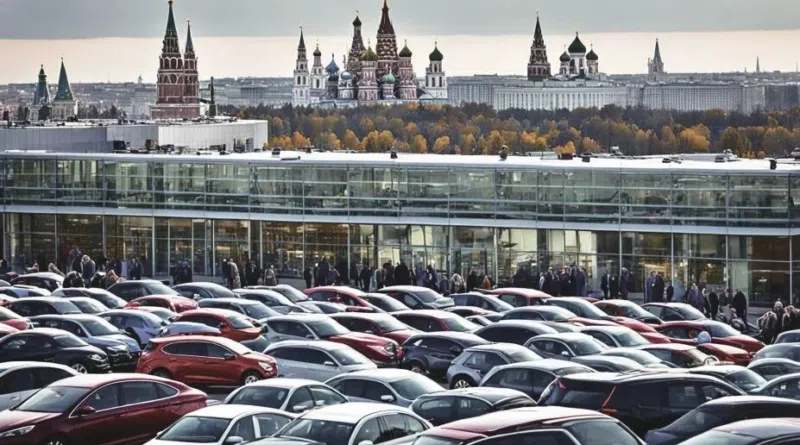
– Russia’s share in China’s car exports sharply decreased: from 14.5% in 2024 to 4.7% in 2025, and by early 2026 — to about 3%. In fact, the drop occurred almost fivefold over the year. Not long ago, Russia was the largest external market for the Chinese automotive industry, but this position quickly collapsed.
– The reasons are internal: a sharp increase in the utilization fee, an economic slowdown, and effectively inaccessible loans due to high rates. As a result, demand collapsed, and even Chinese manufacturers, who actively occupied the niche after Western brands left, began to lose interest in the Russian market.
– This is a telling signal: Russia is losing attractiveness even for “friendly” suppliers. The market is shrinking, purchasing power is falling, and state regulation only worsens the situation.
– In a broader context, this means further isolation of the consumer segment of the economy — Russia ceases to be a significant import market even for China, on which it had pinned its hopes after losing the West.
5. Russia is considering the possibility of sending armed sea patrols to protect the “shadow fleet.”
– Moscow is considering the possibility of escorting the “shadow fleet” tankers with military patrols and even arming them. This involves creating so-called “mobile fire groups” to protect the vessels, as well as installing specialized defense equipment directly on the tankers.
– In essence, Russia acknowledges that its export infrastructure is becoming increasingly vulnerable to attacks and pressure. Notably, there is also a shift in approach to the “shadow fleet” itself. Previously, such vessels were disguised under the flags of third countries and employed concealment schemes; now, some of them are moving under the Russian flag.
– This indicates a narrowing of the opportunities for circumventing sanctions and increased control by the West.
– Consequently, Russia is forced to transfer semi-legal logistics schemes into a semi-military domain. This increases costs, risks of escalation, and complicates oil exports, undermining an already unstable supply model.
6. Two Russian tankers with oil and oil products are heading to Cuba despite increased US sanction pressure.
– The first tanker, Anatoly Kolodkin, is carrying approximately 730,000 barrels of Urals oil and has previously been mentioned in reports on sanction schemes.
– Meanwhile, the situation with the second tanker, Sea Horse, is more indicative, transporting about 200,000 barrels of Russian gas oil. The vessel loaded fuel near Cyprus at the end of February, then employed a typical sanctions avoidance scheme: on February 25, it turned off its AIS in the open sea (over 500 nautical miles off the Bahamas) and remained “invisible” until March 17.
– After restoring the signal, the tanker continued moving towards the Caribbean Basin, directly indicating the likely delivery of cargo to Cuba. Such manipulations with navigation data are a characteristic sign of concealing routes and final recipients within sanction-sensitive operations.
– Unlike crude oil, the supply of gas oil is more critically significant for Cuba, which is experiencing an acute fuel shortage. In conditions where domestic production covers only about 40% of needs, even relatively small batches of the diesel segment directly affect the stability of the energy system.
– The Sea Horse voyage demonstrates not only Russia’s attempts to maintain oil product exports circumventing sanctions but also the growing risks in terms of control by the United States and potential tightening of restrictions against the “shadow fleet.”
7. Orban intensifies conflict with the EU, putting €90 billion for Ukraine at risk.
– Hungarian Prime Minister Viktor Orban is once again using his veto power, threatening to block a €90 billion financial aid package for Ukraine. This move presents the EU with a choice: either make concessions or engage in open conflict with Budapest.
– The situation appears to be a culmination of Orban’s years-long tactic of systematically blackmailing Brussels. However, this time the EU’s reaction is significantly tougher.
– Several countries are already openly discussing the possibility of invoking Article 7, a mechanism that can strip a state of its voting rights in the European Union.
– The rhetoric is also changing: European diplomats are directly speaking of a “new level of unacceptable behavior” from Hungary. There is a forming consensus that further blocking of decisions critical to Europe’s security can no longer go unanswered.
– The conflict is also exacerbated by the political context: ahead of difficult elections, Orban is trailing opposition candidate Peter Magyar in polls. This is pushing him towards even more confrontational behavior to mobilize the electorate.
– For Russia, this situation is advantageous: blocking support for Ukraine and division within the EU directly benefit the Kremlin. However, there is an increasing likelihood that after the elections, Brussels will take tough measures against Budapest to prevent further sabotage.
– Ultimately, the EU is approaching a point where compromise with Orban may prove more costly than open confrontation.
8. South Korea, which halted purchases of Russian oil after the onset of the full-scale war, is forced to revisit discussions about importing from Russia due to the worsening energy crisis.
– The government has confirmed consultations with businesses regarding possible supplies of Russian oil and naphtha. The reason is the sharp deterioration in the fuel market situation.
– For the first time since 1997, authorities have been forced to implement state regulation of petroleum product prices. A key factor is supply issues through the Strait of Hormuz, through which Korea received about 70% of its imported oil.
– Due to prolonged instability in the region, the country’s refineries are on the brink of a supply shortage. Naphtha reserves have dwindled to a few weeks, which is already causing disruptions in the petrochemical industry, including delays in ethylene supplies.
– Before the sanctions, Russian oil provided nearly 30% of this product’s imports, but after 2022, Korea completely ceased purchases from Russia. Interest in Russian oil is essentially a forced step amid temporary U.S. sanction relaxations and the inability to quickly replace volumes from other sources.
– Despite this, returning to cooperation with Russia does not seem like a stable solution: Russian oil remains a toxic asset due to sanction risks, logistical restrictions, and political unpredictability. This forces even reluctant buyers to consider it merely as a temporary and undesirable option.
