

Information on current losses of Russia due to sanctions as of 01.03.2026.
1. Sanctions are working – Russia has lost over $450 billion as a result of international sanctions. This was stated by the Chancellor of the Exchequer of the United Kingdom Rachel Reeves and the Minister of Finance of Sweden Elisabeth Svantesson.
– According to their estimates, the sanction pressure is systematically weakening the Russian economy: state expenditures are rapidly increasing, while exports and budget revenues are decreasing.
– The National Welfare Fund is being depleted, and an increasing financial burden is being shifted onto banks and the population, who are effectively forced to fund the war through inflation, tax pressure, and forced debt placement.
– Sanctions show results, but Ukraine’s allies must intensify efforts. This includes the implementation of the promised EU credit package of €90 billion, which is intended to strengthen Ukraine’s financial resilience and increase strategic pressure on Moscow.
– Thus, the accumulated economic effect of the restrictions is gradually undermining Russia’s resource base, narrowing its opportunities for long-term warfare.
2. Container shipping in Russia continues to decline amid cooling economy and sanction pressure.
– In the last reporting period, the total container cargo flow decreased by 10.5% year-on-year to 504 thousand TEU. Decline was recorded in all directions.
– Internal shipments lost 13%, and railway transit also shows negative dynamics.
– Imports fell the most – down 15% from last year’s volumes, reflecting a drop in foreign goods purchases.
– Exports decreased by 4%, indicating a gradual contraction of external demand and logistical constraints.
– The reasons are systemic: sanctions, complications in international settlements, high cost of credit resources, and general business activity suppression.
– Businesses are reducing import contracts due to financial risks and supply instability, while domestic supply is unable to compensate for the drop in external deliveries.
3. Yachts detained in Europe, associated with Russian owners, have lost about €580 million in market value following arrests within the sanctions regime.
– According to the brokerage company Cecil Wright, 15 seized vessels, which with proper maintenance could be worth around €3.5 billion, are now valued at approximately €2.9 billion.
– Some yachts have been idle for years without proper technical maintenance, accelerating their degradation and devaluation. The exact number of all vessels confiscated in Europe linked to Russian beneficiaries remains unknown.
– Among the detained are the yacht Tango, arrested in Spain, and the 143-meter yacht A, detained by Italian authorities. Both vessels are linked to sanctioned Russian businessmen. These assets require a constant technical cycle — regular lifting from water, engine startup, fuel, and oil circulation. Without this, the value quickly declines.
– Certain vessels have effectively become “frozen” assets: sanction restrictions make their movement impossible and complicate the contracting for service maintenance.
– If the beneficiary is under sanctions, service companies risk violating the restrictions. Formally, obtaining special licenses is possible, but it requires time and significant expenses.
– Even in the case of arrest, the realization of such assets and the allocation of funds, for example, to compensate Ukraine, remains legally complex. Sanctions impose restrictions on property access, not its automatic confiscation.
– Expensive symbols of Russian capital in Europe are gradually losing value, turning from wealth demonstration tools into a financial burden for their owners.
4. Belgium and France intercept a tanker from Russia’s “shadow fleet”.
– Belgian military forces, supported by France, seized an oil tanker belonging to the Russian “shadow fleet” and are escorting it to the port of Zeebrugge for further confiscation. This was reported by Belgian Defense Minister Theo Francken.
– According to him, within a few hours, Belgian armed forces, supported by the French Defense Department, boarded the oil tanker linked to Russian sanction evasion schemes.
– The vessel is currently being escorted to the port of Zeebrugge, where it is to be confiscated. The tanker Ethera is listed on the European Union sanctions list. Francken stated that the vessel used a “false flag and forged documents”.
– “Without its shadow fleet, Putin cannot wage war against innocent Ukrainians. That is why we are detaining these vessels. One by one. Until his aggressive war ceases,” emphasized the minister.
– The interception of the tanker was another blow to the schemes of transporting Russian oil circumventing international restrictions, allowing the Kremlin to finance the war despite sanction pressure.
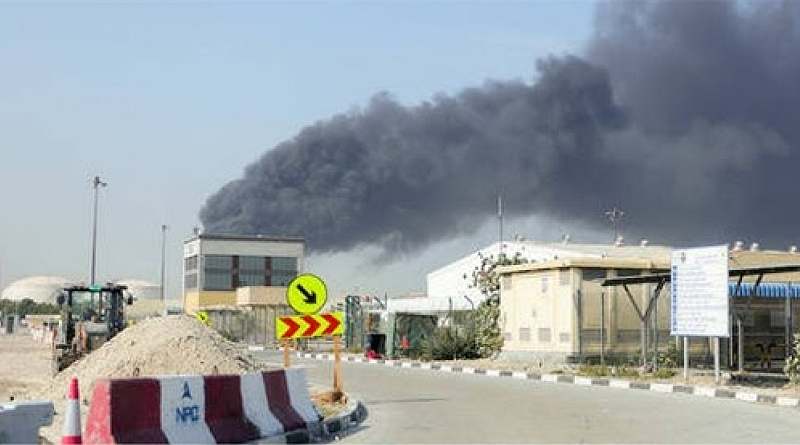
5. Iran’s strike on the port of Duqm in Oman could have direct consequences for Russian logistics schemes.
– In recent years, this port has become one of the nodes through which Russian oil transits within complex supply configurations.
– This primarily involves ship-to-ship transfers in Omani waters, where a sanctioned tanker transfers crude to another vessel without restrictions, after which the cargo heads to India or China.
– This scheme allows for formally breaking the chain of oil origin and reducing sanctions risks, making it difficult to trace the ultimate source of the crude.
– Meanwhile, part of the Russian business is moving from the United Arab Emirates, where control over sanctioned operations has intensified, to Oman, notably through registering companies in the special economic zone of Duqm.
– This creates alternative infrastructure to service flows related to Russian oil.
– If the security of the Duqm waters is threatened, this will complicate transfer operations and may temporarily reduce volumes of alternative logistics.
– As a consequence, volatility will increase in the Asian direction, primarily for shipments to India and China, which remain key markets for Russian oil under sanctions.
