

Information on current losses of Russia due to sanctions as of 01/27/2026.
1. A sharp drop in prices for Russian oil and its sale at almost a 50% discount to world prices forced “Lukoil” to seek help from the state.
– The largest private oil company in Russia, under US sanctions, asked the government to change tax rules to receive payments from the federal budget again.
– This involves adjusting the damping mechanism, which previously allowed oil companies to receive compensation from the budget. Due to deep discounts on Russian oil, this mechanism now works against the companies: in December, they have to pay about 13 billion rubles to the budget. “Lukoil” proposes to limit the discount considered for taxation to avoid these payments and shift the losses to the state.
– The financial situation of the industry is rapidly deteriorating. In the first half of 2025, Lukoil’s profit halved, and Rosneft lost two-thirds of its profit over nine months.
– The situation shows that even the largest oil companies in Russia increasingly rely on budgetary support amid sanctions, market losses, and a collapse in export revenues.
2. Russian businesses do not believe in controlling inflation: companies are planning for almost twice the rate of price growth promised by the Central Bank.
– Russian companies do not trust the official inflation forecasts and are preparing for significant price hikes in 2026, as evidenced by a survey of enterprises conducted by the Central Bank of Russia.
– According to the monitoring results, while forming business plans for 2026, companies are based on an annual inflation rate of 9.3%. This is almost twice the official Central Bank forecast, which expects price growth within 4–5%.
– Such expectations reflect deep business distrust of the Kremlin’s macroeconomic policy and fears about the consequences of sanctions, import shortages, rising costs, and a weakening ruble. High inflation expectations are embedded in prices, wages, and investment decisions, which in itself fuels the inflationary spiral.
– The situation indicates a systemic issue: even with officially “calm” figures, the Russian economy operates under constant price increase expectations, undermining investments, long-term planning, and the purchasing power of the population.
3. “Aeroflot” massively canceled flights due to a failure in the Russian reservation system.
– In Russia, there was a major disruption in the Leonardo booking system, which the authorities positioned as a replacement for Western services after 2022. Due to the failure of the system, “Aeroflot” was forced to cancel almost all flights from Sheremetyevo and Vnukovo airports for several hours. According to airport boards, the company canceled most of the scheduled departures between 16:00 and 19:00, with some flights delayed.
– Passenger registration, ticketing, and baggage processing issues were also reported by other Russian airlines, and the disruption even affected Belarusian “Belavia.” The state corporation “Rostec,” which was involved in the development of Leonardo, explained the incident as “network infrastructure failures.”
– This is the second major Leonardo disruption in the last two and a half years. The system supports about 80% of bookings for Russian airlines and is critically important for the entire industry.
– The incident again raised doubts about Russia’s ability to ensure the stable operation of key digital services after moving away from Western technologies. Instead of “sovereign solutions,” Russian aviation received a vulnerable and unstable infrastructure, the failures of which paralyze transportation at the national level.
4. Russia is reducing its civil merchant fleet construction program due to a lack of funds.
– The Russian government has almost halved plans to build RSD59 project cargo ships as part of a preferential leasing program. According to an updated order from the cabinet, in 2023–2028, the State Transport Leasing Company (GTLK) is to lease only 18 river-sea class vessels.
– The total cost of the project is estimated at nearly 30 billion rubles, with over 23 billion planned to be drawn from the National Welfare Fund, which the Kremlin is already actively depleting to cover budget gaps and finance military expenditures. The remaining funds are borrowed, further increasing financial risks.
– In 2024, GTLK did not receive any cargo ships. The key reason is the financial collapse of the “Krasnoye Sormovo” shipyard, where the actual construction costs were significantly higher than contract prices, leading to chronic losses. As a result, the delivery dates for the ships were postponed to 2025–2028.
– Formally, eight ships were supposed to be handed over last year, but there are no public confirmations of this. This is not just about reducing a specific program, but about a systemic crisis in Russian civil shipbuilding, which has proven unable to operate without large-scale subsidies from the NWF.
– Even these reduced plans appear increasingly unrealistic amid the depletion of reserves and the prioritization of resources for the war.
5. On January 26, the Council of the European Union officially approved a regulation on the phased withdrawal from Russian gas imports, securing the political decision with strict financial enforcement mechanisms.
– Breach of the ban on the import of Russian LNG and pipeline gas will result in fines of at least €40 million or at least 3.5% of the company’s global annual turnover.
– An alternative sanction is a fine of 300% of the turnover from prohibited gas transactions, making any such operations economically pointless.
– For individuals, a fine of no less than €2.5 million is provided. A full ban on the supply of Russian LNG to the EU will come into effect at the beginning of 2027, and on the purchase of pipeline gas from September 30, 2027.
– Thus, Russia finally loses even residual access channels to the European gas market.
6. The European Commission announced its intention to prepare a bill providing for the phased refusal of Russian oil imports by the end of 2027.
– This is another element of the EU’s long-term strategy to dismantle energy dependence on Russia, increasingly viewed in Brussels not as an economic asset but as a systemic geopolitical risk.
– Formally, Moscow has almost lost the European oil market: by the end of 2025, the share of Russian oil in EU imports fell below 3%.
– This is a direct consequence of sanctions and structural supply restructuring. In the gas segment, the situation for Russia remains less catastrophic, but the trend is also clear: about 13% of gas imported by the EU is still of Russian origin — about €15 billion per year.
– In Brussels, this residual volume is openly called a vulnerability for trade and energy security.
– For Russia, this means a gradual but irreversible loss of one of the most solvent and regulated sales markets. The EU consciously opts for more expensive and less stable alternatives to deprive the Kremlin of income and leverage.
– Strategically, this is an investment in reducing dependence on a country that has turned energy resources into a tool of war and blackmail.
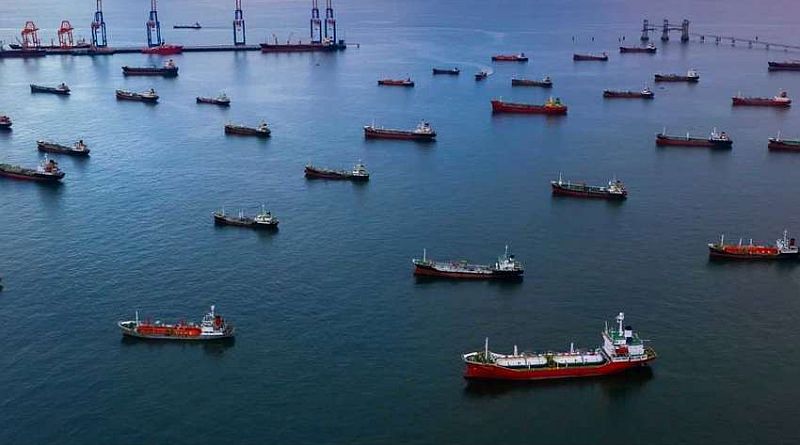
7. Several countries have issued a warning regarding Russia’s “shadow fleet” tankers.
– A group of 14 European countries issued an open warning to Russia’s “shadow fleet” tankers in the Baltic and North Seas. The statement was published by the UK Ministry of Defence.
– The statement states that vessels can only sail under the flag of one state and must have valid safety and insurance documents.
– The signatories emphasized that tankers not complying with these requirements will be regarded as stateless vessels. Additionally, they accused Russia of interfering with satellite positioning and navigation systems.
– They stated in their declaration that the global maritime community must cooperate to develop alternative terrestrial radionavigation systems to be used as backups in case of satellite system disruptions.
– They warned that automatic ship identification systems should not be subject to interference.
– Among the signatories: Belgium, Denmark, Estonia, Finland, France, Germany, Iceland, Latvia, Lithuania, the Netherlands, Norway, Poland, Sweden, and the United Kingdom.
8. Russia continues to demonstratively ignore the sanctions regime, sending a batch of LNG through the Red Sea for the fifth time since January 2024.
– This concerns a gas carrier that transports a sanctioned cargo and is itself under restrictions, highlighting the systemic nature of sanction evasion with the tacit support of third countries.
– The vessel proceeds without an officially designated destination, but in professional circles, there is no doubt: the ultimate buyer will be China.
– Beijing increasingly serves as a “safe harbor” for Russian energy resources, allowing the Kremlin to partially compensate for the loss of European markets and maintain currency inflows despite international isolation.
– The fact that sanctioned gas carriers regularly pass through the high-risk area of the Red Sea indicates not only Moscow’s audacity but also the limited effectiveness of existing control mechanisms.
– For Russia, this is a way to maintain LNG exports at any cost, even if logistics become more expensive, risks higher, and dependence on a single major buyer critical.
