

Information as of 09.02.2026 on current losses of the Russian Federation due to sanctions.
1. Strikes on refineries cost the Russian oil industry more than a trillion rubles.
– Ukraine’s campaign of strikes on Russian refineries dealt a critical financial blow to the Russian oil industry. The total losses of the companies have already exceeded 1 trillion rubles, according to insurance market estimates.
– According to an insurance broker, direct damages from drone attacks exceeded 100 billion rubles, and considering lost revenue and indirect consequences, the overall economic impact surpassed a trillion.
– In 2025, Ukrainian forces conducted about 160 successful strikes on oil extraction and refining facilities in Russia. The most intense attacks occurred in September-October: 6 refineries, 2 oil terminals, 3 oil depots, and 9 pumping stations were hit.
– The result was a systemic degradation of the industry. In 2025, oil supplies to Russian refineries fell to a 15-year low of 228.34 million tons, 1.6% less than the previous year. The total processing volume decreased by 1.7%, to 262.3 million tons.
– The decline in processing and increased losses indicate that strikes on energy infrastructure are depriving the Kremlin of one of the key sources of income, deepening financial pressure on the Russian economy.
2. The Russian gas industry continues to decline: production fell by more than 3% in 2025.
– In 2025, Russia reduced total gas production by 3.3% to 662.7 billion cubic meters, according to Rosstat data. This includes both natural gas and associated petroleum gas, confirming a prolonged decline in the Kremlin’s strategic industry.
– Natural gas production decreased by 3.1% to 561.1 billion cubic meters. Even a traditionally strong December did not save the annual figures: 53.2 billion cubic meters, 4.2% less than in December 2024. The situation is even worse with associated petroleum gas: its production fell by 4.2% to 101.6 billion cubic meters, with 25.1 billion cubic meters flared — 6.8% more than the previous year.
– This indicates a loss of markets and infrastructure degradation. Problems are also felt in the domestic market. A subsidiary of Gazprom — Gazprom Mezhregiongaz — reduced gas supplies to Russian consumers by approximately 4% to 258.4 billion cubic meters.
3. Oil production in Russia is falling for the second consecutive month.
– In January, Russia reduced oil production for the second consecutive month. The average production level dropped to 9.28 million barrels per day, indicating a deepening crisis in the oil sector due to American sanctions and export complications.
– Compared to December, production decreased by 46,000 barrels per day, and the gap from the quota set for Russia under the OPEC+ agreement is about 300,000 barrels per day.
– For comparison: in November, Russia produced 9.43 million barrels, in December — 9.33 million. Official production statistics remain classified, and the Russian Ministry of Energy refrains from commenting on the situation.
– Further production reduction threatens Russia with losing its share in the global oil market, which could be quickly taken over by other OPEC+ countries.
– The situation is complicated by a sharp increase in the volume of unsold oil. By early February, about 143 million barrels of Russian oil had accumulated on tankers — almost twice as much as a year ago. This indicates a shortage of buyers and distribution delays due to increased U.S. pressure.
– The production decline directly impacts Russia’s budget: last year, almost 23% of federal budget revenues were provided by oil and gas revenues. In January, these revenues fell to a five-year low due to declining global prices, increasing discounts on Russian oil, and the strengthening ruble.
4. Russia’s freight traffic on the Northern Sea Route falls again.
– Russia’s plan to increase freight transport via the Northern Sea Route (NSR) has failed for the second consecutive year. In 2025, 37.02 million tons of cargo were transported through the Arctic route, which is 2.3% less than in 2024 (38 million tons).
– Russia has not come close to its goals — 80 million tons by 2024 and 200 million tons by 2030. Actual figures were more than twice as low as planned.
– Despite the NSR shortening the path to Asia by 7–10 days compared to the Suez Canal route, international interest in Russia’s Arctic remains minimal.
– In 2025, 60% of the total freight traffic (22.2 million tons) consisted of domestic Russian export.
– The structure of transportation emphasizes the raw material dependence of the route: 83% of volumes were LNG, oil, and gas condensate. The main supplies came from the “Yamal LNG,” “Arctic LNG-2,” NOVATEK projects, and “Gazprom Neft.”
– The decline in NSR transport demonstrates that sanctions, limited access to the fleet, and weak demand from foreign partners are disrupting the Kremlin’s key infrastructure plans, despite years of propaganda about the “Arctic breakthrough.”
5. Since the beginning of the full-scale war, Russia has transported about 550 million tons of oil (≈4 billion barrels) through the English Channel and earned 239 billion pounds sterling, using the so-called “shadow fleet.”
– From 2022 to 2025, tankers with Russian oil made 9,584 trips through the Dover Strait. The peak occurred in 2023–2024, with the number of passages nearly tripling compared to 2022.
– A significant portion of the vessels are under sanctions, operate without AIS or with fake signals, and engage in dangerous open-sea oil transfers. The actual fleet size is estimated at up to 1,400 vessels, much larger than EU and UK sanction lists.
– The main buyers of Russian oil are India and China. India alone received oil worth £85.5 billion from 2022 to 2025, with volumes sharply increasing after the war began.
– The UK and allies are preparing tougher actions: intercepting tankers, creating a naval command center, and using unmanned vessels to control the English Channel and North Sea.
– Due to wear and breaches of rules, a major oil spill in European waters is just a matter of time, and current sanctions remain insufficiently effective.
6. Major Indian oil companies have begun refusing to purchase Russian oil.
– State-owned oil companies Indian Oil and Bharat Petroleum, as well as the private Reliance Industries, have stopped accepting bids for Russian oil shipments in March–April. The companies intend to maintain this position to avoid complicating trade deal negotiations between India and the USA.
– However, some deliveries for March were previously contracted and continue to be fulfilled. Most other Indian refineries have also halted purchases of Russian oil and may return to them only upon direct government recommendation.
– An exception might be made for Nayara Energy, a private company connected to Rosneft and under EU sanctions. Meanwhile, in April, Nayara’s refinery, with a capacity of around 400,000 barrels per day, plans to pause for a month of technical maintenance.
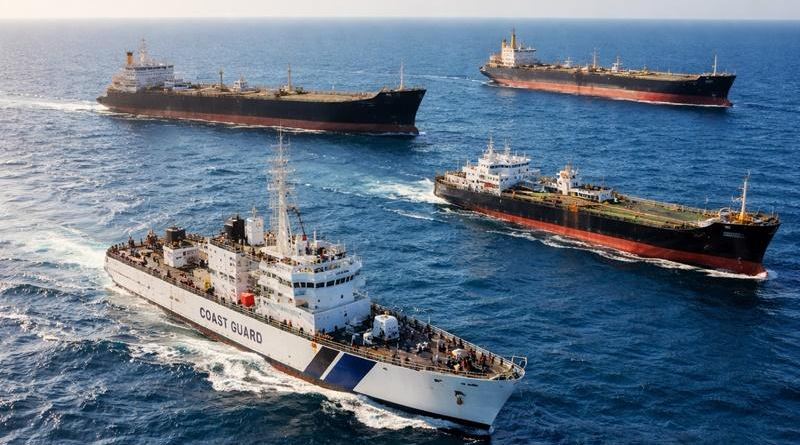
7. India has joined the fight against the global ‘shadow fleet’: three oil tankers detained off the coast of Mumbai.
– The operation took place on February 6 with the participation of naval forces and aviation. According to Indian military sources, the detained vessels were involved in smuggling operations and were under the control of a “global criminal syndicate.”
– The tankers are suspected of transporting oil from conflict-affected regions and transferring oil from ship to ship in open waters to evade customs and avoid taxes.
– All three vessels, AL JAFZIA, ASPHALT STAR, and STELLAR RUBY, are under US sanctions. They were brought to the port of Mumbai for further investigations.
– India’s actions are part of a broader international campaign against the ‘shadow fleet,’ intensified at the beginning of the year by the United States and its partners.
8. The EU may release frozen Russian assets from Euroclear.
– The European Union is considering transferring around 210 billion euros of frozen Russian sovereign assets from the Belgian depository Euroclear to another depository under EU control.
– Such a move would allow Brussels to more actively use Russian funds for the benefit of Ukraine and alleviate politically sensitive risks from Belgium.
– Currently, the majority of Russian assets are blocked in Euroclear, and the Belgian authorities are restraining their use due to fears of legal claims from Russia.
– Transferring the accounts to a new European depository would enable the EU to act independently — without formal confiscation, but with broader possibilities for financing Ukraine’s defense and recovery.
– Amidst this discussion, the EU has already been forced to independently raise 90 billion euros in credit funds to support Kyiv. These resources cover only about two-thirds of Ukraine’s needs for the next two years, reinforcing arguments in favor of using frozen Russian assets.
– At the same time, Russia’s financial situation is deteriorating: budget revenues are shrinking due to falling global oil prices and increased sanctions. Losing actual control over hundreds of billions of euros abroad becomes an additional blow to the Kremlin and undermines its ability to finance a prolonged war.
– Brussels emphasizes that even the preparation to transfer the assets is already a signal to Moscow: the EU is ready to act more decisively and use financial pressure levers against the aggressor country.
