

Information on Russia’s current losses due to sanctions as of 24.03.2026.
1. The Russian government has effectively acknowledged the onset of an economic decline.
– During an economic meeting, Putin stated that at the beginning of 2026, the country’s key macroeconomic indicators are showing negative trends.
– In January, Russia’s gross domestic product fell by 2.1% year-on-year, and industrial production decreased by 0.8%. This is the first GDP decline since 2023.
– The situation is worsening amid a sharp slowdown in economic growth. Last year, the official economic growth rate fell to 1%, which is almost five times less than the previous year.
– Most industrial sectors ended the year with a decline. Out of 28 key industries, 21 were in the negative. Mineral extraction fell by 1.6%, metallurgy by 2.1%, and clothing and footwear production by 3.5%.
– For the first time in 15 years, food production also decreased by 0.5%. The financial condition of the budget is also deteriorating. In the first two months of 2026, the federal budget deficit already reached 3.5 trillion rubles due to falling revenues.
– The authorities may lower the economic growth forecast for the current year to about 0.7% and are preparing to cut budget expenditures by approximately 10%. Most expenditure items, except for military and protected social payments, may be subject to sequestration.
– The economic slowdown threatens additional tax revenue declines. Economists estimate that the budget may miss about 500 billion rubles in VAT and another 100-200 billion rubles in profit tax.
– Considering possible expenditure overruns, the budget deficit could rise to almost 8 trillion rubles.
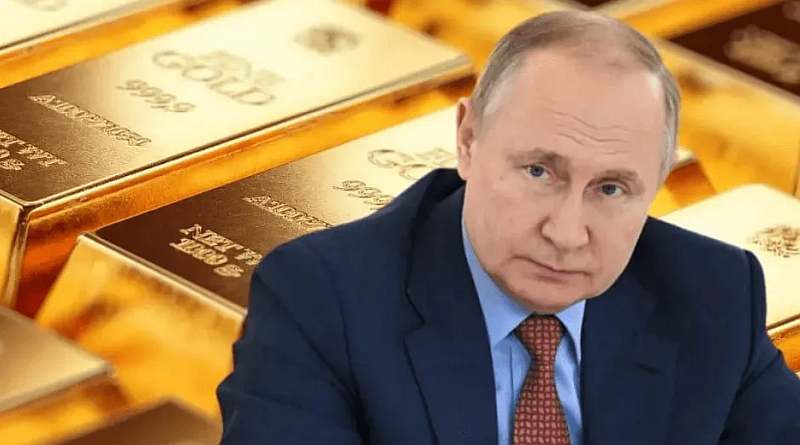
2. For the first time since the early 2000s, Russia began selling gold from international reserves, attempting to cover the growing budget deficit that has formed amid a sharp increase in military spending.
– According to the Central Bank of Russia, around 300,000 ounces of gold were sold in January, and another 200,000 ounces in February. Consequently, the country’s gold reserves have decreased to 74.3 million ounces, the lowest level in the past four years. In total, Russia sold about 14 tons of gold over the two months.
– Estimates by the World Gold Council suggest this is the largest reduction in gold reserves since the second quarter of 2002, when reserves decreased by 58 tons. Authorities are trying to preserve the remaining liquid foreign currency assets, primarily Chinese yuan, which remain practically the only currency available for foreign exchange interventions. After the imposition of Western sanctions, approximately $300 billion of Russian reserves were frozen abroad, and the structure of the remaining assets is classified. Fiscal pressure on the budget continues to grow.
– The cumulative deficit of Russia’s federal budget for 2022–2025 exceeded 15 trillion rubles, with an additional 3.5 trillion added in just the first two months of 2026.
– Selling gold appears to be a forced step to finance expenses, a significant portion of which is directed towards the war against Ukraine.
3. The Saratov oil refinery of Rosneft has halted oil processing after a drone attack.
– On March 21, the primary oil processing unit AVT-6 — the only one at the plant — was halted. Its nominal capacity is around 20,000 tons of oil per day. As a result, the operation of the refinery is practically completely stopped.
– Preliminary estimates suggest the downtime of the unit may last at least a week. Earlier, regional authorities reported a nighttime drone attack on civilian infrastructure facilities in the region, but without direct mention of the oil refinery.
– The incident is yet another blow to Russia’s oil refining infrastructure, creating additional risks for fuel supply stability within the country and reducing oil processing capabilities.
4. The Russian steel industry might become the new “headache” for the Kremlin.
– The industry is facing new problems due to the economic slowdown and declining demand. Leading producers have begun to cut capacity due to a weak domestic market and limited export options.
– One of the country’s largest steel producers, Magnitogorsk Iron and Steel Works, announced the conservation of some underloaded production capacities, reduced investments, and decreased management staff by about 10%. The enterprise is operating at approximately 60% capacity and remains loss-making.
– The company has already conserved one coal mine, halted some production lines, and put others into a reduced operating mode. Employees of retirement age are offered early retirement.
– The crisis in the industry is associated with several factors: high interest rates in the economy, global steel overproduction putting pressure on prices, and sanctions significantly limiting the export opportunities of Russian metallurgists.
– The risk of production cuts may become long-term since domestic demand remains weak. Traditionally, the Russian market accounts for about 60–70% of steel product consumption, and without its recovery, talking about industry stabilization is premature.
5. For the first time since the start of the full-scale war against Ukraine, Russian Urals oil is being sold at a premium to the benchmark Brent on the Indian market.
– According to Argus Media, the delivery price of Urals to the west coast of India reached $121.65 per barrel, the highest since the beginning of 2023. Meanwhile, in Russian ports, the average price was about $89.6 per barrel, significantly lower than the final cost, highlighting losses due to logistics, intermediaries, and sanctions risks.
– In fact, a significant portion of the added value resides outside the Russian economy. Indian oil refining companies, particularly major market players, actively purchase Russian oil. However, such dependence on one or two buyers only increases the vulnerability of Russia’s export model. Any changes in demand or political circumstances can quickly undermine these revenues.
– Despite current prices exceeding the budgeted level of $59 per barrel in Russia, the effect of this increase is limited. The Kremlin is forced to delay fiscal restrictions not due to stable revenues but due to a situational price increase caused by external factors, including tensions in the Middle East.
– Moreover, the previous reduction in India’s purchases of Russian oil has already demonstrated how quickly Russia can lose key sales markets. In such conditions, even a short-term price increase does not compensate for structural problems: dependence on a limited number of buyers, discounts, opaque sales schemes, and increasing costs to bypass sanctions.
– The current Urals premium to Brent rather reflects a temporary market shortage than a real strengthening of Russia’s position, which remains a hostage to external circumstances and sanction pressure.
6. Russia has decided not to change the rules for spending state reserves due to the rise in oil and gas prices for the time being.
– The jump in oil prices has temporarily eased the pressure on Russia’s state finances. The price of oil has risen approximately from $70 to over $100 per barrel, and gas prices have also increased.
– According to estimates by the Russian government, oil and gas revenues in April may increase by about 70% compared to March — to around 0.9 trillion rubles. The current budget rule sets a base oil price at about $59 per barrel, and all revenues above this level are directed to Russia’s National Welfare Fund.
– Initially, the Russian government planned to change the rule’s parameters to increase long-term reserves, but now this decision is likely postponed until at least 2027.
– Despite the temporary increase in energy revenues, the budget situation remains tense. Earlier, the authorities considered cutting expenditures, but due to rising oil prices, the issue of sequestration remains open.
– The main part of the fund’s assets is held in Chinese yuan. The temporary suspension of currency sales from the fund led to a weakening of the ruble by about 6% in March.
– Meanwhile, short-term rises in energy prices do not solve the systemic problems of Russia’s economy, which remains critically dependent on raw material exports and fluctuations in global energy markets.
7. Hungary’s dependence on Russian oil undermines the EU’s efforts to completely abandon Russian energy resources.
– In 2025, the share of Russian oil in the country’s imports reached 93% compared to 61% in 2021. At the same time, dependence on Russian gas and nuclear fuel also increased.
– This model was deliberately entrenched by the Orban government through the use of sanction exceptions, long-term contracts, and related business structures. The European Union plans to stop importing Russian LNG by the end of 2026, pipeline gas by September 30, 2027, and oil by the end of 2027. Meanwhile, there are several loopholes that allow Russia to maintain supplies through third countries, including Turkey, Azerbaijan, and the Western Balkans.
– By the time of the full embargo, the total volume of such imports could reach €13.4 billion. The Hungarian oil and gas company MOL Group gains the most benefit from importing cheap Russian oil.
– In 2025, its profit increased by approximately 15% — to about €1.3 billion. However, this advantage is almost not reflected in consumer prices: the cost of gasoline and diesel before taxes in Hungary remains higher than in neighboring Czech Republic.
– Such an energy policy effectively helps Russia maintain revenues from energy exports and weakens the European strategy of energy separation from Russia.
8. In the European Union, concern is growing about possible leaks of confidential information to Russia through political channels within Europe itself.
– The German party “Alternative for Germany” (AfD) is under suspicion, whose representatives have access to the EU’s internal document database EuDoX.
– This concerns a system where tens of thousands of service materials are stored — from preparatory notes for ministerial meetings to reports on closed diplomatic consultations. Some of these documents contain sensitive information, including the use of frozen Russian assets to support Ukraine.
– Several European diplomats and German parliamentarians express concerns that access to this database may be used to transfer data to Moscow.
– In particular, the head of the Bundestag EU Affairs Committee, Anton Hofreiter, explicitly stated suspicions about possible leaks of information to Russia and China. The situation is complicated by the fact that Bundestag deputies have wider access to the EU’s internal documents than parliamentarians in most other countries, which creates additional security risks for information.
– Against this background, there are increasing calls in the EU to review the mechanisms for accessing sensitive data. The story of potential leaks once again emphasizes that Russia continues to actively use political and information channels in Europe to obtain data it deems advantageous. This indicates attempts by the Kremlin to influence the internal processes of the EU not only through economic or military means but also through political forces loyal to Moscow.
9. Lithuanian customs uncovered another scheme for circumventing EU sanctions, used for transporting goods to Russia.
– At the customs checkpoint in Vilnius, two DAF trucks traveling from the Netherlands to Russia were stopped. The carrier was listed as a Lithuanian company in the documents, while the drivers were Belarusian citizens.
– During the inspection, it was discovered that the vehicles were equipped with special mechanisms to change license plates: with the push of a button, Lithuanian plates were replaced with Russian ones.
– Additionally, the drivers were found to have registration documents for the vehicles issued for the same trucks, with identification numbers matching the VIN codes of tractors officially registered in the European Union. According to the investigation, both vehicles were initially registered in Lithuania and later in Russia, allowing for dual identification.
– Customs authorities suspect that the license plate swapping was used to circumvent sanctions that expressly prohibit cargo transportation between the EU and Russia for both European and Russian carriers.
– This scheme effectively allowed the “masking” of the transport’s origin and evading control when crossing the border. The discovered case indicates increasingly complex and technological attempts to bypass sanction restrictions, involving intermediaries, fictitious companies, and carriers from third countries.
– This underscores the dependence of the Russian economy on gray supply schemes and its inability to function under transparent international trade rules.
