

Information on current losses of the Russian Federation due to sanctions as of 11.03.2026.
1. Ukrainian drones attacked a chemical plant in Tolyatti.
– On the night of March 11, drones attacked the Samara region of Russia. According to photos and videos released by local residents, the KuybyshevAzot chemical plant in Tolyatti was hit. A fire started on the premises after the attack.
– KuybyshevAzot is among the top ten largest enterprises in Russia’s nitrogen industry. The plant produces caprolactam, polyamide-6, technical threads, ammonium nitrate, urea, ammonia, ammonium sulfate, and other chemical products.
– Besides Tolyatti, explosions also occurred in Samara and Syzran. According to Russian sources, at least ten explosions were heard there, and a fire broke out in one of the districts of Syzran.
– Drones also attacked Taganrog and several areas in the Rostov region, where a power line was damaged.
2. The Armed Forces of Ukraine struck a microelectronics manufacturer for Russian missiles in Bryansk.
– On March 9, Ukrainian forces launched a missile strike on the “Kremniy EL” plant in Bryansk, one of the key enterprises of Russian microelectronics, producing components for missile systems and drones.
– Eyewitness videos published by monitoring resources indicate a series of hits on the enterprise’s territory — according to preliminary estimates, up to ten missiles could have been used. After the strike, a large cloud of smoke rose over the plant, and there are reports of possible detonation.
– The “Kremniy EL” enterprise is one of the largest microelectronics manufacturers in Russia. The plant produces over 1,200 types of products, including components for missile systems, air defense systems, and drones. Its products are used in systems such as “Pantsir,” “Iskander,” “Topol-M,” “Bulava,” S-300 and S-400, as well as in electronic warfare and radar systems.
3. Russia’s budget deficit exceeded 3.4 trillion rubles in two months.
– The federal budget of Russia ended January–February 2026 with a deficit of 3.449 trillion rubles, which is almost 1.5 times more than the same period last year, according to data from the Ministry of Finance of the Russian Federation.
– The decline in revenues is largely due to reduced income from the energy sector. Oil and gas revenues almost halved — to 826 billion rubles due to the drop in prices for Russian oil and forced production cuts.
– Non-oil and gas revenues increased by only 4.1% — to 3.94 trillion rubles, but accounting for inflation, they actually decreased by 1.6%. Meanwhile, budget expenditures significantly exceeded revenues: 8.21 trillion rubles compared to 4.76 trillion in tax revenues.
– Thus, the deficit for the first two months of the year almost reached the planned figure for the entire year of 2026, which is 3.78 trillion rubles.
– Russian authorities are already considering changing the budget rule to allow more active use of the National Welfare Fund to cover the deficit.
– Since the reduction of military spending in Russia is practically not considered, the spending on the civilian economy, which is already showing signs of stagnation, may be at risk.
4. Inflation in Russia during Putin’s rule exceeded 900%.
– Since Putin came to power, consumer prices in Russia have increased more than tenfold. According to calculations based on Rosstat data, from 2000 to the end of 2025, cumulative inflation amounted to about 930%.
– If at the beginning of 2000, goods and services cost 100 rubles, by the end of 2025, their average price was about 1033 rubles. Thus, over 26 years, prices increased by 10.3 times.
– On average, inflation in Russia was about 9.4% per year, meaning a rapid loss of purchasing power, as at this rate, the real value of savings halves every 7-8 years.
5. Rising freight costs restrain Russia’s oil export revenues.
– Despite the sharp increase in the price of Russian Urals oil, the soaring cost of maritime transport limits Russian exporters’ income. The price of Urals on an FOB basis in Russian ports exceeded $70 per barrel, reaching its highest point in the last 2-3 years due to the war in the Middle East and rising global oil prices.
– The cost of a batch of Urals loaded onto a 100,000-ton tanker at the port of Primorsk rose to about $54 million compared to about $35 million in February.
– At the same time, the sharp increase in freight costs significantly reduces Russian sellers’ profits. Rates for transporting oil from Russia’s Baltic ports to India rose to $22-23 million per trip, almost twice as much as at the beginning of February, and $5-8 million higher than at the end of last week.
– Freight for transporting oil from the port of Novorossiysk to India also exceeds $20 million per trip. The market is experiencing a shortage of tankers, which is driving prices to almost record levels.
6. The EU urged the US to strictly adhere to the price cap on Russian oil.
– The European Commission has called on the United States to strictly enforce the price ceiling on Russian oil set by the G7 countries.
– The statement came after Washington announced a temporary easing of certain sanctions related to Russian oil, explaining it as necessary to support supply stability and curb rising global prices.
– The European Commission emphasized that strict adherence to the price limit is critically important and did not rule out the possibility of a complete ban on the provision of maritime services for the transportation of Russian oil to limit Russia’s war revenues.
– In Brussels, it was warned that easing restrictions could have the opposite effect: it would increase Russia’s financial resources to continue the war against Ukraine, weaken international support for Kyiv, and could negatively impact Western efforts to contain Iran.
7. China purchases about 1 million barrels of Venezuelan oil.
– China will purchase about 1 million barrels of heavy Venezuelan Merey oil. This is the first shipment after a U.S. military operation in Venezuela.
– Currently, about 950,000 barrels are being loaded onto the tanker Skage, which is set to depart for the Chinese port of Qingdao. The supply is operated by the company North American Blue Energy Partners. The cost of the deal is not disclosed.
– In December, China already imported heavy Venezuelan oil at a discount of about $15 per barrel compared to the benchmark Brent brand. Some of the supplies were paid for by repaying loans previously provided by China, including to reduce part of Venezuela’s sovereign debt.
– Previously, the U.S. administration declared its readiness to facilitate the export of Venezuelan oil to China at market prices.
– At the same time, general licenses issued by the U.S. Treasury Department for working with the Venezuelan state oil company PDVSA do not apply to operations related to Iran, Russia, or North Korea.
8. Deliveries of microchips and drones from Portugal to Kyrgyzstan and Kazakhstan have sharply increased after sanctions against Russia were imposed.
– According to the National Institute of Statistics of Portugal, after the start of the full-scale war in Ukraine, direct exports to Russia decreased from over 26 million euros in 2021 to a minimum.
– Instead, shipments to Kyrgyzstan, Kazakhstan, Azerbaijan, Turkey, and the UAE have significantly increased. Specifically, exports to Kyrgyzstan rose from approximately 200,000 euros in 2021 to almost 6 million euros in 2025.
– Among the goods are microchips, semiconductors, electronic equipment, drones, and industrial components that can be used in the defense industry.
– Following the sanctions, direct exports of Portuguese cork to Russia also declined, but sales to Turkey, Kazakhstan, Kyrgyzstan, and the UAE increased significantly.
– Statistical data indicate that since 2022 these countries have been importing more sanctioned goods while simultaneously increasing exports to Moscow, which may assist Russia in circumventing restrictions.
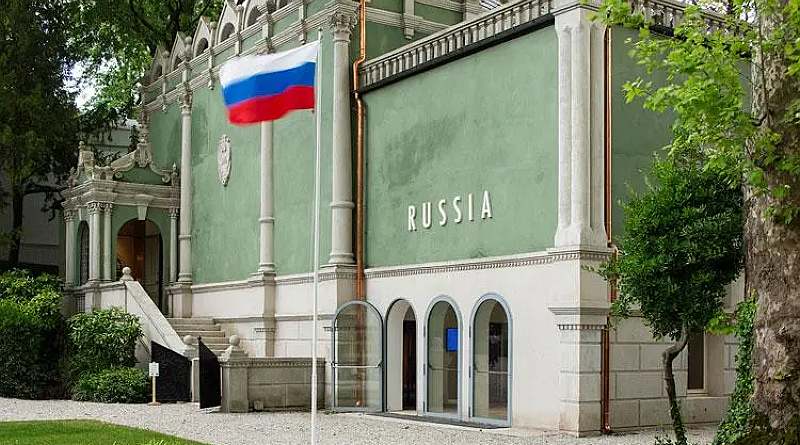
9. The European Commission threatens to withdraw funding from the Venice Biennale due to possible Russian participation.
– The European Commission threatens to suspend or completely cease funding for the Venice Biennale if the organizers allow Russia’s participation in the exhibition.
– The Biennale’s organizing committee previously stated that the Russian pavilion might reopen in May, emphasizing that the exhibition “rejects any forms of exclusion or censorship in culture and art” and should remain a space for dialogue and artistic freedom.
– Brussels sharply criticized this stance, noting that Russia’s return is incompatible with the EU’s collective response to Russian aggression against Ukraine.
– EU commissioners for democracy and culture warned that if the organizers proceed and allow Russia to participate, Brussels might consider additional measures, including the suspension of a three-year grant for the Biennale fund. According to an EU Commission representative, the funding amounts to approximately 2 million euros.
– Additionally, culture ministers from 22 European countries sent a joint letter expressing concern that Moscow might use participation in the exhibition to create an image of international legitimacy.
– The scandal has become politically awkward for the Italian government as well. The country’s Minister of Culture stated that Rome has doubts about Russia’s return but emphasized that the decision is made by the autonomous Biennale committee.
10. The war in the Middle East might accelerate Europe’s move away from Russian gas.
– The shock increase in gas prices due to the war in the Middle East may accelerate Europe’s process of separating from Russian energy resources.
– After Iran’s attack, QatarEnergy, the world’s second-largest exporter of liquefied natural gas, was forced to suspend production, causing European gas prices to rise by almost 50%. This has shown how vulnerable Europe remains to geopolitical upheavals.
– Although Qatar only provided about 4% of the EU’s gas imports in 2025, the loss of these volumes means additional supplies are increasingly coming from the US, the world’s largest gas producer and one of the main LNG exporters.
– As a result, the US may gain additional leverage to accelerate Europe’s complete abandonment of Russian gas, which the West seeks following Russia’s full-scale invasion of Ukraine.
– Despite reducing dependence, Russian gas still accounts for about 10% of the EU’s imports. Brussels plans to completely stop imports by September 2027, but legal loopholes may maintain some dependence even after 2028.
– Meanwhile, in Central and Southeastern Europe, Russian gas remains dominant. Main supplies come through the “Turkish Stream” pipeline, while the state company Gazprom retains a significant share in the regional market.
– One of the key diversification projects could be the “vertical gas corridor,” intended to connect LNG terminals in Greece with Bulgaria, Romania, Moldova, and Ukraine. The project is designed to reorient gas flows in Central and Southern Europe towards Atlantic supplies. American exporters, including Cheniere Energy and Venture Global LNG, have already agreed to supply about 8 billion cubic meters of gas per year under 20-year contracts with Central and Eastern European countries.
– However, the realization of these plans may be hindered by high transit tariffs, limited gas storage, and infrastructural bottlenecks. Without EU financial support, Russian pipeline gas may remain cheaper and retain a competitive advantage.
