
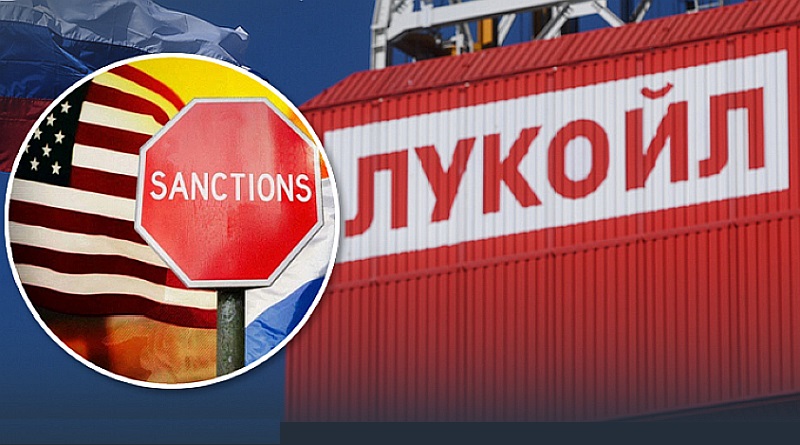

Information on Russia’s current losses due to sanctions as of 27.02.2026.
1. The Russian ruble may collapse by almost a quarter due to a decline in Russia’s oil revenues.
– The Russian ruble may fall by nearly 25% this year amidst a sharp reduction in oil revenues and a growing budget deficit.
– Sberbank CEO Herman Gref stated that the ruble stands no chance of maintaining the levels of 2025, when it strengthened by 45% against the dollar. According to him, the exchange rate could weaken from its current 77 rubles per dollar to about 100 by the end of the year, approximately a 23% decline.
– In fact, the Russian authorities are already preparing for a weaker currency. The finance minister is already planning to direct more funds to reserves, which means reducing foreign currency sales from the National Wealth Fund. These sales previously supported the ruble’s exchange rate.
– Reducing foreign exchange interventions will automatically weaken budgetary support for the ruble.
– The reason for the depreciative pressure is the decline in energy revenues due to sanctions and problems with oil exports. According to the Kremlin, these revenues fell by 24% in 2025 and halved year-on-year in February. Despite this, Russian authorities call the situation “ordinary difficulties.”
2. Russia plans to increase the export of Urals oil to China amid reduced supplies to India.
– Russia is forced to prepare for even deeper discounts on its Urals oil for Chinese buyers.
– The discount may increase by another $2–5 per barrel to the current $10–12 on delivery terms to port, and some traders expect further expansion of the discount in the coming months.
– No new deals on Urals in China have been concluded yet, but negotiations are being prepared from about minus $15 per barrel on DES (delivery ex-ship) terms. This indicates a weakening position of Russian suppliers who have to concede on price to maintain export volumes.
– Despite this, Russian oil imports to China in February may rise for the third consecutive month and potentially reach a record 2.1 million barrels per day.
– The increase in purchases is linked to independent Chinese refineries taking advantage of discounts after a reduction in imports from India. However, market participants caution that China’s demand may be approaching its peak.
– According to a representative of a major Western oil company, April may become a critical month for supplies: small Chinese refineries (“teapots”) will form stocks, after which demand risks declining.
– In this case, Russia may be forced to cut production, as there are practically no alternative large sales markets with similar volumes left for it.
3. Russian “AvtoVAZ” acknowledged a sharp deterioration in the situation on the Russian car market and does not expect a revival before the second half of 2026.
– According to the company’s estimates, the market for new passenger and light commercial vehicles this year can only repeat the weak result of 2025, and the beginning of the year turned out worse than forecasts.
– January and February were the worst in the last 20 years of observations. The industry, which is already significantly reliant on state support and administrative import restrictions, enters the new year with minimal chances for a quick recovery.
– The deterioration in the market is occurring against the backdrop of structural problems within the manufacturer itself. After severing cooperation with the Renault-Nissan-Mitsubishi alliance, the company is essentially having to rebuild its technological processes, while also facing sanctions restrictions, complicated equipment imports, and rising component costs.
– Additional pressure is created by competition from Chinese manufacturers, who are actively increasing their presence in Russia. The combination of factors — technological isolation, a shortage of engineering personnel, limited access to modern components, and dependency on state support — creates long-term risks for the Russian automotive industry.
– In the absence of significant investments and the restoration of external cooperation, the industry risks being mired in prolonged stagnation.
4. The EU seeks G7 coordination for a full ban on maritime services for Russian oil.
– The European Union aims to coordinate with its G7 partners a complete ban on maritime services for exporting Russian oil by sea. Brussels supports the idea of stricter restrictions, but the decision must be synchronized with G7 countries to avoid loopholes and market imbalance.
– The European Commission proposed a full ban on insurance, chartering, financing, and other services related to the transport of Russian oil starting February 6. Currently, a price cap mechanism is in place, lowered to $44 per barrel.
– The potential ban could effectively replace the price cap mechanism and impact over a third of maritime supplies of Russian oil. Meanwhile, the issue remains sensitive due to the position of the U.S., whose support is considered crucial for a coordinated decision within the G7.
– If the initiative is agreed, it could significantly complicate the logistics of Russian oil exports, limiting access to insurance and financial services, without which large-scale maritime shipments are practically impossible.
5. Hungarian MOL threatens lawsuit against Croatian pipeline operator over Russian oil.
– The Hungarian oil and gas group announced its intention to demand permission from the Croatian operator of the Adriatic pipeline for the transit of maritime shipments of Russian oil to Hungary and Slovakia. In case of refusal, the company considers appealing to the European Commission and filing a claim for damages.
– Since the end of January, Hungary and Slovakia have not received Russian oil due to damage to the Druzhba pipeline on the Ukrainian section. Despite claims of technical readiness to resume pumping, supplies have not been renewed.
– In response, the European Commission facilitated the organization of alternative supplies through Croatia, but only for non-Russian oil, which is more expensive and does not fully meet the volume needs.
– The attempt to achieve the resumption of transit of specifically Russian raw materials demonstrates the continued critical dependence of certain Central European countries on supplies from Russia.
– For Moscow, this is a principled issue: the loss of stable export routes to the EU means further reduction of currency revenues and increased pressure on the budget, which already feels the effects of sanctions and declining export price parameters.
6. Hungary blocks the adoption of the 20th EU sanctions package against Russia, attempting to use the situation to gain financial concessions from Brussels.
– According to EU diplomats, Budapest links its position to the delay in approving a €16 billion application within the SAFE defense program. The new package of restrictions proposed on February 6 includes expanded sanctions against Russian energy, the banking sector, goods, and services.
– Its approval requires the unanimity of all member states. Hungary is effectively holding another round of pressure on Moscow hostage through this mechanism.
– Concurrently, the approval of a macrofinancial loan for Ukraine amounting to €90 billion is being delayed. Brussels intended to adopt both decisions by the anniversary of Russia’s full-scale invasion, but Budapest’s stance has derailed the process.
– Hungary applied for €16 billion through the SAFE mechanism — a tool for joint defense purchases to strengthen the EU’s ability to counter Russian aggression. The European Commission has not yet completed its review.
– According to European sources, the initial tranche of €2.4 billion is also progressing slowly. The situation is complicated by the earlier freeze of about €17 billion for Hungary by the European Commission due to rule of law issues.
– Thus, internal contradictions within the EU create additional opportunities for Russia to buy time and ease sanction pressure, directly serving the Kremlin’s interests in the protracted war against Ukraine.
7. The US significantly increases pressure on financial structures servicing Russian flows.
– The U.S. Department of the Treasury, through its FinCEN unit, has initiated the application of a special measure against the Swiss bank MBaer Merchant Bank AG, which, if finally approved, will effectively cut it off from the American financial system.
– The regulator accused the bank of funneling over $100 million through the U.S. financial system in the interests of entities linked to Russia and Iran.
– This includes servicing transactions suspected of money laundering and financing sanctioned individuals, including the Islamic Revolutionary Guard Corps.
– Under the procedure provided by Section 311 of the “Patriot Act,” FinCEN proposes banning American banks from opening and servicing MBaer’s correspondent accounts.
– Such a step would mean the actual loss of access to dollar transactions, a key component of international financial operations. Currently, the decision has the status of a notice with a 30-day period for objections.
– The bank stated its intention to challenge the actions of the American regulator in court. For Russia, this signals a further narrowing of access channels to Western financial infrastructure.
– Even small European banks that handle transactions with Russian ties risk losing access to the dollar system, increasing the toxicity of any transactions linked to Russian capital.
8. The U.S. is slowing down the sale of Lukoil assets to exert pressure on Russia in peace negotiations regarding Ukraine.
– The decision was made by the Office of Foreign Assets Control (OFAC), effectively meaning another delay in the sale process of a portfolio worth about $22 billion. This includes assets from Iraq to Finland—fields, refineries, and gas station networks that the company is forced to sell off following U.S. sanctions against it and state-owned Rosneft.
– OFAC has postponed the deadline for potential buyers for the third time. Washington links the extension of the deadline to the broader negotiation process on Ukraine.
– The American side aims to structure a potential sale so that the Russian company does not receive an initial monetary payment, and the proceeds are placed in a blocked account under U.S. jurisdiction.
– This mechanism minimizes the immediate financial effect for Moscow and limits the use of funds to support the budget and military expenditures. More than a dozen investors, including ExxonMobil, Carlyle Group, and consortia involving Middle Eastern capital, have shown interest in the assets.
– However, due to sanctions risks and political uncertainty, the agreement on terms is delayed. For Russia, this means maintaining a suspended state regarding one of the few sources of potential major liquidity.
– The asset sale is formally possible, but under conditions that do not allow for quick conversion into budget-accessible funds.
– Essentially, this is about using a corporate agreement as an element of sanctions pressure in a broader geopolitical game.
Collage: Center for Counteracting Disinformation
