

Information on Russia’s current losses due to sanctions as of 12.02.2026.
1. On the night of February 12, Ukraine’s defense forces struck the arsenal of the Main Missile and Artillery Directorate (GRAU) near the village of Kotluban in the Volgograd region.
– This caused a large fire and the detonation of ammunition, according to Russian sources. The Russian authorities announced the evacuation of local residents from nearby settlements “for safety due to the risk of new explosions during firefighting.” Local residents are posting messages on social media about powerful explosions and a large fire in the area of the military facility.
– This is not the first attack on this arsenal—an identical facility in Kotluban was hit in September 2024, also resulting in fire and detonations, but the fire did not reach the ammunition depot.
– According to previous reports, batches of missiles, including those of Iranian production, might have been delivered to this facility in 2024.
2. Ukrainian UAVs attacked the Lukoil refinery in Komi, 2000 km from Ukraine.
– On February 12, Ukrainian drones struck the Lukoil oil refinery in the city of Ukhta (Komi Republic), about 2000 km from Ukraine. This is the second attack on the facility since August 2025. A fire broke out on the plant’s premises.
– Monitoring channels Exilenova+ and Supernova published footage of a significant column of black smoke over the plant. According to their information, the strike was carried out by ‘Lutiy’ type drones.
– It is likely that an atmospheric-vacuum distillation unit (AVD), modernized in 2012 with a capacity of up to 2 million tons of raw materials per year, was affected.
– Its damage could impact the production of heavy oil products and road bitumen, as well as subsequent stages of deeper processing. The overall capacity of the refinery in Ukhta is estimated at 4–6 million tons of oil per year.
3. Business activity in Russia has fallen to a minimum since 2022. The Russian economy continues to slow down.
– The Business Climate Indicator (BCI), which the Central Bank calculates based on a survey of about 15,000 enterprises, decreased to 0.2 points in February after 1.5 in January, 2.5 in December, and 3.2 on average for 2025. A zero value separates growth from decline. The February figure was the worst since October 2022.
– Assessments of the current state of business have sharply deteriorated: the corresponding component of the index fell from -4.2 to -7.8 points — the lowest since May 2022.
– Assessments of demand for products have also worsened. The balance of production volume assessments has remained negative since September 2024. In February, it fell to a minimum since last autumn; worse figures were last recorded in the summer of 2022.
– According to a preliminary estimate by Rosstat, GDP growth in 2025 slowed to 1% compared to 4.9% in 2024 and 4.1% in 2023. In the industry, excluding the military-industrial complex, output has decreased in almost all sectors, except for pharmaceuticals and the tobacco industry.
4. Russian businesses are massively requesting government support.
– In Russia, the number of large companies seeking financial assistance from the government is growing amid worsening economic conditions. At least three such cases became known within a week.
– The steel industry is seeking the abolition of the excise tax on crude steel and the mineral extraction tax on iron ore. This could cost the budget about 10 billion rubles ($129 million) per month. The Ministry of Industry and Trade proposed deferring tax payments to the end of the year, but the Ministry of Finance does not consider this idea.
– The Ministry of Transport plans to allocate 65 billion rubles to support Russian Railways — a third of the 200 billion rubles in emergency aid that the state monopoly requested earlier.
– Last week, the largest developer “Samolyot” appealed to Prime Minister Mishustin to provide a preferential loan of 48–50 billion rubles to cover part of the debt. The company faced difficulties after the cancellation of preferential mortgages and amid a high key rate.
– The Russian authorities are looking for up to 1.2 trillion rubles to balance the budget. The liquid reserves of the National Wealth Fund are decreasing, and the Central Bank’s rate, after peaking at 21%, remains at 16%.
5. Russian LNG producer Novatek announces a more than 60% drop in net profit in 2025.
– By the end of 2025, the company’s net profit fell by more than 60% — to 183 billion rubles (approximately $2.37 billion). This is one of the worst results for the gas giant in recent years.
– The company is under Western sanctions and still cannot fully launch its flagship project “Arctic LNG-2”. The plant on the Gydan Peninsula began production back in December 2023, but the first batch of LNG was delivered to final customers in China only in August 2025.
– Delays in shipments, logistical restrictions, and sanction pressure continue to undermine the financial performance of one of Russia’s key gas exporters.
6. Russia’s foreign trade decreased by almost 3% over the year.
– Russia’s foreign trade turnover in 2025 decreased by 2.8% to $697.3 billion. Exports fell by 3.7% to $418.3 billion, and imports declined by 1.4% to $279 billion. The trade surplus decreased by 8.17% year-on-year.
– The decline in imports is attributed to reduced domestic demand, particularly investment demand, amid the tight monetary policy of Russia’s Central Bank.
– The largest contribution to the reduction in exports came from a drop in hydrocarbon revenues. This was partially offset—approximately by two-thirds—by an increase in non-resource exports; however, the overall trend indicates a further weakening of Russia’s foreign trade.
7. Russia’s front losses exceeded contract enlistment.
– Losses of the Russian army in the war against Ukraine have for the first time in a long period exceeded the pace of recruiting new military personnel.
– In January, approximately 9,000 fewer contract soldiers enlisted in the army than were killed and wounded at the front. In December, recruitment almost matched losses, but the new figures indicate a worsening situation for the Russian command.
– Despite significant losses, which sharply increased in winter according to European officials, the Russian army failed to achieve a significant breakthrough.
– Ukraine aims to increase Russia’s losses to 50,000 per month to make it difficult for the Kremlin to replenish the army without a new wave of mobilization.
8. TotalEnergies may halt LNG exports from Russia due to EU ban.
– French company TotalEnergies might be forced to completely stop exporting liquefied natural gas from the Russian project “Yamal LNG” following the EU ban on importing Russian LNG.
– Previously, the company planned to redirect volumes from Yamal to other markets, including Asia, after closing the European direction at the beginning of next year.
– However, it is currently unclear whether the ban will apply only to imports to the EU or also to any activities of European companies related to Russian energy projects.
– According to Energy Aspects, Total has a contract to purchase about 4 million tons of LNG per year until 2032. The Siberian project accounts for approximately 10% of the company’s entire LNG portfolio.
– A complete halt of exports would be an additional blow to the Russian gas sector, already facing constraints due to sanctions and the loss of part of the European market.
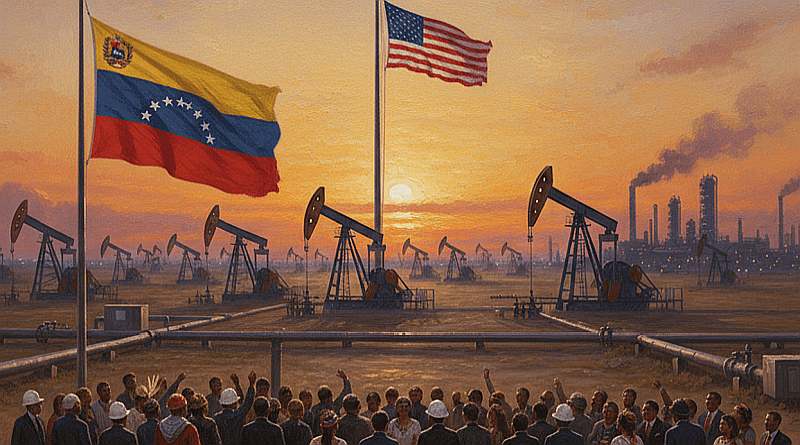
9. The US cut off Russia from deals with Venezuelan oil.
– On February 10, the U.S. Department of the Treasury issued a new license for operations involving Venezuelan oil, which explicitly prohibits Russia’s participation in such transactions. The document was published by the Office of Foreign Assets Control (OFAC).
– The restrictions apply not only to Russian companies and citizens but also to any entities under their direct or indirect control, as well as joint ventures involving them. Iran, North Korea, and Cuba are also subject to the ban.
– It is specifically noted that the restrictions also apply to companies associated with Chinese entities.
– Meanwhile, the license opens opportunities for American businesses: U.S. companies are allowed to conduct the full cycle of oil and gas activities in Venezuela—from exploration and extraction to field development. The permit covers financial transactions, logistics, freight, ship insurance, and port services.
– Thus, Washington simultaneously expands the presence of American companies in the Venezuelan oil sector and blocks Moscow’s participation in these schemes, narrowing another avenue for Russia to circumvent sanctions.
