
Vitaliy Shevchenko, BBC Ukraine
The war in Ukraine has turned into a field of high technology.
The sky above the country buzzes with reconnaissance and combat drones, and unmanned boats have already seriously damaged the Russian fleet in the Black Sea.
Now Ukraine has launched a large-scale program of armed ground robots.
Ground robotic systems (UGV, as they are called in the Ukrainian army) have already proven their effectiveness.
There are reports that ground robots have successfully repelled Russian attacks and even captured enemy soldiers.
It is said that Ukrainian and Russian combat robots have already “met” on the battlefield, with no people present at all.
“Robotic wars are already happening,” asserts Oleksandr Afanasiev, commander of the UGV battalion in the K2 brigade of the Ukrainian Armed Forces. He claims it is the first such battalion in the world.
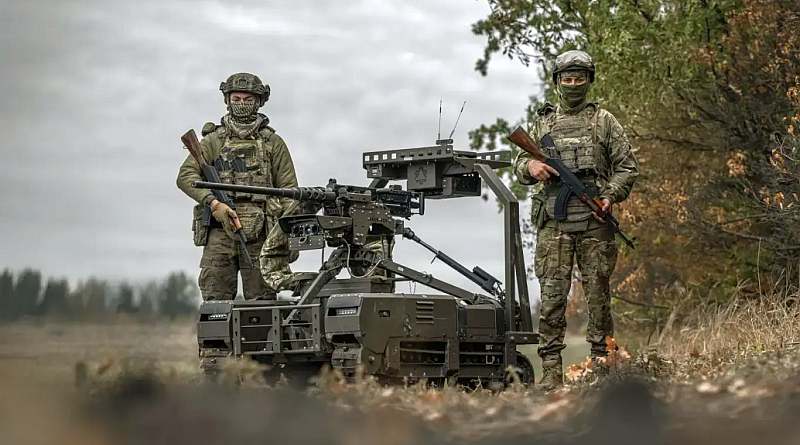
One way to use these robots is by mounting Kalashnikov machine guns on them.
“They open fire in places where a foot soldier would not dare to step. And the UGV can calmly risk its ‘life,'” explains Major Afanasiev.
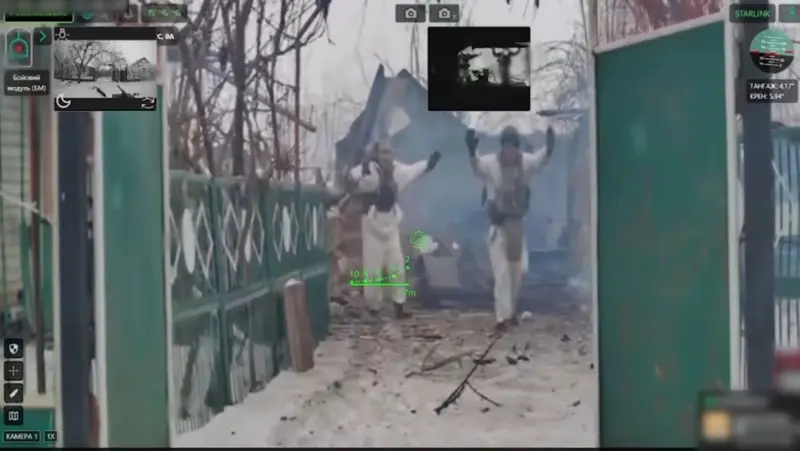
His battalion also uses “kamikaze” – battery-powered UGVs equipped with explosives that destroy enemy positions and shelters.
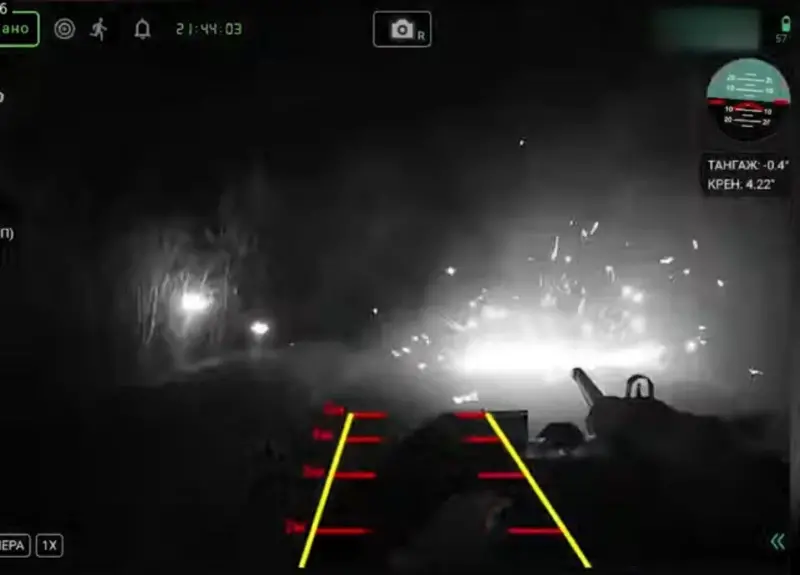
Unlike airborne drones hovering overhead, these robots are almost silent, so the enemy receives no warning of an approaching strike.
The deputy commander of the tank battalion of the 33rd separate mechanized brigade, with the call sign “Afghan,” reports: one Ukrainian robot with a machine gun ambushed a Russian armored personnel carrier, while another protected a Ukrainian position for weeks.
However, Afghan admits: robots have limitations of autonomy on the battlefield. Most of them are related to ethics and international humanitarian law.
“Modern UGVs operate partially autonomously: they move independently, observe and detect the enemy. But the decision to open fire must always be made by a person – the operator,” he explains.
“Robots can mistakenly hit the wrong enemy or harm a civilian, so the last word always belongs to the operator.”
Most armed robots are remotely controlled via the internet from a safe distance.
Diversity of Functions
Ukrainian combat robots can be equipped with machine guns and grenade launchers, lay mines and barbed wire.
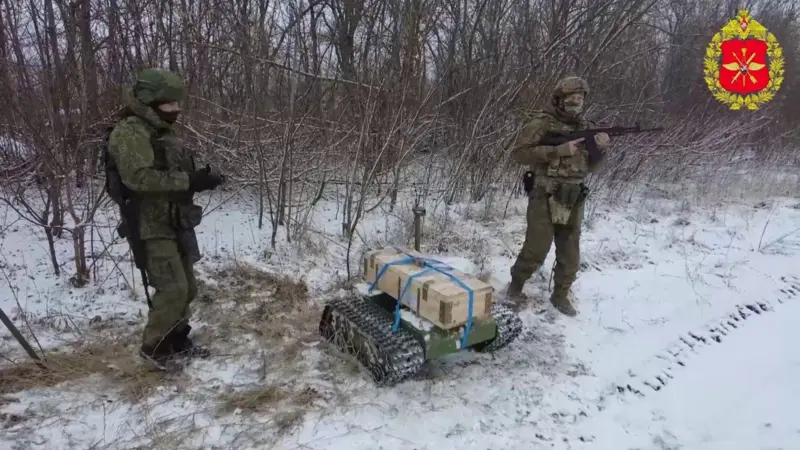
However, most unmanned machines continue to perform traditional tasks: delivering ammunition and evacuating the wounded.
According to Valeriy Zaluzhny, former Commander-in-Chief of the Ukrainian Armed Forces and now Ukraine’s ambassador to the United Kingdom, the role of combat UGVs will soon multiply significantly.
At a conference in London, he noted that strike robots would not operate individually but as part of large groups of drones controlled by artificial intelligence.
“Soon we will see dozens, if not hundreds, of intelligent and cheap drones attacking simultaneously from the air, land, and sea,” he said.
The main driver of the development of these technologies has been necessity.
Aerial drones have made human presence on the battlefield extremely dangerous, expanding Ukraine’s so-called “strike zone” to 20–25 km from the front line.
“UGVs don’t replace infantry, but they help them survive,” explains Major Afanasyev. “Ukraine can afford to lose robots, but not combat soldiers.”
The army faces a severe shortage of personnel, and replenishing losses with new soldiers is becoming more difficult – and that’s where machines come to the rescue.
“Robotic wars – our reality”
Russia is also developing combat robots, such as the Kuryer. According to Russian media, it can be equipped with a flamethrower and a heavy machine gun, like on tanks, and it can autonomously operate for up to five hours.
The Russian army also uses kamikaze robots “Zhabka” to destroy Ukrainian positions.
Clashes between Russian and Ukrainian combat robots on the battlefield are only a matter of time, considering their growing numbers and capabilities, believes Yuriy Porytskyi, CEO of the Ukrainian company Devdroid, which produced hundreds of “strike drones” for the army last year.
“Robotic wars may sound like science fiction, but there’s nothing fantastic about the battlefield. This is our reality,” he says.
Devdroid is working on a system that will allow robots to return to base if they lose connection with the operator.
In the future, machines will be able to independently reach the target, perform tasks – such as monitoring the advancing enemy and engaging in battle if necessary, and returning to base.
Looking to the future
Another Ukrainian ground robot manufacturer, Tencore, produced over 2,000 such machines for the army in 2025.
According to its director Maksym Vasylchenko, demand could rise to about 40,000 units by 2026, with 10–15% of them being armed.
“Strike ground drones will become indispensable, there is no doubt about it,” he assures.
In the future, Vasylchenko predicts that robots will fight in “human form.”
“This will no longer be science fiction.”
Cover photo: Ministry of Defense of Ukraine
