
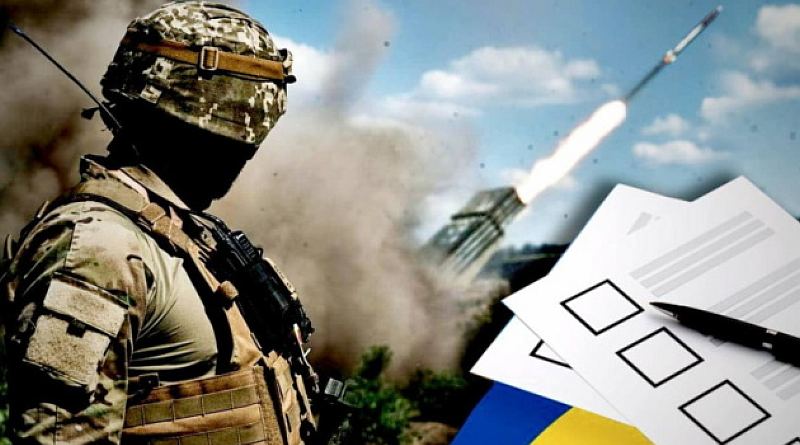
Andriy Magera / Oleksandr Kurylenko, Texty
Volodymyr Zelensky intends to announce a plan for presidential elections and a referendum on a peace agreement with Russia. This is reported by the Financial Times. According to the publication, Zelensky is forced to take this step under pressure from the White House regarding the completion of peace negotiations with Russia. Washington allegedly demands elections by May 15, otherwise Kyiv risks losing security guarantees from the USA.
Andriy Magera, Deputy Chairman of the Central Election Commission of Ukraine from 2007–2018, one of the leading lawyers and experts in electoral law, explains whether presidential elections during martial law are legitimate, why post-war elections will require an entirely new approach, and how much time will be needed to organize elections.
Vulnerable Legitimacy
— Is it realistic to conduct legitimate presidential elections during martial law?
Many people think that it is enough to amend the law on martial law and the Electoral Code — and elections can be held. This is a very simplified and mistaken notion.
The electoral process is not just the voting day. A complex procedure lasting 90 days (presidential elections — Ed.) must take place before voting day, where each stage is important. The procedures are created to guarantee the basic principles of electoral law. If these principles are absent, it is no longer an election, but an imitation, as in Russia or Belarus.
— Which principles are the most important?
All principles of electoral law are important. However, I would like to focus on one of them — the principle of free elections. It has two components. First, the voter must freely form their political will. Second, they must freely realize it without external illegal influence.
In wartime, people primarily think not about politics, but about survival, about themselves and their loved ones.
It is inappropriate to talk about the free formation of will under such conditions.
The Constitution allows for the restriction of electoral rights during martial law, as the right to vote and to be elected is not included in the protected list.
Moreover, Ukraine cannot simply ignore international obligations. The principle of free elections is enshrined in Article 3 of the First Protocol to the Convention for the Protection of Human Rights and Fundamental Freedoms of 1950 and Article 25 of the 1966 UN International Covenant on Civil and Political Rights.
— So even with changes in the laws, legitimacy will be in question?
Yes, it would be questionable in terms of both legality and legitimacy. Such elections are unlikely to be recognized by Ukrainian society and the international community.
Therefore, proposals to “just conduct” resemble fantasies of people who poorly understand the nature of the electoral process. Let me emphasize once again: elections are not a ritualistic mechanism, but principles and values in action.
“Invisible” Voters
— Let’s move on to practical matters. What are the main challenges Ukraine will face during its first post-war elections?
It’s not just about technical issues, but also about security, logistics, and fairness. I’d highlight four key challenges.
The first is security. Even after the end of active hostilities, it will remain critical. Extensive landmining of territories poses a threat to voters, commission members, and candidates. Additionally, Russia is likely to continue hybrid actions—sabotage and terrorist acts presented as “Ukraine’s internal conflict.”
The second challenge is electoral infrastructure.
According to the Central Election Commission, over seven and a half thousand polling station premises are destroyed or unusable.
At the same time, the State Voter Register needs to be fully restored.
The third is the implementation of voting rights for three groups: IDPs, military personnel, and Ukrainians abroad.
— Let’s go through these voters separately: IDPs, military personnel, Ukrainians abroad.
For internally displaced persons (IDPs) and military personnel, voting at their actual location may be possible through changing their electoral address or voting location or through temporary polling stations. Meanwhile, some people might avoid contact with commissions due to unfounded fears of military registration, potentially reducing turnout.
The situation is most challenging for voters abroad. According to the UNHCR (United Nations Refugee Agency), at the end of last year, 5.7–6.8 million citizens were outside Ukraine.
A significant portion of those who left Ukraine have integrated into their host societies and are unlikely to return quickly. The current network of foreign polling stations is not prepared for this situation.
Fewer than 600,000 people are registered in the State Voter Register abroad, and only a portion of them have a voting address outside Ukraine. Millions remain “invisible” without a separate application.
— What are the possible solutions for organizing elections for Ukrainians abroad?
Extending voting hours and creating additional polling stations outside embassies—in schools or cultural centers—with the host country’s consent. However, obtaining such permission will be challenging in some countries.
— Let’s return to the military personnel now.
Demobilization will be gradual, so for some military personnel, special polling stations will need to be created upon the Ministry of Defense’s proposal, considering security and logistics.
— What is the fourth challenge of post-war elections?
Passive electoral right (the right to be elected). Constitutional residency requirements make it practically impossible for many citizens (five years of residency in Ukraine for parliamentary candidates and ten years for presidential candidates) who have been physically abroad for years to run for office.
There is a separate issue for voters and potential candidates from the occupied territories. Special mechanisms need to be created for them.
Thus, post-war elections are not a return to the pre-war model but a fundamentally new reality.
Russian Influence
— What about people in occupied territories who have Ukrainian passports and obtained Russian ones?
Most people were unable to leave due to objective life circumstances: caring for relatives, lack of opportunity, or fear of leaving property. Many people were forced to take a Russian passport to survive. Such acquisition of Russian citizenship is not considered voluntary and does not lead to the loss of Ukrainian citizenship.
Another matter is those who voluntarily held positions in occupation structures, organized pseudo-referendums or “elections,” and voluntarily acquired Russian citizenship. They should be recognized as having lost Ukrainian citizenship due to forfeiture. This must be done to deprive them of voting rights and the right to run for office. Clear legal assessments and decrees are needed.
There’s another nuance: our military in the Kursk region or military personnel in training or captivity were effectively absent from Ukraine. Separate legislative exceptions are needed for them, which will be consistent with constitutional logic.
The military follows orders, prisoners are deprived of freedom of choice. Their physical absence from Ukrainian territory is not their will and not their choice, so the residency requirement should not be applied to them in the literal sense.
— What else is critical for post-war elections?
The restoration of a competitive political environment. Voting rights are inseparably linked with other civil and political rights and freedoms: freedom of speech, the right to peaceful assembly, freedom of movement, and the free choice of residence.
Without the full restoration of these constitutional rights and freedoms, elections will be false. All “unified telethons” or restrictions must be left in the past—everything must return to at least the democratic standards of 2021–2022.
The authorities should not use tools to combat Russian influence for their own benefit.
Yes, Russian influence must be fought mercilessly, using the experience of Romania and Moldova.
But with an important caveat: this cannot become a pretext for government arbitrariness against the opposition, independent media, or civil society institutions.
— You mentioned the election experience of Romania and Moldova. How do they resemble Ukraine?
Moldova has the unrecognized Transnistrian enclave and pro-Russian influence. In Romania, pro-Russian candidates have attempted to influence elections through social media. Thus, the experience of these countries is useful specifically for counteracting external interference.
Parliament or President?
— Imagine martial law has been canceled. How soon can elections be held?
After the cessation or cancellation of martial law, the parliament is obligated to schedule elections that were not held during martial law within a month. But realistically, much more time is needed for preparation—at least six months, as proposed by parliamentary parties, the CEC, and experts. For safety, infrastructure, and legitimacy.
— Can presidential and parliamentary elections be held simultaneously?
No, this has never been done even in peacetime. Different terms, commissions, funds, campaigns—overlapping would lead to massive abuses and temptations to manipulate. The savings are negligible, and the risks are enormous. Elections may be deemed illegitimate, requiring new ones. A penny saved is a penny earned.
— Which elections should be held first?
In my opinion, presidential elections should be first. I’ll explain why.
Firstly, the president acquired powers earlier than the parliament.
Secondly, the issue of legitimacy is raised by some experts regarding the president, rather than the parliament. By the way, considering the principle of continuity of public power, I consider all elected officials to be legitimate: the president, parliament, and local government bodies.
Thirdly, organizationally, presidential elections are simpler: one winner, faster counting. Whereas parliamentary elections involve 450 mandates, which is much more complex.
There is also a political aspect. An elected president, having received a mandate of public trust in the elections, gains the opportunity to form a stable team of like-minded individuals in subsequent parliamentary elections to rebuild the country.
— And local elections?
It is advisable to hold them third, after the presidential and parliamentary elections. Some propose holding them simultaneously with the presidential elections. The idea can be considered and discussed, but in my opinion, that option has drawbacks. It is better to space out the elections over time.
Overall, after the martial law is lifted, at least several months are needed to prepare for the elections, then the presidential, followed by parliamentary, and then local elections. This will ensure the legitimacy of power and stability of the state.
The issue of competition
— What should the buffer time be between lifting martial law and starting the presidential elections?
Article 20 of the Electoral Code prescribes holding elections within a month after the end of martial law. But this timeframe is absolutely unrealistic—the Electoral Code was written under conditions where full-scale war and martial law were not understood.
Realistically, months are needed. Participants of the “Jean Monnet Dialogue” in parliament (faction leaders) signed a political document that stipulated: at least six months for preparation. This position is supported by public organizations, including the Centre for Political and Legal Reforms, and the CEC itself. They note that the more time for preparation, the better the quality of the elections.
OSCE international observers say they themselves need at least nine months for a full-fledged observation mission. So six months is the minimum, although even that may not be enough.
— And if public sentiment demands immediate elections?
Yes, after sustainable peace, the public’s demand for elections may be immense—right here, right now! Under such conditions, ensuring six months for preparation is very difficult. If it is possible to achieve two to three months, that would be good. It is still better than rushing into the process headlong and getting chaos.
Preparation time is essential, but how much depends on the political situation and societal pressure. No one knows in advance.
In any case, the lifting of martial law is necessary. After this, elections in Ukraine are inevitable.
Until that moment, we can have political discussions, debate, and prepare.
But the real start is only after the lifting of martial law and the launch of all democratic processes, restoring healthy political competition.
Collage: Ukrinform
