
Oleh Chernysh, BBC News Ukraine
The Ukrainian defense industry complex has become a top topic in global media. The reason is that the war with Iran has shown the entire danger of “Shahed” drones and the importance of protection against them. Ukraine has the solution to this problem.
The first Iranian “Shahed-136” began flying in Ukrainian skies in the fall of 2022. Subsequently, their production was localized in Russia under the name “Geran-2”.
Currently, according to Ukrainian intelligence, Russia can produce about 5-6 thousand of these UAVs per month.
These drones have caused a lot of damage in Ukraine, attacking not only military objects or defense enterprises but also civilian trains and residential buildings.
Kyiv started looking for a solution. The same is now being attempted by leaders of Gulf countries and the Middle East, who suffer from the strikes of “Shaheds”.
Mobile fire teams, self-propelled “Gepard” systems, and anti-aircraft missile complexes—at certain stages, all of these either do not provide the desired efficiency against UAVs or become too expensive a means to shoot down a relatively cheap drone. It is believed that its price, depending on the modification, can range from 30 to 100 thousand dollars.
Why interceptors are in demand
The most profitable, simple, and effective solution turned out to be shooting down with special anti-aircraft drones (also known as interceptors), which Ukrainian companies invented and began mass-producing last year.
All of them are priced at about 1-2 thousand dollars, depending on the configuration.
This military “commodity” from Ukraine is now the most demanded in the world due to the war in the Gulf.
The Ukrainian authorities reported that they have already received requests for the supply of drones from 11 countries and have sent several groups of their military operators with interceptors, totaling about 230 people, to assist.
“Our teams are already working with five countries regarding counteracting ‘Shaheds’—evaluations have been provided, and we are helping to build a defense system,” Volodymyr Zelensky stated on March 20.
According to the BBC, Ukrainian specialists have already carried out several successful interceptions of Iranian drones in one of the countries in that region.
However, the direct sale and purchase of these Ukrainian drones are still blocked at the state leadership level.
Producers interviewed by BBC News Ukraine said they received dozens of commercial offers from Gulf countries and the Middle East, as well as intermediaries.
All of them are interested in exporting tens of thousands of Ukrainian interceptors to this region. Moreover, they are ready to buy them at a higher price than in the Ukrainian market.
Some manufacturers refused further negotiations, citing a letter from the SBU sent to companies at the beginning of March, which mentioned a ban on arms exports to the Middle East and possible criminal liability for violating this order.
They believe that the leadership of Ukraine should take responsibility for resolving this situation because President Zelensky has publicly announced he would like to see not just the purchase of weapons, but a certain barter: Kyiv transfers drones and, in return, receives scarce missiles for Patriot systems.
Other manufacturers have already entered the official procedure for obtaining permission to export their products.
According to the BBC, at least two major manufacturers of interceptor drones have already submitted relevant applications to the interdepartmental commission on military-technical cooperation and export control policy. The applications must first be reviewed by the commission and then approved by the State Service for Export Control (SSEC).
For now, they are lying “dormant,” meaning there is neither permission nor a direct prohibition on export from the state.
“We have received inquiries from some foreign countries regarding the supply of ‘Shahed’ interceptors. We cannot respond affirmatively until we receive permission from the state,” said the CEO of TAF Industries, Volodymyr Zinovsky, to the BBC.
A representative of another manufacturer who applied for UAV export said on the condition of anonymity that the authorities, in his opinion, are deliberately blocking the possibility of selling Ukrainian interceptors abroad.
“The President has already voiced his conditions for the sale of drones and, apparently, believes that without meeting these conditions, there can be no export at all,” the source said.
He believes that the government’s delay in opening exports could lead potential buyers to lose interest or shift to other markets offering similar products.
As an example, he mentions that the USA has already sent 10,000 MEROPS interceptor drones of their own production to the Middle East.
These drones were tested on the battlefield in Ukraine, although they are more expensive than the Ukrainian counterparts.
History of the Invention
How did these drones come about?
Back in the spring of 2024, the company “Wild Hornets” began developing them at the request of the Ukrainian Armed Forces to shoot down Russian combat helicopters, a company representative “Oleksandr” (name changed for safety) told BBC News Ukraine.
Later, it was decided to use interceptors not only against helicopters but also against drones.
After extensive testing in the fall of 2024, the first prototypes of their most successful product—the Sting interceptor—appeared.
However, according to “Oleksandr,” not everyone in the military leadership believed that this small multirotor UAV would be an effective weapon against Russian aerial targets.
“Some high-ranking commanders said it couldn’t work, that it’s unrealistic to shoot down a ‘Shahed’ with a drone,” noted the developer.
Nevertheless, the company continued to develop its product, and in April 2025, the first downing of a Russian drone by a Ukrainian interceptor was recorded. By the summer of last year, the number of downed targets was in the dozens.
The country’s military-political leadership approved this method of countering “Shaheds” and gave the green light for product procurement.
At the end of last year, several large manufacturers launched mass production of the “anti-Shahed” models.
The Ukrainian Defense Procurement Agency (DOA) told the BBC that the first contracts for interceptor procurement were concluded in the first half of 2025, and by December last year, the average daily deliveries of products amounted to about 950 units.
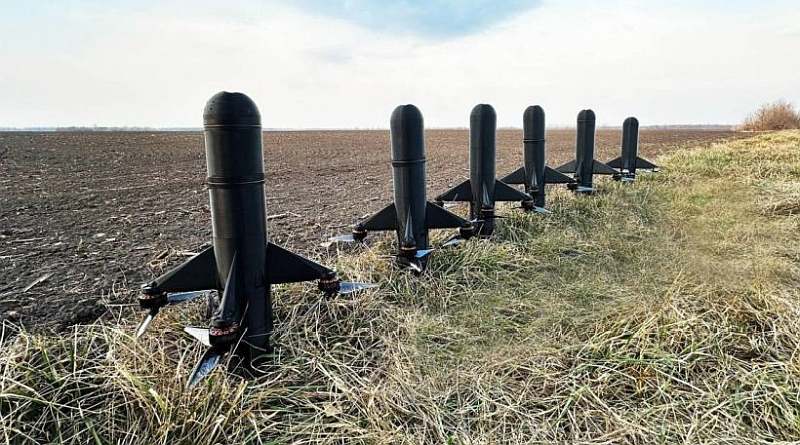
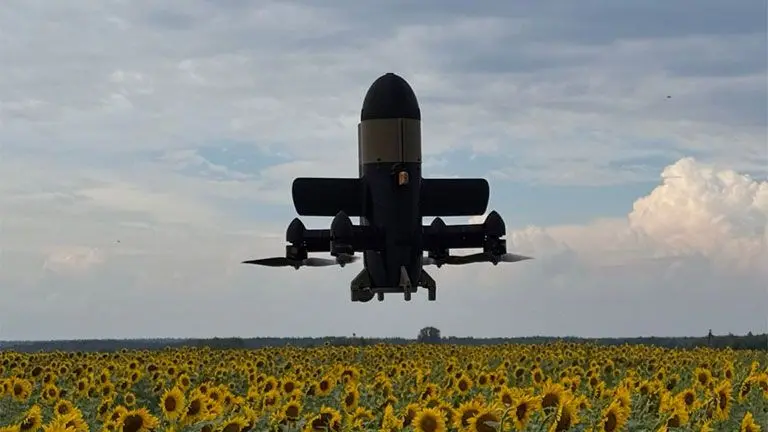
There are three main types: airplane-type, standard quadcopter on a 7 or 10-inch frame, and multirotor rocket-like type (Tailsitter aerodynamic shape with a dome and four rotors and electric motors).
The first and second options are less common, while the third has become effective specifically against “Shaheds.”
This is because preparation for operation and launch of airplane-type UAVs requires more time, equipment, and effort, and piloting them requires considerable skill. Moreover, wings and standard FPV quadcopters fly much slower than a “Shahed” and are usually used to shoot down reconnaissance UAVs.
Therefore, the main “workhorse” both at the front and in the rear has become multirotor interceptors with a rocket-like body.
“This is currently the best form factor to achieve the required speed, having the ability to hover a bit,” explains TAF Industries Director Zinovsky.
The suspicious similarity of all Ukrainian interceptors to each other even led to conflicts between manufacturers.
The management of “Wild Hornets” claims that some companies took their developments without permission and created copies.
“Every week, some new copy of our ‘Sting’ appears. But we started doing this when no one else did; our primary goal was to find exactly how to protect the sky from ‘Shaheds’,” says “Oleksandr,” a representative of the “Hornets.”
And so far, this protection has been successful.
For example, throughout February, intercept drones shot down 70% of “Shaheds” on the Kyiv direction alone, reported Commander-in-Chief Oleksandr Syrsky.
Across Ukraine, interceptors shot down 1,500 Iranian-Russian UAVs in a month.
How the Interceptor Works
Most interceptors have a rocket-like shape and are built according to the Tailsitter scheme (from English “sitting on the tail”), meaning they take off and land vertically on the tail section. They are launched within minutes and do not require a catapult or special launch pad.
This allows the operator, who has detected an enemy UAV in the sky, to quickly prepare and launch the interceptor.
In the sky, it can fly for several dozen minutes at a cruising speed of 160-180 km/h, searching for the “Shahed” and choosing an attack trajectory.
Once found, it accelerates to 300 km/h and catches up with the UAV, detonating near its wing or main part, where the warhead is located, for guaranteed destruction.
At the same time, the interceptor carries a small amount of explosives—about 500-800 grams.
The operator controls the drone in FPV mode, meaning through special virtual reality goggles.
A control station is also needed to maintain communication with the drone. It is preferable to have information from radar or acoustic radars, but there are cases where the operator shot down a “Shahed” by visually spotting it in the sky.
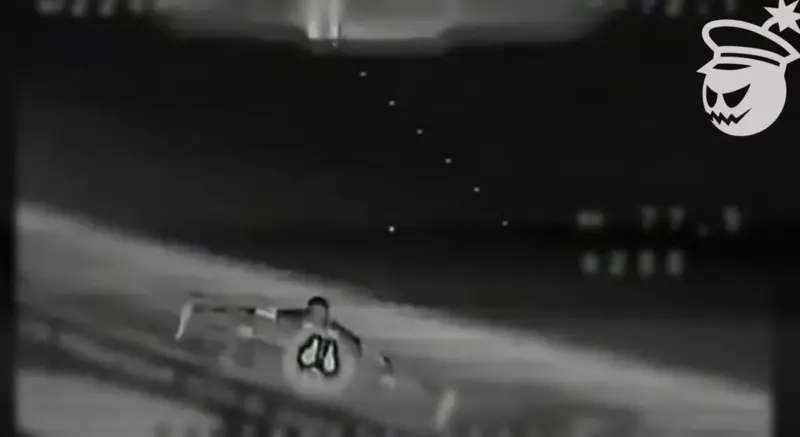
Currently, the targeting of the enemy drone is done manually, but most Ukrainian manufacturers are working on integrating artificial intelligence (AI) into their interceptors.
This will allow the drones to automatically identify targets in the sky, track them, and attack without operator involvement.
This is expected to increase the efficiency of anti-aircraft drones. Currently, in some situations, operators have to launch two drones for one “Shahed” to hit it.
However, there are also cases where a professional operator manages to shoot down several Russian UAVs in quick succession, using just one drone each time.
The current record is the downing of 24 “Shaheds” in one night by a fighter of the 1020th Anti-Aircraft Regiment with the call sign “Miguel” in January 2026.
Mass production of interceptors in Ukraine is handled by 4-5 manufacturers. Other companies are still setting up their production and looking for niches they could occupy in this field.
Their products are quite similar to each other, differing only in the quality of components and minimal design features.
What are the well-known and popular models in Ukraine?
“Sting”
The most effective one currently is the “Sting” anti-aircraft drone, which in its basic configuration costs 50,000 hryvnias, has a warhead of 500 grams, and flies at a maximum speed of 300 km/h.
The operational range of the interceptor is 25 km, and it can remain airborne for up to 20 minutes.
It has modifications with digital and analog, as well as thermal imaging cameras for night operations.
According to the manufacturer, the average success rate is 80-90%, depending on the military unit.
A company representative told the BBC that a new modification of the “Sting” is being developed, which will be even faster and able to catch up with Russian jet UAVs.
P1-SUN and D1L-Duck
Another interceptor that ranks high in efficiency ratings is the P1-SUN by the company SkyFall.
This manufacturer was previously known primarily for its small quadcopters “Shrike” and night bombers “Vampire,” which also earned the nickname “Baba Yaga” on the front lines.
Their interceptor P1-SUN is more commonly known among the military under the humorous name “Pisyun” due to the similar spelling of letters in the name.
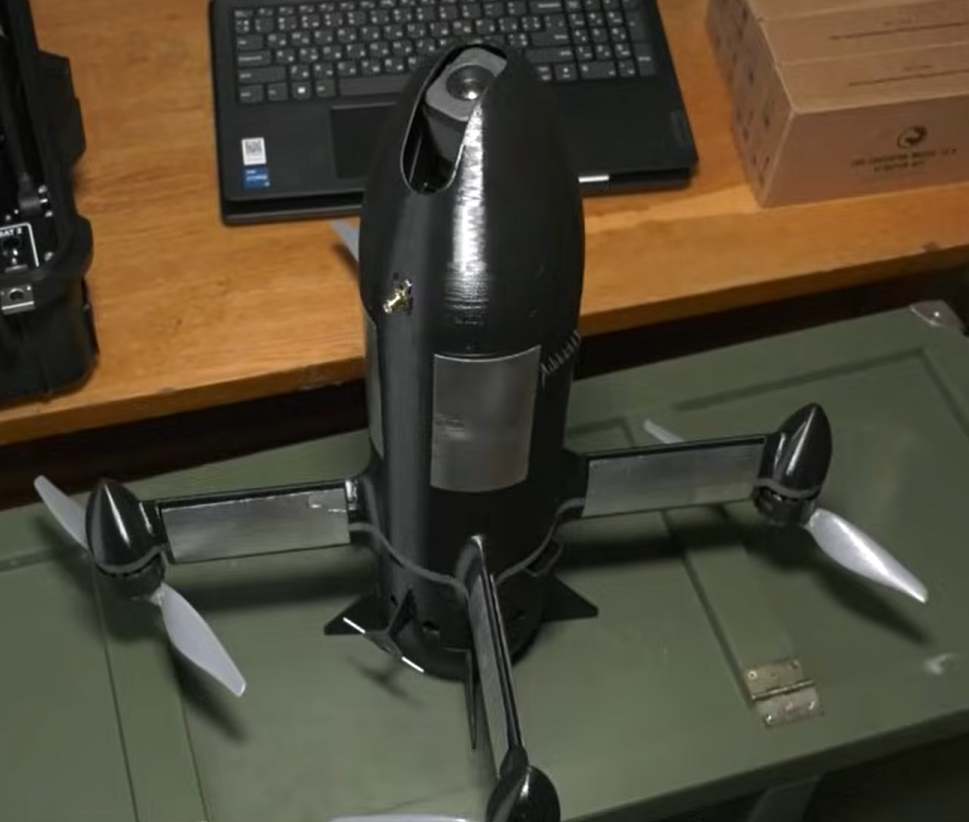
It was presented last fall and quickly proved to be an effective means of shooting down “Shaheds.”
The company has enough resources to scale up production of this product, and negotiations are underway to establish its own factory in Denmark with the support of the Danish government.
The “Pisiun” reaches a maximum speed of 300 km/h, can reach an altitude of up to 5 km, operates within a 23-kilometer radius, and stays airborne for over 17 minutes.
It carries up to 800 grams of explosives.
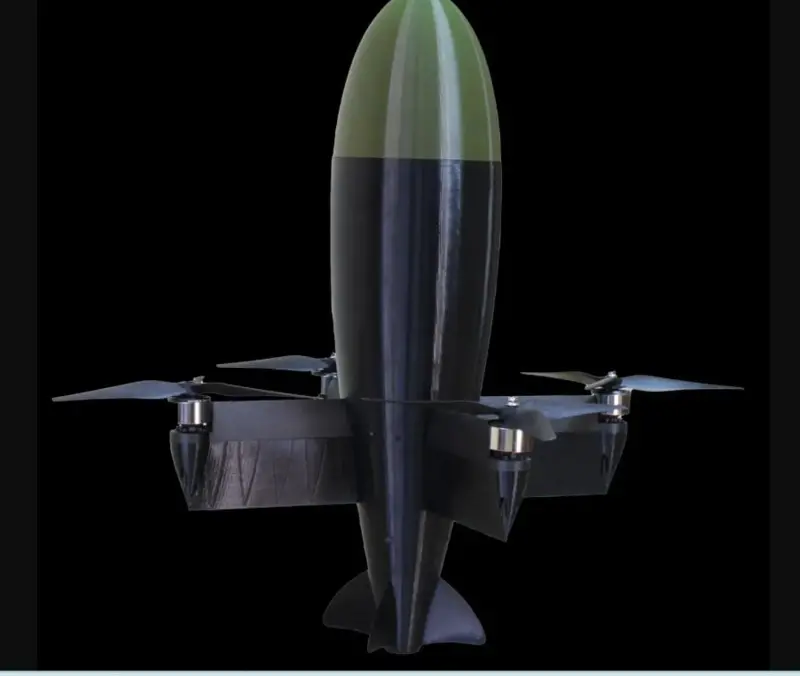
A similar humor in naming their product was used by another Ukrainian company, “Falcons.”
They named their interceptor the D1L-Duck (stands for “Drone v.1 Large Duck”), which sounds like the slang word “dildak.”
This interceptor has a cruising speed of 150 km/h and a maximum of about 300. It carries the smallest warhead at 300 grams and operates within a radius of only 15 km. The cost of the “dildak” is 65,000 hryvnias.
However, there is currently no data on its combat use and production scale. The Brave1 Market states that its delivery from the manufacturer is still “expected.”
“General Cherries”
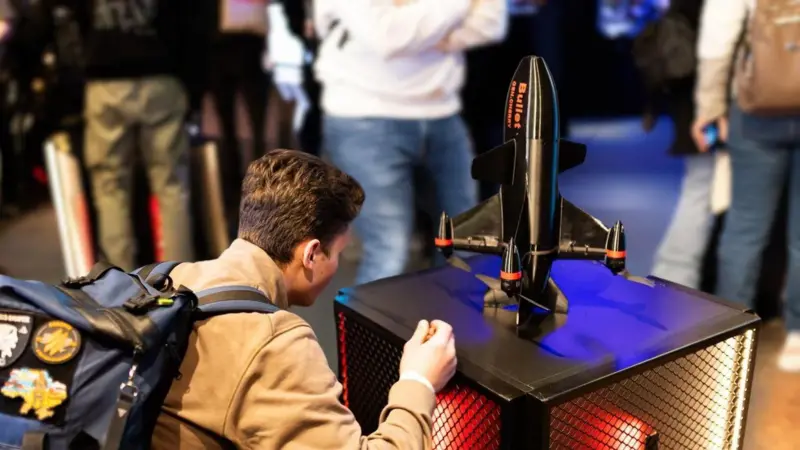
This manufacturer has long been developing a line of quadcopter interceptors, which were previously more known for their work against enemy reconnaissance UAVs rather than “Shaheds.”
However, in November of last year, the company announced that it had launched serial production of the interceptor “General Chereshnya Bullet,” built according to the “rocket-like” scheme. In December, it received codification from the Ministry of Defense and began to be procured for the Defense Forces.
Currently, this product has already accounted for thousands of downed Russian reconnaissance and strike drones, including “Shaheds.”
According to the manufacturer, the copter accelerates to 310 km/h, rises to a height of up to 6 km, and can remain in flight for up to 25 minutes. Its cost ranges from 1.5 to 2 thousand dollars.
“Octopus”
It is also worth mentioning the interceptor “Octopus.”
It was developed and is produced according to a unique scheme. The fact is, this interceptor was created by experts from the Ministry of Defense in collaboration with British experts.
Fourteen Ukrainian companies have obtained a license for the production of the “Octopus,” some of which have already started serial production. It is also manufactured in Britain.
In November 2025, delegations from the Ukrainian and British Ministries of Defense signed a licensing agreement for the interceptor drone, paving the way for its production in the UK. It was mentioned that the volumes could reach “several thousand drones per month.” The manufactured devices will be delivered to Ukraine to strengthen air defense.
The Ukrainian company TAF Industries is one of those that received a license to produce “Octopuses.”
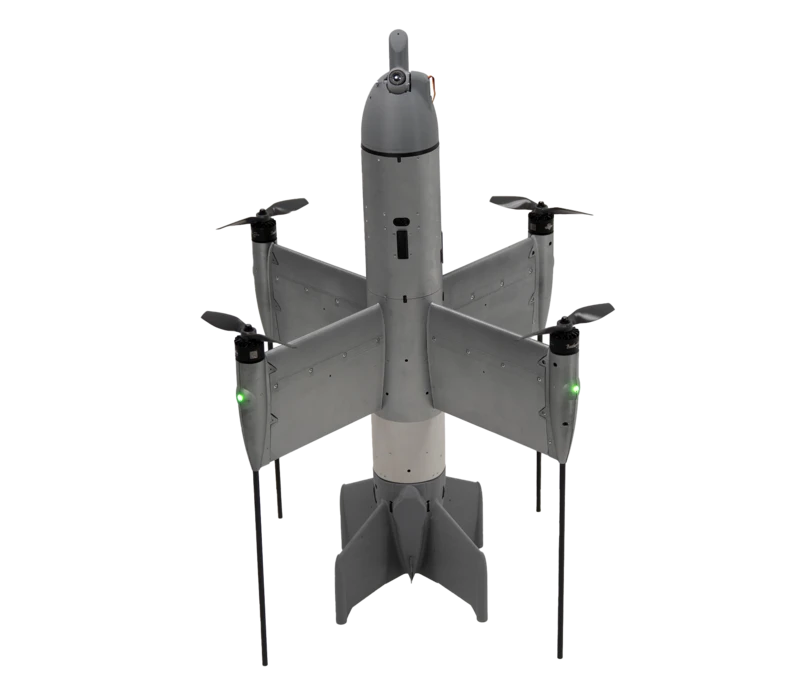
But CEO Volodymyr Zinovskyi says that the launch of this interceptor into serial production unexpectedly faced difficulties:
“It was not widely used precisely because the product was not sufficiently adapted for large-scale production. However, feedback from those who used it was extremely positive in terms of both efficiency and convenience.”
According to its director, TAF Industries has refined the drone and is launching it into serial production from April.
This interceptor has the largest combat unit among its analogs – from 1.2 to 1.5 kg. Its maximum speed is 300 km/h, operational altitude – 4.5 km, range – 30 km, and flight duration – 15 minutes. It is also stated to have automatic guidance and a night camera.
The main advantage of the drone is its ability to operate at night, under jamming, and at low altitudes.
Cover photo: Militarnyi
