
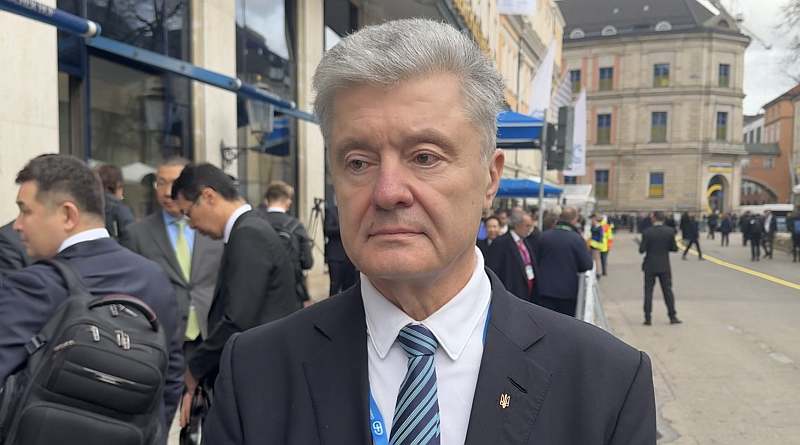
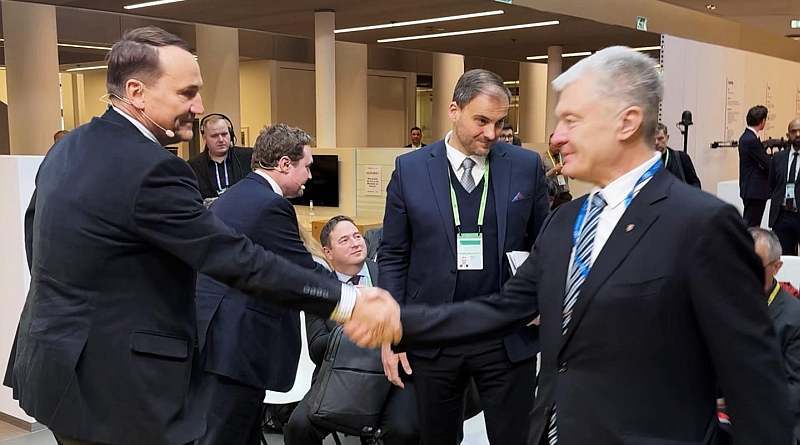
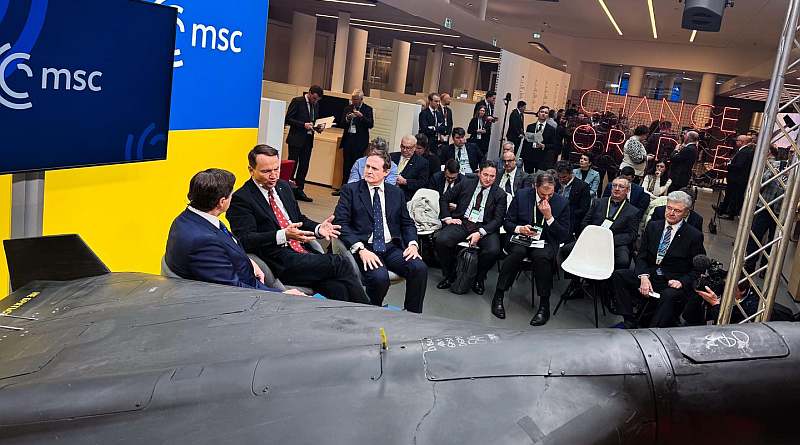
Started participating in the Munich Security Conference by talking with my good friend and friend of Ukraine, Radosław Sikorski.
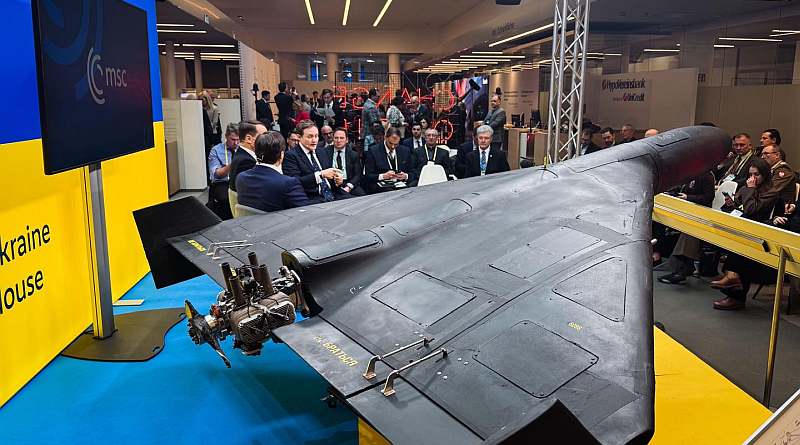
This year, the Deputy Prime Minister and Minister of Foreign Affairs of Poland brought a Russian-Iranian Shahed to Munich. We see these killers in Ukraine every day, but the world needs to see them too, so I am glad to help Radosław in this matter.
Together, we can do more for Ukraine, strengthen European and transatlantic unity, and also end the war and restore peace, security, and stability.
Soon, I will be glad to welcome Radosław to Ukraine.
 |
 |
 |
* * *
We must stop calling the support for Ukraine “aid.” This is not charity. It is about how Poland, the Baltic countries, Germany, and France will survive in the future.
Here at the Munich Conference, where I started work today, it’s not just about military aid — we are discussing the security of the entire continent.
There are no more illusions. It is impossible to negotiate with a dictator. I know this for sure because of my five years of negotiations with Putin. The success then was only in stopping the active phase of fire, clearly understanding that no lasting peace agreement with him is possible.
The only real way to stop this aggression is “boots on the ground.” The presence of NATO troops on Ukrainian territory is a more reliable and ultimately cheaper strategy than keeping these troops in Poland.
The war cannot be stopped just with money or weapons — only an effective mechanism of NATO’s Article 5 stops it.
Today, the future of global security is at stake. The main condition for our victory is transatlantic unity. Any disunity between the US and Europe makes us weaker, and Russia, Iran, and North Korea stronger.
I remain optimistic because we have no other choice but to stick together.
* * *
We have two tools to put pressure on Russia — sanctions and weapons. I am not very optimistic, but at the same time, the war can and must be ended this year.
Continuing work at the Munich Security Conference, I shared our negotiation prospects with journalists from the Polish channel Slawa TV.
First, we must ensure a ceasefire. For this, we already have very effective tools, such as sanctions for countries that continue to buy Russian energy carriers.
German Chancellor Friedrich Merz emphasized during his speech and our meeting the strengthening of sanctions to cut off Putin’s ability to finance the war. Second, it is weapons that enable Ukraine to respond to attacks on civilian infrastructure.
We need to carry out democratic reforms and ensure Ukraine’s entry into the European Union. We need to take care of security guarantees.
Recently released sociological research data showed that more than 75% of Ukrainians firmly believe: if peace agreements are signed under these conditions now, Putin will quickly attack us again.
And I share the opinion of the Ukrainians.
During our meeting with the Polish Foreign Minister, I heard from Radosław Sikorski that in 2025 all weapon funding for Ukraine was provided by the European Union.
This is a very strong argument for the European Union to be represented at the negotiation table. The negotiations should not be in the USA-Ukraine-Russia format, but must include the EU.
Nothing about Ukraine without Ukraine. This is very important. But also nothing about Europe without Europe. The fate of the entire continent cannot be decided without the European Union.
I would like to congratulate Defense Minister Mykhailo Fedorov on an excellent start in “Rammstein.” 38 billion for arms supplies from EU countries is significant. But I also hope for the inclusion of American weapons and funding. Then victory will be our shared challenge. I am convinced this is possible.
* * *
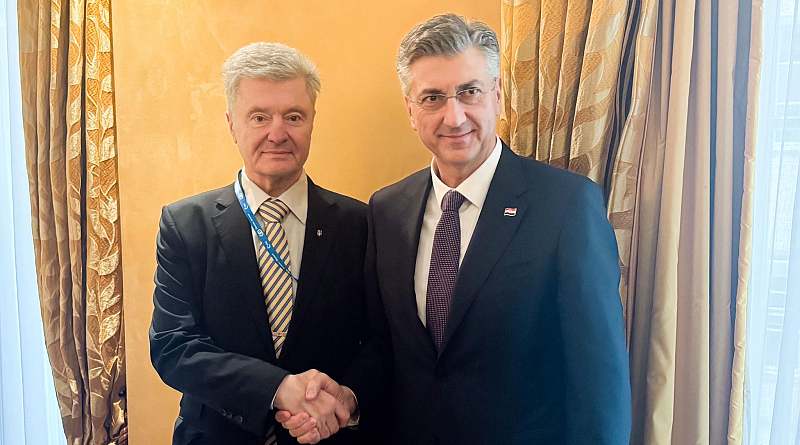
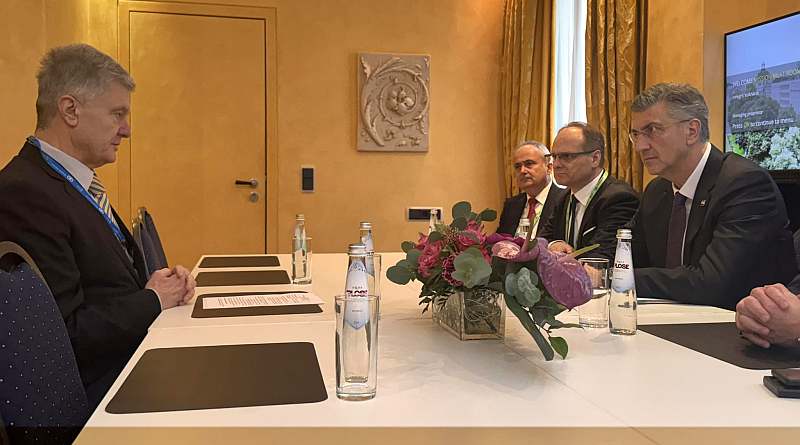
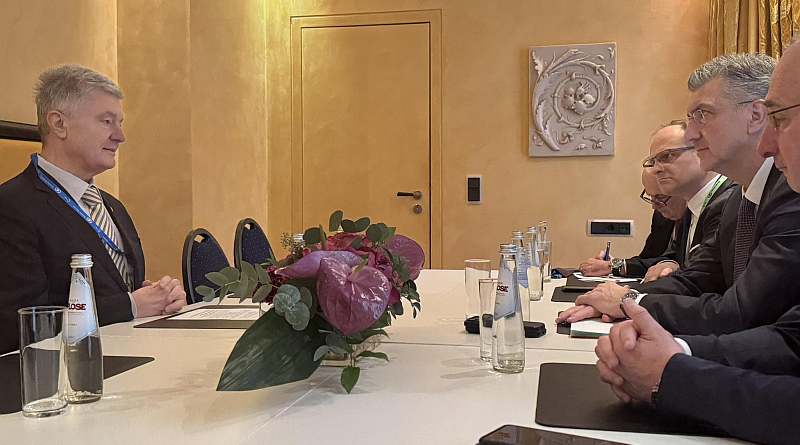
A now traditional meeting with Croatian Prime Minister Andrej Plenković.
I told him how Ukrainians survive without heat and light under daily bombings, how much we lack weapons, and how important it is for Europe to be strong today. It’s not just Russian aggression against Ukraine, it’s aggression against all of Europe.
I urged the Head of the Croatian government to actively advocate for increased military and economic support for Ukraine. This concerns the swift approval by the European Council of the 90 billion euro loan for 2026-2027 and the confiscation of frozen Russian assets.
We also exchanged thoughts on the prospects and obstacles of Ukraine’s expedited membership initiative in the European Union.
 |
 |
 |
* * *
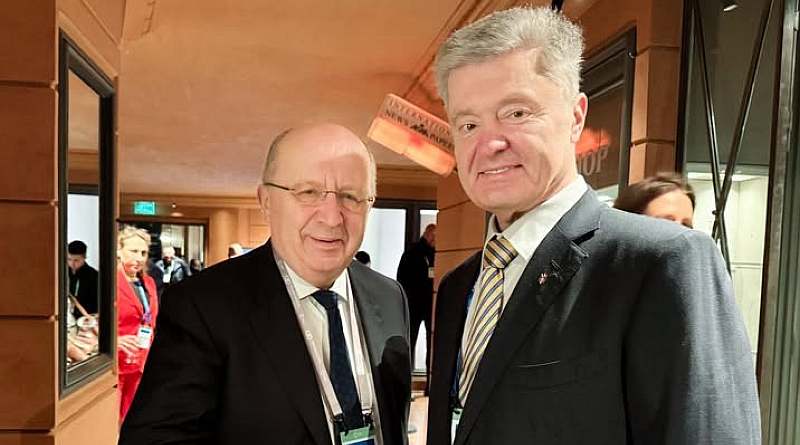
And it is the EU Commissioner for Defense, Andrius Kubilius, who is today an active and creative generator of ideas and approaches to strengthening the security of a united Europe.
I had the opportunity to discuss urgent issues and ways to enhance support for Ukraine and the increasing role of our country in the EU’s defense strategy with the Commissioner.
* * *
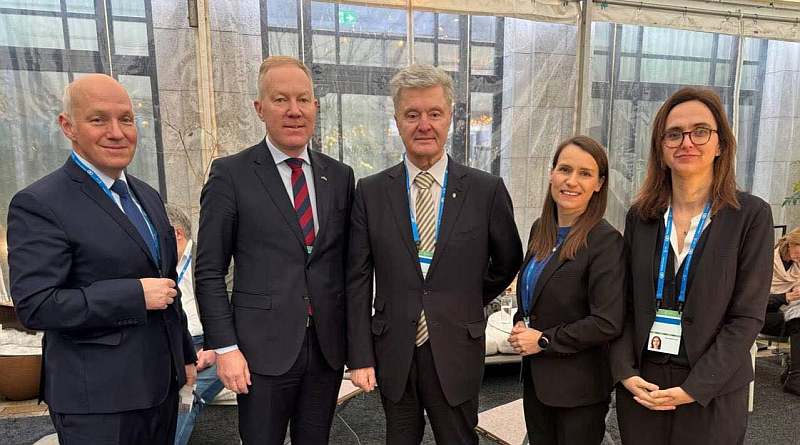
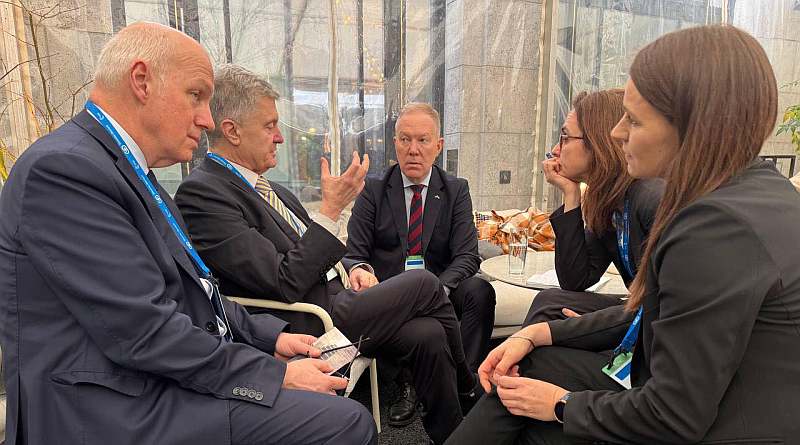
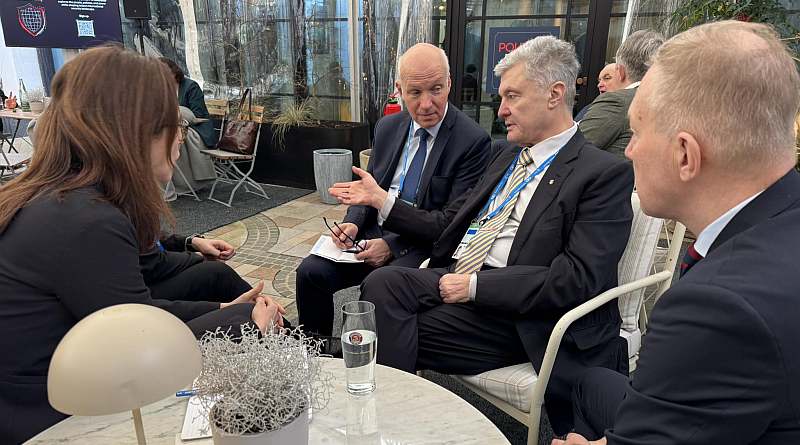
With the heads of the parliamentary committees of Italy, Estonia, Poland, the Czech Republic, we discussed ways to strengthen Ukraine’s negotiating positions, the defense potential of Europe, the Euro-Atlantic alliance, and the weakening of the Russian aggressor and its allies.
Agreed on the necessity of accelerated EU membership for Ukraine while maintaining high attention to the adherence to European standards of democracy and the rule of law in our country.
 |
 |
 |
* * *
Friendly meeting with the European Parliament’s rapporteur on Ukraine, Michael Gahler.
We discussed the preparation for a special session of the European Parliament on the occasion of the fourth anniversary of the Russian invasion, as well as the substantive content of the corresponding European Parliament resolution in support of Ukraine.
Exchanged views on ways to accelerate Ukraine’s EU membership.
* * *
A discussion about the security situation in Europe is impossible without Ukraine. Our army will play a key role in defending the continent, as we have the strongest Armed Forces.
This was discussed in an interview with the Polish Ukrainian-language TV channel Slawa TV.
If the issue arises of the US leaving Europe, it will create a vacuum. But it will not exist for long and will be filled by Russia and elements of hybrid warfare. This includes supporting radical left-wing ultra-right regimes, using democratic mechanisms to destroy democracy itself. Understanding of this at the Munich Security Conference intensifies every year.
Europe and Ukraine are united by the common values of Western civilization. This is what will enable the protection of the continent’s future and the entire Free World.
Therefore, the key result we must achieve is transatlantic unity. It is the only way to defeat Putin.
There are several pieces of advice based on my personal experience of negotiating with Putin that I shared with our allies. The key thing is not to trust Putin. He has already signed a huge number of agreements, but none of them have been fulfilled. Because Putin does not understand the language in which they are written. He only understands the language of force.
What can stop Putin’s attack? Security guarantees in the form of “boots on the ground.” This means the presence of partner countries’ troops on Ukrainian territory.
This can be accomplished in two ways. The first is the issue of Ukraine’s accelerated membership in NATO. And in the transitional phase, while preparatory work is ongoing, we must have French, American, British, and other partner military contingents on Ukrainian territory.
A security guarantee is also Ukraine’s membership in the European Union. But we should not place all the responsibility only on our allies. Ukraine also has to do its homework. We should not believe that the EU will allow us to become part of the union while we have corruption. Because the movement towards the European Union is bilateral.
I would like the European Union to be a mandatory participant in peace negotiations, because it is not only about the fate of Ukraine but about the security situation of the entire continent. And when we say that help is needed for Ukraine, it should not be perceived as charity. It is an investment in one’s own security.
Unfortunately, I must state that NATO is currently absolutely unprepared for the war ongoing in Ukraine. Therefore, allies should study our experience and strengthen the defense industry.
* * *
Pressure must be applied on Russia to achieve an unconditional and complete ceasefire. Without this, any peace negotiations will yield no results.
We have two key tools to pressure the aggressor — sanctions and weapons. Weapons, in particular, allow Ukraine to respond to attacks on civilian infrastructure. The USA, Europe, and Ukraine must act together, as the fate of not only Ukraine but global security as a whole is at stake.
Here, at the Munich Security Conference, during meetings with EU Commissioner for Defense Andrius Kubilius, Polish Foreign Minister Radosław Sikorski, Croatian Prime Minister Andrej Plenković, European Parliament Rapporteur on Ukraine Michael Gahler, and also with the heads of parliamentary committees of Italy Lia Quartapelle, Poland Agnieszka Pomaska, Estonia Marko Mihkelson, and Czech Republic Pavel Fischer, the leadership of the European Union, including Ursula von der Leyen, heads of Latvia Edgars Rinkēvičs and Montenegro Jakov Milatović — called for actively strengthening military and economic support for Ukraine.
This includes the rapid approval by the European Council of a loan of 90 billion euros for 2026–2027 and the confiscation of frozen Russian assets. We also discussed ways to strengthen Ukraine’s negotiating positions and expedite our EU membership.
If we are divided — we will lose. “We” means NATO, Ukraine, the USA, and the European Union.
We have no choice but to reach an agreement and stand together. If we are united, the dictator will have no chance.
* * *
What do we need to succeed in peace negotiations?
We discussed this with British journalists on BBC at the Munich Security Conference.
First and foremost, we must understand what “Putin’s practice” is. He does not want an additional 100 kilometers of Ukrainian land. His goal is his personal role in history. He sees his role as the restorer of either the Soviet Union or the Russian Empire. That’s why understanding Putin as a dictator with whom we can negotiate under “favorable terms” will definitely not work.
So what is needed for success?
- Strong Armed Forces of Ukraine, equipped with everything necessary.
- Sanctions that will cut off Putin’s ability to finance the war.
I firmly believe that this is the language Putin understands. He does not understand English, he does not understand German, he does not even understand Russian. He only understands the language of strength. And that is why it was so important to carry out this work in Munich.
