
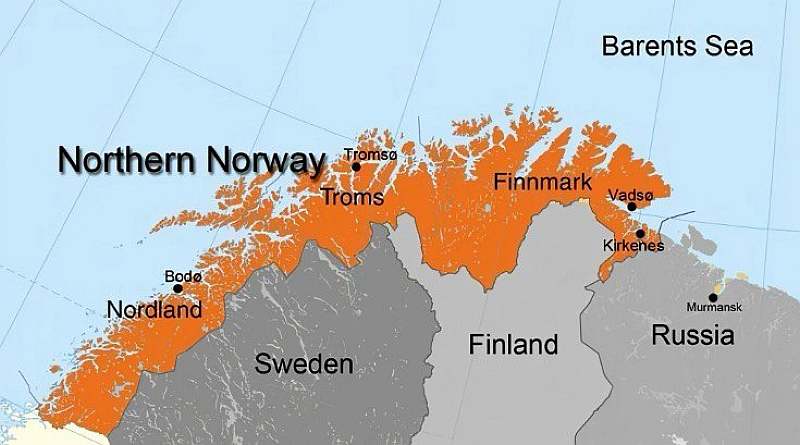

According to the Finnish publication Yle on March 15, 2026, Northern Norway has become the epicenter of unprecedented Russian espionage activity. Putin’s Kremlin, having completely lost the trust of the civilized world, has moved from covert operations to systematically surveying NATO’s critical infrastructure under the guise of a civilian fleet.
The leading instrument of hybrid warfare in the Arctic has become Russian fishing and commercial vessels. This is not just about suspicions but documented tactics of the Russian special services.
Norway maintains a port loophole for Russia, as despite the pan-European isolation, the ports of Kirkenes, Båtsfjord, and Tromsø are still open to Russian vessels. Oslo’s “humanitarian gesture” is used by Moscow as a weakness.
Russian vessels entering Northern Norway’s ports are equipped with technology that allows them to study underwater infrastructure in detail—communication cables that provide internet connectivity between Europe and the US, and energy nodes.
Moreover, Norway’s Police Security Service (PST) has repeatedly warned that full-time Russian special service officers are working under the guise of sailors on these ships.
The Kremlin has turned fishing into an operation mapping targets for potential sabotage. What is this if not a direct preparation for an attack, where the first strike will not be with missiles but by “disconnecting” communication and energy across the entire Norwegian north, and possibly on a larger scale.
Simultaneously with ship-based espionage, the Russians are using “snooping diplomacy,” relying on their consulate in Kirkenes. The situation in this Norwegian city is a textbook example of the brazenness of Putin’s regime. The Russian consulate is located in close proximity to the city hall. This is not just a convenient address. It’s an ideal observation point, allowing them to track all visitors and staff of municipal services; conduct electronic surveillance of administrative buildings; create an atmosphere of constant pressure on local officials, reminding them of Moscow’s “invisible presence.”
The darkest part of the Kremlin’s espionage campaign concerns Russians living in Norway. Russian special services have almost fully transitioned to tactics resembling hostage-taking. There are numerous reports at the border of harsh interrogations of arriving Russians. People are required to provide full access to their smartphones, information about their contacts among Norwegians and other Russians, and opinions within the diaspora.
For Moscow, any Russian abroad is either an agent or a traitor. People are literally coerced into espionage against the country that has provided them safety and employment. This is not the protection of compatriots but their unscrupulous use as “expendable material” for destabilizing Norway.
Russia’s interest in such activities is transparent: the Arctic is becoming the last frontier where the Kremlin hopes to impose its rules on NATO. By gathering data on residents, studying weak points in defense and ports, Putin’s regime is preparing the ground to blackmail Europe with an “Arctic front” at the right moment.
In turn, Norway has shown great restraint and patience for a very long time. But when “fishermen” start studying military cables, and consuls monitor mayors, the time for silent diplomacy ends. It’s time for Oslo to consider effective countermeasures against a toxic neighbor engaged in the systematic undermining of its security and plotting a serious military confrontation in the Arctic.
