
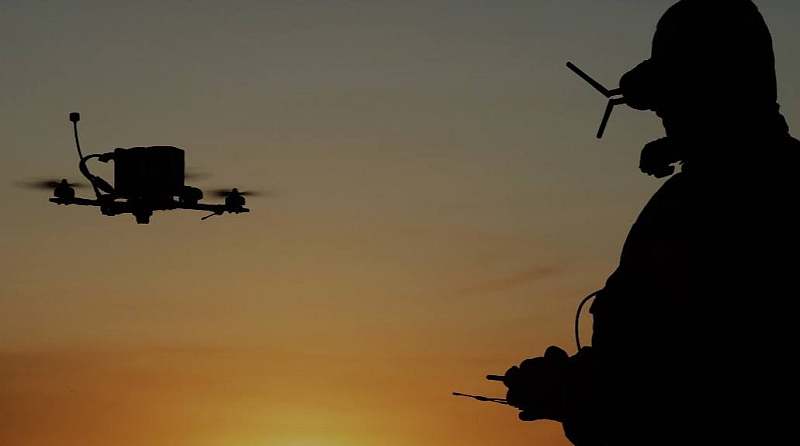
Yevhen Legalov / Radio Svoboda
The full-scale Russian invasion of Ukraine has been ongoing for five years and has become a war of attrition, where there are no major breakthroughs. Advances are made almost exclusively by small infantry groups, with little use of heavy armored vehicles, and the front line has turned into a multi-kilometer “kill zone” dominated by countless drones, the main striking force for both armies.
Over the course of this great war, which has lasted more than four years, both the tactics of warfare and key weapon systems have changed radically. Will the Ukrainian experience become a model for a new type of war?
Radio Svoboda’s Russian Service spoke with American military analyst Michael Kofman and a Ukrainian drone operator fighting on the Pokrovsk front.
“Kill Zone” under a Swarm
American military analyst Michael Kofman notes that the war in Ukraine is not the first instance of effective UAV usage: drones, albeit not in such numbers, were actively used during the Nagorno-Karabakh war in 2020.
“In any war, you can find a new technology and new weapons, and somewhere new equipment, which we haven’t seen in a previous war. This doesn’t tell us that it’s a new type of war.
The fact that we see a lot of new things in the framework of the war in Ukraine does not mean that this is the trajectory of development for future wars. There are many technologies and tactics that are applied in one war and provide an advantage, but in another war, they do not work as effectively. It’s quite clear that drones will impact future wars, but one should be cautious in projecting the image of future war based on one experience.”
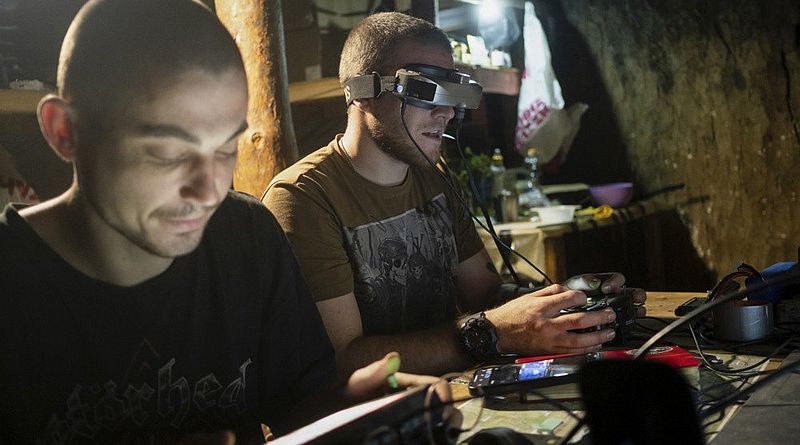
Kofman notes that drones began to play a key role on the battlefield in Ukraine only in the middle of the second year of the war, when both the Russian and Ukrainian armies lost the ability for large-scale offensive actions, and the war itself turned into a positional one. Before this, traditional artillery had decisive significance, Kofman recalls, and drones were long used mainly for its targeting. For example, during the major offensive attempted by the Armed Forces of Ukraine on the southern front in the summer of 2023, the main role was assigned to armored vehicles, including tanks, and various types of artillery; although drones were already relatively widespread then, their importance in both offense and defense was comparatively small.
“Only when the battlefield finally took shape did the role of drones start to grow,” the analyst believes.
Kofman identifies several important trends developing due to the mass use of drones.
Firstly, the use of UAVs has shaped today’s “porous” battlefield, where instead of a front line, there are only separate positions. The large number of drones leads to increased dispersal of forces in defense and offense, says the expert, complicating any side’s effort to conduct combined-arms offensive operations or concentrate personnel on small front sections in defense. Drones have provided the capability for ubiquitous fire damage and reconnaissance at tactical depth.
“Drones themselves have also evolved into what the West calls a means of massive precision strike – they allow for cheap and readily available massive and pinpoint strikes on the battlefield for practically any country,” Kofman says.
The second important trend noted by the expert is that drones have nullified the advantage of night operations. Now, any army can purchase and use a quadcopter for three and a half thousand dollars to conduct night reconnaissance of areas located far from the front line.
“Conducting night battles was one of the key advantages of the ground forces of Western countries, which their armies actively practiced since the 1980s, but today all its advantages are partially or completely lost. Now the question arises – is it still worth training and preparing units for night fighting at such a high level if night operations do not provide a significant advantage?” says Kofman.
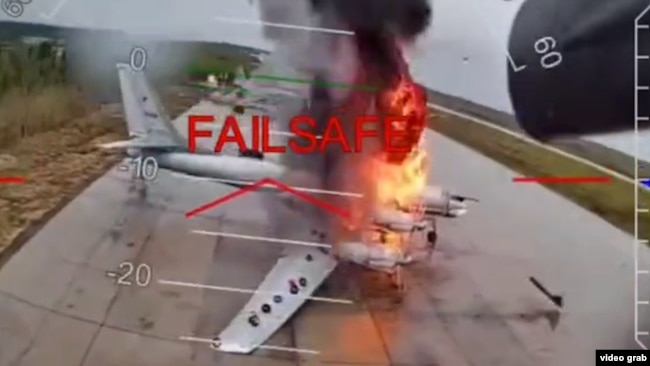
Thirdly, Kofman talks about the significant role of long-range drones, which have become a valuable addition to traditional weapons, such as cruise missiles.
Fourthly, drones have proven to be an effective and inexpensive means for sabotage attacks – such as the Ukrainian operation “Web”, during which Russian military aircraft were damaged at airfields deep in the rear, or the Israeli operation targeting Iranian air defense systems during the 12-day war in 2025.
“These operations have shown us how special forces can use drones inside enemy countries and achieve operational effects at very low costs. They also demonstrated how vulnerable the critical military infrastructure of many countries is to such attacks,” says a Radio Liberty interlocutor.
Fifthly, the expert notes that although for a long time the main element of UAV deterrence was electronic warfare systems that evolved alongside drones, it is now drones themselves that have become the primary means of intercepting other drones, surpassing some electronic warfare capabilities. The Ukrainian military is actively using interceptor drones against “Geran”, “Gerber” and other Russian long-range UAVs, as well as employing FPV drones to combat small and medium-range strike and reconnaissance drones. The Russian military is also using FPV drones to combat Ukrainian small and medium-range strike and reconnaissance drones, and limitedly using their own specialized interceptor drones and testing interceptor drones to combat long-range high-altitude kamikaze UAVs, which regular FPV drones “cannot reach.”
“Today drones are both a strike means, a defense means, and interceptors,” concludes Kofman.
Drone operator Vitaliy (name changed), who serves with the Armed Forces of Ukraine and spoke to Radio Svoboda, discusses the increasing importance of ground robotic complexes (GRCs)—he considers them the main breakthrough of recent times. Ground robots, along with octocopters (heavy UAVs with eight propellers), help restore logistics disrupted by FPV drones and meet the needs of Ukrainian servicemen in the field for provisions and ammunition.
“What required a vehicle and a risky approach under FPV a year ago is now solved by a single drone. Yes, losing it is unpleasant, but a drone is not a human, just hardware. GRCs first appeared in our operations on the Pokrovske direction. Thanks to them, we could avoid leaving the ‘square’ for long periods while receiving everything we needed. In several units, GRCs are used for assisting in evacuating the wounded. Yes, the reliability of the ‘Termit’ (TerMIT, Ukrainian GRC – ed.) raises questions, and sometimes the tracks fall off or the robot might overturn due to operator error, but they’ve greatly simplified our lives. Even in our unit, there are now vacancies for GRC operators,” says the Radio Svoboda interviewee.
Ukrainian GRC “Droid TW-7.62” captures 3 Russians. With a kind word and a machine gun, as they sayhttps://t.co/fmRfRnoue0 #RussianUkrainianWar pic.twitter.com/nY8dSHvJKp
— Necro Mancer (@666_mancer) January 27, 2026
In addition to evacuating the wounded and delivering cargo, ground robotic complexes are used for mining and other tasks, says Vitaliy. In at least one instance, Ukrainian servicemen captured three Russian soldiers with the help of a GRC.
Drones instead of tanks
Although drones play a key role on the battlefield in Ukraine, they still cannot fully replace artillery, mortars, and many other classical offensive weapons. Kofman cites the example of the Javelin anti-tank systems, whose use by the Armed Forces of Ukraine has significantly decreased since the beginning of the war. According to Kofman, ATGMs have several advantages over drones that may become apparent in conditions different from the current positional warfare.
“When you have a command post set up, with UAV teams monitoring their sectors, drones will indeed be more effective, especially with artillery support and a mined area,” says Kofman.
He believes that in the case of a rapid advance and amphibious infantry landing deep within enemy lines, ATGMs will have the advantage.
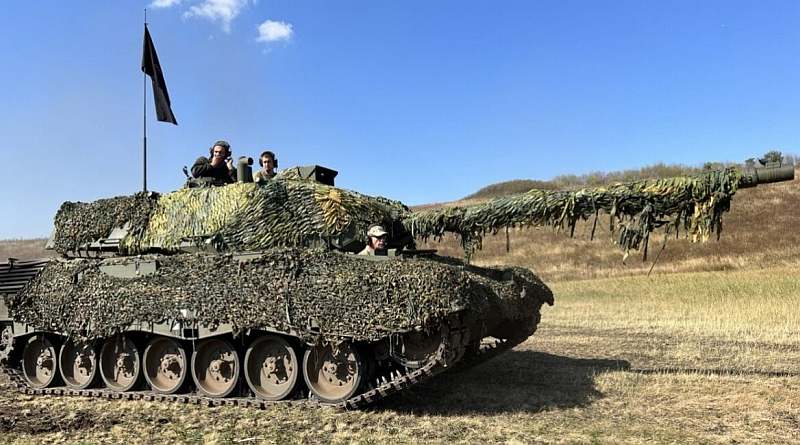
“Currently, the deployment of infantry is not supported by a large number of drones. This technology is not yet adapted for offensive operations that require compactness, mobility, and rapid deployment. Anti-tank guided missiles still play an important role in certain types of operations. Of course, for the price of a Javelin missile, you can buy 80 drones, but this comparison does not take into account the nuances,” says the expert.
The war in Ukraine has sparked debates about the role of armored vehicles in modern conflict, as today, with the constant expansion of the “kill zone,” almost any attempt at mechanized offensive from both sides ends with the destruction of equipment.
Kofman believes that it’s impossible to definitively answer whether armored vehicles have lost their relevance based on a single war.
“Vulnerability is not the same as obsolescence. In the 1970s, anti-tank guided missiles significantly increased the vulnerability of tanks. Now we are in a new cycle of adaptation and rethinking the balance between firepower, protection, and mobility on the battlefield.”
Ukrainian Modernization
Over the past four years, Ukraine has become one of the largest producers of combat UAVs in the world, successfully replacing many models supplied by allies with its own developments. Turkish Bayraktars are a thing of the past. Practically or completely not used are the American Switchblade 300 and 600 loitering munitions. German drones HX-2 from the Helsing company, developed during the war in Ukraine, showed actual accuracy in combat conditions of only 35%, after which Ukraine and Germany suspended further orders.
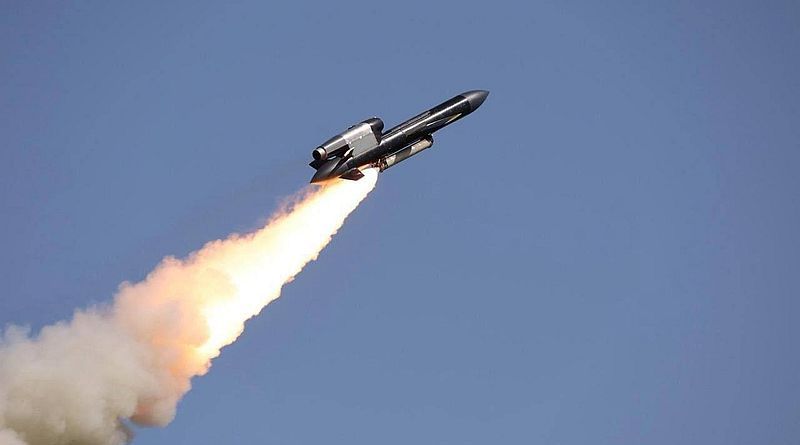
According to Kofman, it’s not about the relatively high cost of Western developments but the need to constantly upgrade developments to follow the changing situation and respond to the enemy’s progress.
“The West does not have the ability to adapt and improve technologies every few months. Ukrainian manufacturers can do this because they have close cooperation with their military units. Any technology in this war can become obsolete very quickly. Moreover, much of what suits the Armed Forces of Ukraine and solves their problems may not solve the problems of Western armies, so the West is not interested in it: for the West, in the end, it is not just a matter of price,” the expert says.
Lessons for NATO
Michael Kofman notes that the number of UAV units is increasing at all levels of combined-arms formations in the armies of Ukraine and Russia, and separate drone regiments and brigades are being created; in both the Russian and Ukrainian armies, drone forces have been designated as separate branches.
Meanwhile, Western armies discuss integrating drones only as an additional means to the main forces, but do not create full-fledged structures dedicated solely to their use, Michael Kofman notes. Furthermore, some armies, such as the American one, recognize the need to consider possible enemy light drone attacks but are not in a hurry to implement them in their units. Among Western armies, there are also those that would like to develop and use UAV technologies but do not have enough resources for this, Kofman believes.
“If the key future war for the US will be with China, what role will drones play in it, especially if it is mostly an air and sea battle? Many see the strength of the West in its traditional military advantages: aviation and long-range precision weapons, inter-service operations, integration, and coordination of the Air Force, Navy, and Army. From their point of view, the fact that drones have proven themselves and started to play a key role in the second or third year of the war in Ukraine doesn’t mean that in the first weeks of a future war they will play the same role and impact operations the same way. Currently, drone use is likely more of an evolutionary process than revolutionary,” the expert says.
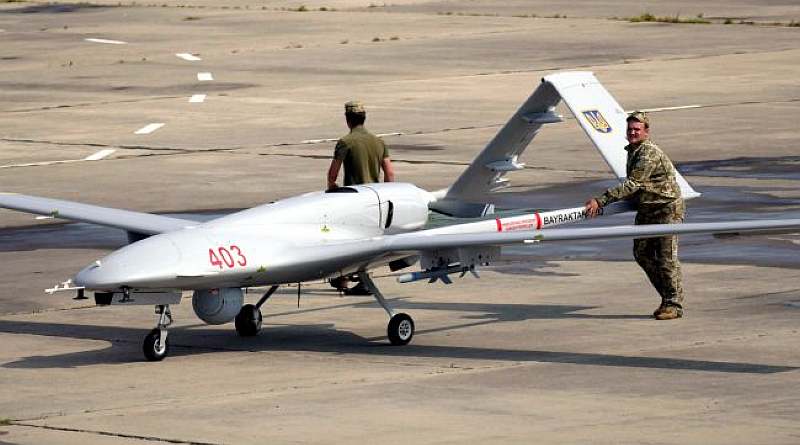
Kofman reminds us that weapons that perform effectively in one war are not necessarily as useful in a different type of conflict. For example, the main UAV during the Nagorno-Karabakh war was the Turkish TB-2 Bayraktar, which proved effective only in the early days of the invasion in Ukraine, when Russia had not yet established a proper air defense system, and during the battles for Snake Island. However, the vast majority of Bayraktars in service with the Armed Forces of Ukraine were destroyed by the Russian army, and by the end of 2023, Turkish drones were practically no longer used.
Drones are likely to become a key means of firepower for the Russian army in the event of a potential war against Europe, but this, according to Kofman, does not mean that Europe will use them as actively. Europe may focus on creating effective counter-drone measures while relying on its traditional advantages.
“There is no guarantee that countries initially using a new technology on the battlefield will successfully turn it into operational art in the future. A good example is the emergence of the tank and aircraft carrier in the early 20th century. Great Britain, which developed both, did not find an optimal way to use them. Initially, technologies always attach to existing tactics of operational art and doctrines. Other armies studying this war may find more optimal solutions and new approaches to using this technology,” says Kofman.
Drone operator Vitaliy from the Armed Forces of Ukraine believes that allies have much to learn from Ukraine even now. As an example, he cites the NATO exercises in Estonia, “Steel Porcupine,” which took place last year and involved Ukrainian drone operators.
In one of the training scenarios, a group of several thousand individuals, consisting of British and Estonian military personnel, was required to transition into a mechanized offensive. A participant of the exercises recalled that the NATO battle group simply moved without any concealment, set up tents, and deployed armored vehicles. Within half a day, one of the Ukrainian units, numbering about 10 people, conditionally destroyed 17 pieces of equipment and struck 30 other targets. In total, by the end of the day, the conditional enemy forces, represented by Ukrainian Armed Forces operators, were able to annihilate two NATO battalions without suffering any losses. The WSJ publication, which reported on the exercises, noted that the results were a shock to the military leadership of the NATO units participating in the training.
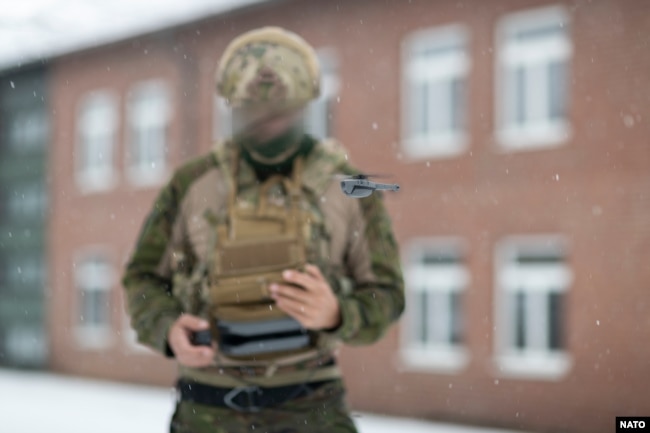
Ukrainian military expert Kyrylo Danylychenko, however, noted that elite drone units from the Ukrainian Armed Forces participated in the exercises, whose training and equipment levels are evidently much higher than those of most Ukrainian and Russian units, while NATO forces used a very limited list of countermeasures and weapons.
“In a real war, things wouldn’t be like that and would be much harder. Yes, we showed them the technologies of the most brutal selection from an 11-year war, and they were impressed. Well, what did they expect?” – wrote Danylychenko.
Kofman believes that the main lesson of the war in Ukraine for Western military forces should be the level of losses, both human and in weaponry. According to the expert, the current size of Western armies and their ammunition supply are insufficient for conducting large-scale conventional warfare, no matter how long it lasts. The exception, he says, is the United States.
“And the issue here is not who has drones or who doesn’t, all key problems are fundamental. Perhaps the future version of drones will, of course, be much more efficient due to high autonomy, but for now, the use of drones still heavily depends on the staffing of all the technology with personnel,” he says.
Source
Copyright © 2021 RFE/RL, Inc. Reprinted with permission from Radio Free Europe / Radio Liberty
Cover photo: General Staff of the Armed Forces of Ukraine
