

Glory to Ukraine!
Glory to the defenders of Ukraine and all modern civilization!
Today in the issue:
- The election season has begun in the USA, which will last exactly 9 months – party primaries were held in three states
- War with Iran: goals, decision-making mechanisms, and consequences
▶ Not just the main focus, but practically all attention in the USA is concentrated on the war with Iran. The media have “forgotten” about the existence of Epstein files. News about everything that is not directly related to the war or the changes associated with it in the energy, stock, and financial markets have practically disappeared.
The exception is the party primaries, which began on Tuesday, March 3, starting the election season that will last exactly 9 months – on November 3, elections will be held for Congress, and in many states, there will also be elections for governors and local elections. And on Tuesday, party primaries are held in the first three states – Texas, Arkansas, and North Carolina. In essence, the election campaign is already underway, particularly active in these three states over the last few months – candidates are competing for nominations to Congress, and in Texas and Arkansas, for governor nominations from their parties. Primaries are held just like the general elections themselves. The same polling stations open, and people vote. In some states, only registered members of the respective parties are allowed to vote in party primaries, while in others, independent voters can also participate.
We will discuss this in the next news release.
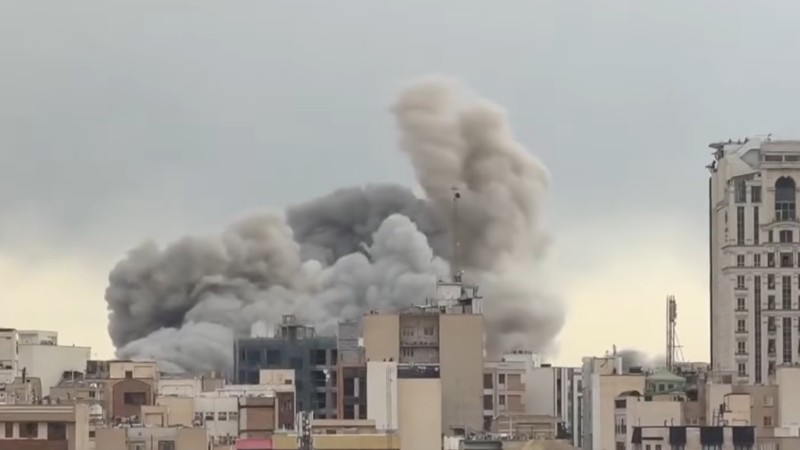
▶ The war that Trump and Netanyahu conceived as a “small victorious war” is developing according to its own laws, showing that an impulsive decision to start military actions without considering all possible scenarios can lead to unexpected consequences.
If the real goal seen by Trump and Netanyahu was the elimination of Iran’s dictator Ayatollah Khamenei, then that goal has been achieved. If their goal was to make Khamenei’s elimination a trigger for the regime’s downfall, then that goal has not been achieved. The regime remains in power. Even if US Defense Secretary Hegset calls the regime former a dozen times during a Pentagon briefing, it is currently not former. It is active.
But many things are happening that the 47th President clearly did not think about when he started the war.
Trump himself admitted that he did not expect Iran to start attacking Arab countries. The UAE, Kuwait, Bahrain, Qatar, Saudi Arabia, and Jordan are under attack. And these attacks are being carried out not only on American military bases, embassies, and consulates, but on entirely civilian targets in these countries. The war has already inflicted, and continues to inflict, enormous damage to their economies. And this damage will grow with each new day of the war. People living in these countries, especially in wealthy countries like the UAE, Qatar, and Saudi Arabia, felt safe and were making plans for the future just a few days ago. Companies operating in these countries were planning their business and profits from it. Now everything has changed drastically—war has come to these countries.
On Monday, the price of oil soared by 7%. Only two oil tankers and one chemical tanker passed through the Strait of Hormuz on Monday. If the war continues, the price of oil will keep rising. This means a new flow of money into Putin’s pockets, new opportunities for him to continue aggression against Ukraine.
This also means money flowing into the pockets of American oil companies, the main sponsors of the Republican Party.
But it also means that in the US, gasoline, diesel fuel, and aviation kerosene will become significantly more expensive (fuel prices will rise worldwide, but our president assures us he thinks of America first, so let’s consider this here). In the US, rising fuel prices mean rising prices for everything – a strong surge in inflation. For two reasons. First, the logistics of delivering goods across the country are based on road transport. Expensive gasoline means expensive transportation. Expensive transportation means higher costs for wholesale buyers. Higher costs for wholesale buyers mean higher retail prices. The second reason is that food prices will rise. Because agriculture depends on fuel. More expensive fuel means more expensive agricultural products.
No need to look far for examples. After the full-scale Russian aggression against Ukraine began, oil prices surged sharply. By June 2022, inflation in the USA reached 9.1%. This contributed to the Democrats’ losses in the House of Representatives elections, and later to defeats in the presidential elections and both houses of Congress in 2024.
Republicans were in a similar situation in 2006 when soaring oil prices led to inflation, which, combined with significant economic costs from the wars in Iraq and Afghanistan, angered voters, and the Democrats won the elections for both houses of Congress by a large margin.
Price hikes and escalating inflation are politically deadly for Trump and the Republicans. Because it will lead them to a crushing defeat in the elections.
Not to mention the widespread dissatisfaction among drivers across the country, who will have to pay more for gasoline. This includes the core Republican voter base – residents of rural areas, where public transportation is absent or nearly absent, and almost every family has as many cars as there are family members old enough to drive.
Many Americans (at least thousands) are stranded in Middle Eastern countries, having gone there for business and tourism, or working there. The administration of the 47th president did not consider these people at all. The State Department did not warn them to leave the relevant countries before the war began, and now the administration is taking no action to evacuate U.S. citizens.
And all of this is far from a complete list of what neither Donald Trump nor the people around him considered when the 47th president decided to start military actions.
There is an aspect important for Ukraine. Think about where the missiles for the PATRIOT air defense systems will be directed first. Something suggests they will go to a number of Middle Eastern countries, not Ukraine.
Once, when I was studying at the university, I really liked a subject called “operations research.” The science of modeling complex processes, planning optimal actions leading to the achievement of a properly set goal. In the preface to one of the textbooks, a classic story was told about the importance of setting the right goal and then choosing the correct, optimal methods to achieve it. During World War II, convoys of American ships delivered aid to the USSR – weapons through Lend-Lease, equipment, food. The Nazis hunted these ship convoys and bombed them. American military responsible for the air defense of the ships believed that the goal of their work should be to destroy as many German planes as possible. They fired at them with anti-aircraft guns. They shot down many. But many of the bombs they dropped still hit their targets. Ships sank, were put out of action, and their cargoes were lost. Then the goal of air defense work was changed. The aim became to preserve as many ships and cargoes intact as possible. Considering that the anti-aircraft systems of the time were not very accurate, they could shoot down an aircraft or they might not, it was decided to conduct not aimed fire at them, but barrier fire along the convoy’s perimeter when Nazi planes appeared. Far fewer planes were shot down. But they became afraid to come closer to the ships, and the losses from their bombings significantly decreased.
If an unattainable goal is set, no matter what actions are taken, it cannot be achieved.
If the right goal is set and the right actions are chosen to achieve it, the result will be successful.
Starting from Saturday, the 47th president, his defense minister, and his secretary of state proposed three non-overlapping goals for the war with Iran:
1) Regime change in Iran;
2) Prevent Iran from creating nuclear weapons and eliminate its ballistic missile arsenal and their production;
3) Eliminate the Iranian navy.
Secretary of State Rubio then suggested a fourth option: we launched a preemptive strike, as Iran would otherwise have attacked Israel and American targets.
Of all these goals, the first – regime change, seems like one that could truly become a catalyst for the 47th president. A catalyst on a purely emotional level. But is this goal achievable in principle? And is it achievable by eliminating the previous dictator and missile-bombing Iran? It is unlikely Donald Trump burdened himself with such analysis.
The real factors that led Trump to the decision, as reported by the Washington Post and New York Times citing their sources, were conversations with Netanyahu and the Saudi Crown Prince MBS. It is undeniable that the Iranian regime, with its pursuit of nuclear weapons, is an existential threat to Israel. This is a fact. If the Iranian ayatollahs had nuclear weapons, they would not hesitate to strike Israel with them. It is unlikely that the attitude towards this existential threat to Israel varies among different political forces in Israel. But there is also the election factor, which will take place in Israel in October. The factor that Netanyahu needs a military victory right now to boost his popularity, win the elections, and remain in power, rather than sitting in the dock on corruption charges.
Tensions surrounding Trump’s decision were evidently influenced by his desire to divert attention from the Epstein files. He has succeeded in this regard for now.
Three-time Pulitzer Prize winner Thomas Friedman, who has worked for many years as a correspondent for The New York Times in Israel and Lebanon and is very knowledgeable about the Middle East, wrote on Monday:
“First of all, I hope that the attempt to overthrow the clerical regime in Tehran succeeds. This is a regime that kills its own people, destabilizes its neighbors, and has destroyed a great civilization. No event would do more to steer the entire Middle East onto a more worthy and inclusive path of development than the replacement of the Islamic regime in Tehran with leadership solely focused on enabling the Iranian people to realize their full potential and have a real voice in determining their future.
Secondly, this will not be easy because this regime is deeply rooted and is unlikely to be overthrown by air strikes alone. Israel has been unable to eliminate Hamas in Gaza after more than two years of relentless aerial and ground warfare – and Hamas is right next door. However, even if this US-Israeli attack on Iran does not lead to the uprising of the Iranian people, as President Trump called for, it may have other unforeseen positive outcomes, such as the creation of Islamic Republic 2.0, which would be much less dangerous to its own people and neighbors. But it could just as easily lead to unforeseen dangers, such as the breakup of Iran as a single geographic entity.
Thirdly, we must remember that the timing of the end of this war will be determined by oil and financial markets as well as the military situation within Iran. Iran is on the verge of economic collapse, and its currency is worth little more than wallpaper. Europe has become much more dependent on liquefied natural gas from the Persian Gulf to sustain its economy after stopping purchases of natural gas from Russia. A sustained spike in inflation caused by rising energy prices will anger Trump’s supporters, many of whom do not want to be drawn into another war in the Middle East. Many will want this war to be short, and this will affect how and when Trump and Tehran will negotiate.”
“This is the most unpredictable moment of rapid change in the Middle East since the Islamic Revolution of 1979. Anything and its opposite can happen.”
In conclusion, as they say, a stroke to the portrait of the time. A week before the start of the war with Iran, FBI Director Patel dismissed a group of more than ten CI-12 counterintelligence department employees, involved in combating Iranian espionage, who were participating in the criminal investigation into Trump’s theft of classified documents from the White House. Iran specialists were involved in the investigation because some of the documents concerned Iran. This was first reported by investigative journalist Carol Leonnig of MS NOW (formerly MSNBC) and then by other media.
There are 1,054 days left in the story titled “Fear: Trump in the White House” © (the title of Bob Woodward’s book published in 2018).
Thank you to everyone who read this. Take care of yourself and your loved ones. Take care of each other, help each other. Good health to everyone.
Ultimately, what happens in the world depends on us. On whether we fight against evil, do Good, remain mere observers, wait passively, and believe that someone somewhere will make decisions for us, or fight against evil and do everything possible to ensure Good prevails.
We must not allow evil to win. The victory of evil would mean the end of the world as we know it. We cannot allow this. Especially now.
Ukrainian friends, I embrace and love you all. Please take care of each other, I urge you.
Ukraine is and will always be.
And evil will be defeated and punished. This is certain.
