
Thomas L. Friedman / translation iPress
New York Times columnist Thomas Friedman is convinced that Donald Trump is the most anti-American president in U.S. history, whose policy is driven not by national interests but by personal ambitions and ego. Unlike all previous American leaders after World War II, Trump does not share the fundamental values regarding America’s role in the world and is willing to sacrifice strategic alliances for his own benefit. His distorted value system leads to the destruction of what generations of Americans have built over decades. Friedman warns: instead of a future of “America First,” the country is moving towards a future of “America Alone” and “Me First.” This is also confirmed by Trump’s speech in Davos.
Thomas Friedman claims he has never spread conspiracy theories about Donald Trump and Russia. He never believed that Trump is a Russian agent or that Putin has any financial hold over him or sex tapes that could be used to blackmail him. Friedman says he has always believed that it is much worse: deep inside, Trump simply does not share the values of all other American presidents after World War II regarding what America’s role in the world should and must be.
According to Thomas Friedman, Trump has an absolutely distorted value system that is not based on any of the founding documents of the U.S., but simply favors any leader who is strong, regardless of what they do with that power; any leader who is wealthy and can enrich Trump, regardless of what the leader does with that money or how they obtained it; and any leader who will flatter him, regardless of how obviously fake that flattery is.
As long as dictator Putin met all these criteria more than the democratic leader of Ukraine, Trump treated him as a friend, despite American interests and values. Putin didn’t even have to make an effort to make Trump his puppet.
For all these reasons, Thomas Friedman is convinced that Trump is the most anti-American president in history. This became evident the day Trump disgraced Senator John McCain, a true American war hero and patriot, for being shot down in combat and captured. What American would condemn McCain, who spent more than five years in captivity in a North Vietnamese POW camp, refusing early release, knowing it would be used for propaganda purposes?
Trump’s worst anti-American impulses and intellectual laziness were restrained during his first term in the White House by a group of serious advisors. This time, no one can restrain him. He has surrounded himself with sycophants. Therefore, Friedman asserts, Trump now runs the U.S. the same way he ran his companies—as a sole proprietor who can make terrible deals.
This style of management led to six bankruptcy filings for his companies. Unfortunately, today we are all his shareholders, and Thomas Friedman fears he will bankrupt the U.S. as a nation—morally guaranteed, and possibly one day financially and politically.
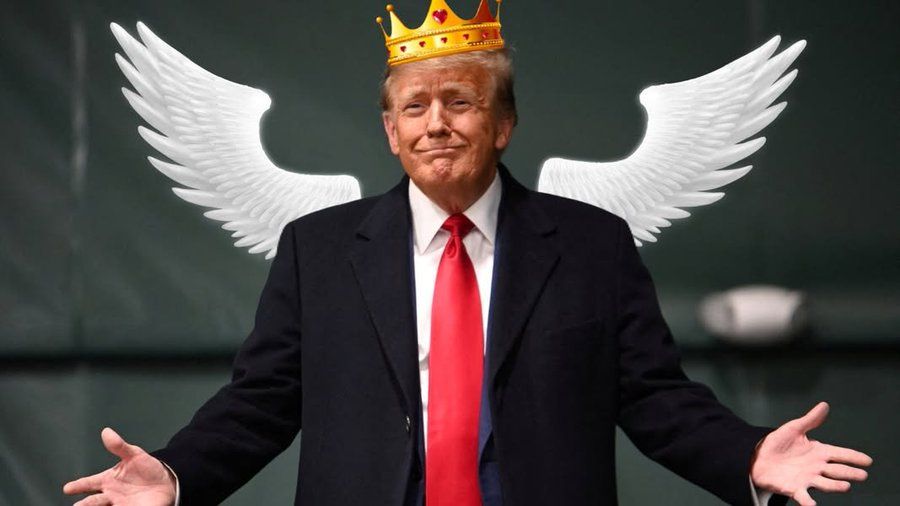
Trump’s behavior, the author argues, has become so reckless, so selfish, so blatantly contrary to American interests, as long defined even by Republicans, let alone Democrats, that the question arises: is America now ruled by a crazy king?
Friedman asks, what American president could have written a letter like the one Trump sent on Sunday to Norwegian Prime Minister Jonas Gahr Støre, claiming that one of the reasons he insists on purchasing Greenland is because he was not awarded the Nobel Peace Prize? Trump wrote: “Considering that your country decided not to award me the Nobel Peace Prize for stopping eight wars plus, I no longer feel obliged to think solely about peace, though it will always prevail, but now can think about what is good and right for the United States of America.”
Read these words slowly, Friedman advises. They do not scream “America First.” They scream “Me First.” They scream: “I, Donald Trump, am ready to take Greenland, even at the cost of breaking a nearly 77-year NATO alliance, because the Nobel Committee did not award me their peace prize last year,” ignoring the fact that the Norwegian government does not control the awarding of the prize.
Another thing, writes the New York Times columnist, if Trump declared he was willing to ruin NATO for geopolitical considerations affecting the security of the American people. At the same time, he says he cannot imagine that this could happen, but at least can imagine such a possibility. It is incredible to him that an American president is so obsessed with getting the Nobel Peace Prize to satisfy his ego and surpass his predecessor and equal Barack Obama, who received the Peace Prize in 2009, that he is ready to destroy the entire NATO alliance and trade system with Europe because he did not receive it.
The author tries to imagine a scene in which Trump shamelessly dictates this note to his aide, who sends it to the Norwegians—presumably without anyone in White House leadership stopping him, without anyone saying: “Mr. President, are you out of your mind? You cannot place your personal ambition to win the Nobel Peace Prize above the entire Atlantic alliance.”
But Trump can do it because he obviously does not value the blood, treasures, and energy that generations of American soldiers, diplomats, and presidents before him sacrificed to build a strong partnership with the Europeans.
Thomas Friedman tries to put it in terms Trump should understand: if America were a company, you would say that generations of American workers, managers, and investors built the most successful, profitable, and influential corporation in world history—the Atlantic Alliance (NATO), created on the ruins of World War II. Through relatively small investments in postwar Europe as part of the Marshall Plan, the U.S. created a healthy trading partner that helped make both America and Europe wealthier than ever; the U.S. helped turn Europe from a continent known for nationalist, ethnic, and religious wars into the greatest hub of free markets, free people, and the rule of law in the world, gaining a powerful democratic ally that helped stabilize the world and contain Russia for the last three-quarters of a century.
It is true that Europe is facing huge challenges, from uncontrolled migration to overregulation and the rise of far-right parties. And yes, it often responds to this indecisively. And yes, there are legitimate security concerns in the Arctic. But generations of American statesmen and presidents understood the extraordinary importance of the American-European pact and never even considered sacrificing it for the sovereignty over Greenland.
It is quite obvious, writes Friedman, that only a pathological narcissist who insists on having his name on everything—from someone else’s Kennedy Center to someone else’s Nobel Peace Prize—would risk all of the above to seize Greenland, especially considering that the U.S. already has the right to use bases in Greenland and station troops and missiles there. The United States also has the right to invest in mining its resources.
If America really were a company, the author emphasizes, the board of directors would respond to Trump’s behavior by announcing an “intervention” in the CEO’s activities.
Unfortunately, America’s board of directors, namely the U.S. Congress led by Republicans, has completely deprived itself of authority. And now its people, the shareholders, will be left with the bill to pay.
Meanwhile, Thomas Friedman notes, America Inc.’s competitors simply cannot believe their luck. Since the end of World War II, both Russia and China understand what Trump does not: America’s competitive advantage. While Russia and China only had vassals whom they could command and pressure to join them in any geopolitical or geoeconomic competition with the United States, America had a secret weapon that was hidden in plain sight: allies who shared its values and were ready to do difficult things, such as sending their soldiers to fight and die in its wars in Iraq and Afghanistan. One of them was Denmark, which has sovereignty over Greenland.
Russia and China dreamed that one day something would happen that would lead America to lose its allies, and NATO would collapse. Without economic allies, America could never be as influential in trade negotiations with China, and without America’s military power, NATO would find it difficult to prevent Russia from reclaiming parts of Central and Eastern Europe that it lost after the fall of the Berlin Wall.
And then one day their dreams came true. The American people elected a person who, regardless of what they tell us, is leading us not to a future of “America First,” but to a future of “America Alone” and “Me First,” concludes Thomas Friedman.
Thomas L. Friedman is a New York Times columnist in the “Foreign Policy” section. He joined the editorial staff in 1981 and has been a Pulitzer Prize winner three times. He is the author of seven books, including “From Beirut to Jerusalem,” which won the National Book Award.
