

“General, a person is very inventive
They can fly, they can shoot
But they have one flaw
They can think,” wrote the German poet and playwright Bertolt Brecht in his “War Primer.”
Ninety years after the publication of these lines, this “flaw” of homo sapiens has become one of the key dimensions of the modern military confrontation, which we now call cognitive warfare. Alongside conventional weaponry, Russia has been waging an information war since the beginning of the Russo-Ukrainian war. We can feel this aggression both inside the country and outside. In Ukraine, the Kremlin tries to divide the society through internal narratives like “criminal government,” “the children of the rich do not fight,” inciting hostility towards the Territorial Defense Centers or law enforcement agencies. Abroad, particularly in European countries, the topics often differ but are relevant there, regarding Ukrainian refugees and the need to negotiate with Moscow.
Despite European leaders being aware that a hybrid war is ongoing, societies are often unprepared to confront the enemy. “This is a consistent and increasingly intense campaign aimed at destabilizing our citizens, testing our resolve, dividing our alliance, and weakening our support for Ukraine. It’s time to call it by its real name. It’s a hybrid war, and we must take it very seriously,” stated Ursula von der Leyen, President of the European Commission, during a speech at the European Parliament in October 2025, commenting on airspace violations of Romania, Poland, and Estonia by drones of unknown origin. A month before, she began her speech on the state of the EU with quite an acute phrase for such a politician, indicating that “Europe is in a struggle for a peaceful and integral continent.”
Meanwhile, support for populist forces, often advocates of “reconciliation” with the Kremlin and reducing support for Ukraine, is growing. In Germany alone, the pro-Russian “Alternative for Germany” is the strongest political party, according to recent polls. Thus, developing countermeasures against the Russian hybrid war is extremely important for Europe today. The narrative and semantic dimensions play a significant role in this aspect.
European leaders discussed this, among other topics, during the Munich Security Conference, held a week before the fourth anniversary of Russia’s full-scale invasion. “I believe that cognitive warfare is the most dangerous for our democracies,” said Moldova’s President Maia Sandu in an interview on the sidelines of the event. “Where Russia has really succeeded is in cognitive warfare against our peoples,” noted Poland’s Foreign Minister Radosław Sikorski during a discussion at the Ukrainian House at the Munich Security Conference.
At the same time, discussing such a dimension requires a scientific approach. In fact, such an attempt is being made for the third time by Ukrainian (Ukrainian Catholic University), German (Ludwig Maximilian University of Munich), and American (University of Notre Dame) universities on the eve of the Munich Security Conference. This year, the symposium was titled “Russia’s Hybrid War and the Distortion of Truth: Rebuilding the Foundations of Security and a Just Peace.” During the symposium, scholars and publicists discussed the use of historical memory as a political weapon, a return to Europe’s moral roots, security challenges, the lessons Ukraine can offer other European countries, and attempted to define the concept of “Rashism.”
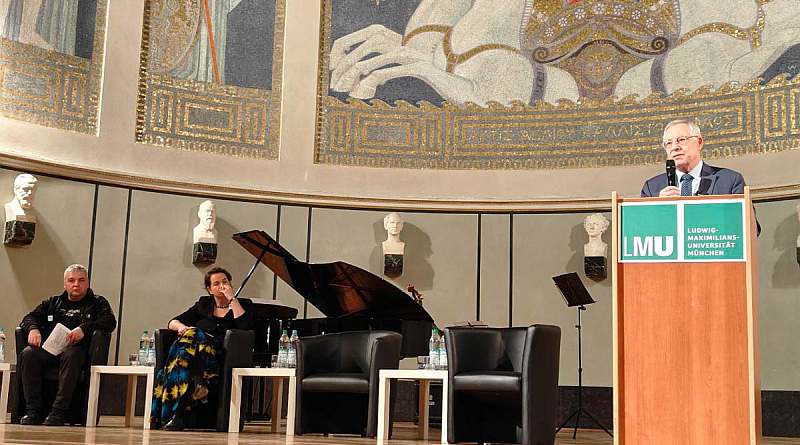
In fact, the question of what the modern Russian regime is and how to define it was outlined in the introductory speech by historian Karl Schlegel: “I have to say that I don’t know what’s happening there [in Russia — Ed.]. I still have contacts with friends/colleagues [from Russia — Ed.] who are now mostly in exile. But to understand what it is, I have only the term ‘Putinism.’ However, we need to find an appropriate description or analysis, as this term is not relevant.” The German historian believes that sometimes the most relevant analysis of what’s happening in Russia comes from rereading the “classics of the ’30s,” for example, the works of totalitarianism researcher Hannah Arendt. “Sometimes I think we need to reread the classics of the ’30s — Hannah Arendt… But we now face the challenge of finding the right term for what Russia is and what type of enemy we are facing,” he noted in his speech.
The Vice-Chairman of the Munich Security Conference, Benedikt Franke, in his brief speech at the opening of the symposium, noted that despite the annual challenge of organizing the Munich Security Conference, the year 2026 is particularly difficult. “This year, we are working under conditions of maximum uncertainty: the geopolitical situation is constantly changing, and we observe what we’ve described in our report, published two days ago, as the “return of the politics of destruction”… It is about destruction without a clear vision of how to rebuild all that has been destroyed,” Franke explained. One of the greatest concerns he mentioned in his speech, which was later echoed both publicly and in conversations during the Munich Security Conference itself, is what is happening in the USA and whether the world is moving towards a ‘post-rules’ order. “We see a country [the USA] that has been building itself for 250 years and is now deconstructing. On the other hand, we see Ukraine, which is rebuilding itself every day from morning to night. That is why Ukraine is at the heart of the Munich Security Conference this year,” said Franke. This is why Ukraine’s experience and the perspectives of Ukrainian scholars in dialogue with foreign colleagues are so important.
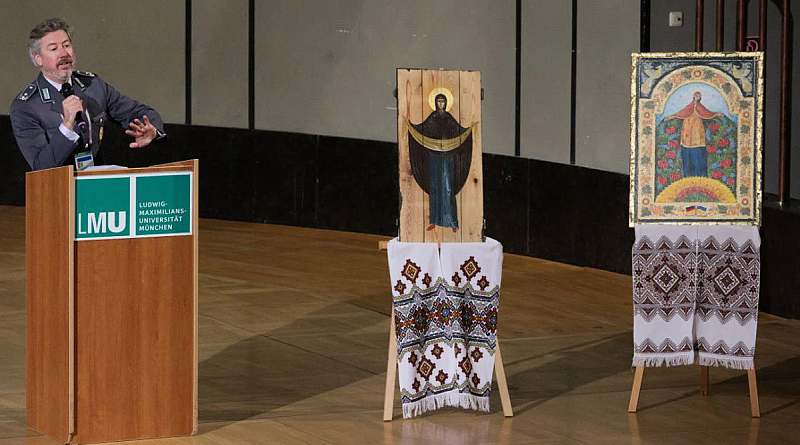
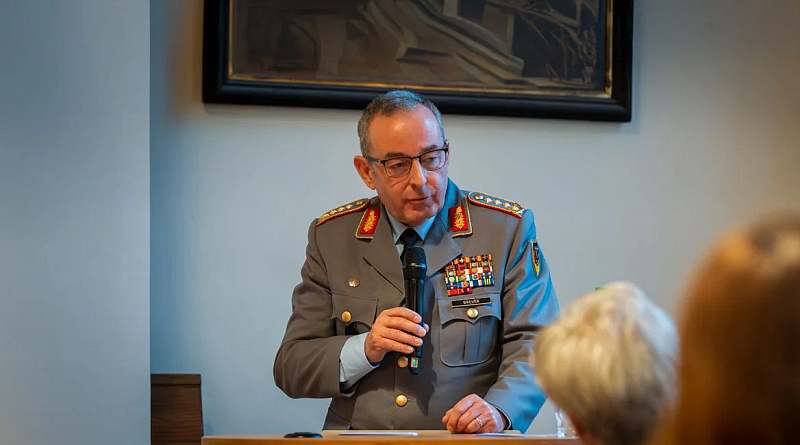
On the importance of Ukrainian experience and the readiness of European, including German, societies for war during a panel on social resilience and security challenges, the Chief Inspector of the German Armed Forces, General Carsten Breuer, said: “When I ask soldiers these days if they are kriegswürdig – ready for war – the soldiers say “yes””. He also noted that German society has made significant progress in understanding what ensures its own security. However, if the same question about readiness for war that he posed to the army were asked to society, the response would be: we are ready for defense, but not to wage war. Nonetheless, posing and discussing similar questions ten years ago, according to Breuer, would have been impossible in Germany.
From the Ukrainian perspective, such “maturing” of European neighbors seems extremely slow, as the Russian threat for them is already a reality with arson, sabotage, interference with the operation of satellite navigation systems of NATO countries bordering Russia, and other challenges of hybrid warfare. However, this “maturing” is extremely necessary for us in Ukraine. Another important dimension of this “maturing” is the correct terminology, because, as one of the symposium speakers noted, “Russia deliberately uses our categorical apparatus against us.” As in the classic by George Orwell: “War is peace; freedom is slavery; ignorance is strength.” That is why it is important to work on this “scientific dimension” of war, which, compared to all others, is even more “slow,” but instead has a more long-lasting impact.
“Our attitude to past wars is also influenced by what happened after them,” writes historian Margaret MacMillan in her book “War: How Conflict Shaped Us.” She explains that the Second World War, portrayed as a model of the struggle of good versus evil (“ignoring the fact that Western states cooperated with the Soviet Union — one of the most tyrannical countries in the world,” — and MacMillan highlights this), shaped the current perception of the First World War, which now seems pointless and immoral. The perception and interpretation of the Russian-Ukrainian war will be significantly influenced also by the terms in which philosophers, political scientists, historians, and scholars describe it both now and upon its conclusion, so it is extremely important to seek accurate and precise definitions and to resist Russian newspeak.
“Wars are contests of will and endurance, as well as competitions between systems,” concludes military analyst Michael Kofman in his recent article on the Foreign Affairs magazine’s website. According to his perspective, although Ukraine faces challenges, time is increasingly less on Russia’s side, no matter how Moscow tries to portray the situation otherwise. This is yet another argument for more actively working on common meanings and narratives to describe Russian aggression and the regime behind it, shared by Ukrainians and those who support us.
