
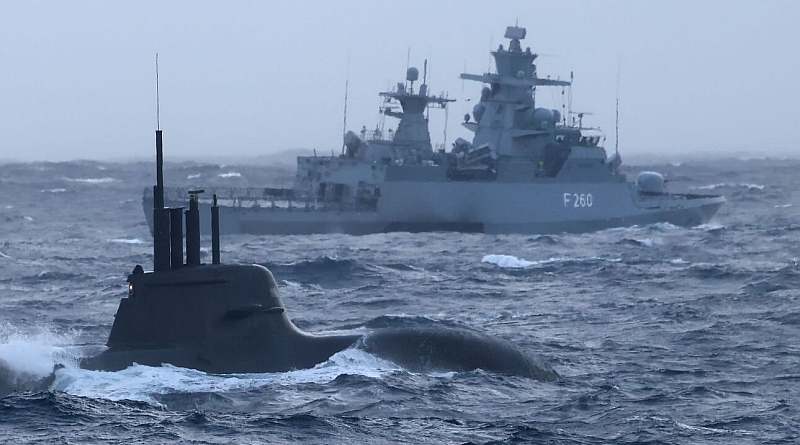
Pavlo Aksionov, BBC Military Observer / BBC Ukraine
NATO’s “Arctic Sentry” initiative, ceremonially announced last week by the alliance’s Secretary General Mark Rutte, emerged against the backdrop of strained relations between the US and European countries over Greenland.
Rutte did not disclose details of this initiative, but from unofficial comments by NATO representatives, it can be inferred that instead of the principle “The US ensures its own security by controlling Greenland,” Washington was offered a new principle: “NATO ensures the security of all its members, including the US, throughout the Arctic, including Greenland.”
Thus, NATO — particularly its European participants — responds to two foreign policy propositions of Donald Trump’s administration: that they should take more responsibility for security and that without Greenland, the US itself cannot feel secure.
Mark Rutte announced the launch of the initiative at a meeting of NATO defense ministers in Brussels. Pentagon chief Pete Hegset did not attend.
Washington has not yet reacted to this initiative. However, American military personnel likely participated in its organization, as the US has been and remains a leading member of the Alliance.
During his current presidential term, Donald Trump began discussing that Greenland should become part of the US as early as the beginning of 2025. But at the beginning of January 2026, this issue caused a serious transatlantic political crisis.
On January 6, the White House press service reported that “the president and his team are discussing a range of ways to achieve this important foreign policy goal, and, of course, the use of US armed forces is always considered as one of the options available to the commander-in-chief.”
These claims provoked outrage among European countries — US allies in NATO. Subsequently, the US president softened his position, stating that after negotiations with Denmark, European allies, and Canada, he was considering the possibility of concluding an agreement.
According to Trump, the US needs Greenland to ensure America’s security amid increasing activity by Russia and China in the Arctic.
“Arctic Sentry” is also directed against Russia and China, and this is currently its most apparent aspect.
The initiative was widely discussed at the defense ministers’ conference, but it raises many questions. The BBC attempted to find answers to them.
What is “Arctic Sentry”?
A clear explanation of this issue has not been provided in either official statements or unofficial comments from NATO representatives.
“Sentry” is referred to as a “approach,” “initiative,” but not an operation. This reflects some uncertainty in its very essence.
“Initially, the [‘Arctic Sentry’] will combine exercises such as the Danish ‘Arctic Endurance’ and the Norwegian ‘Cold Response,’ which will involve tens of thousands of people and equipment suitable for effective operation in Arctic conditions. This will clearly demonstrate that we are all ready to jointly contribute to security in the Arctic — and, in essence, the overall security of the entire Alliance,” said NATO Secretary General Mark Rutte, speaking at the headquarters before the start of the defense ministers’ conference.
This has led many commentators to talk about the formal “renaming” of existing trainings.
Rutte categorically disagreed with this statement and, responding to the relevant question, explained that the main distinction would be a unified command (the initiative is led by the Supreme Allied Commander Europe of NATO) and a unified informational space, particularly with the use of modern technologies.
At the same time, no one refers to the “Arctic Watch” as a new structural unit to which specific forces and means will be assigned.
Finally, the initiative is not time-bound. However, it is difficult to say that it will end after achieving a specific result, as its purpose and tasks have not been publicly announced.
Why is the “Arctic Watch” needed?
Speaking about the new initiative, NATO reminds that the alliance already conducts two operations with similar names — “Baltic Watch” and “Eastern Watch.”
The first began in January 2025 to protect cables at the bottom of the Baltic Sea, and the second in September after several Russian drones fell on Polish territory.
NATO notes that since the start of the Baltic operation, there have been no cable damages. There have also been no massive drone raids on alliance countries lately. Thus, these operations can be considered quite effective.
However, unlike these two campaigns, which were caused by specific incidents and aimed at clearly defined threats, the reasons for the start of “Arctic Watch” have not been articulated as unequivocally.
On the official “Arctic Watch” page on NATO’s website, it is stated that the initiative was prompted by Russian military activity in the region, growing northern ambitions of China, and Russian-Chinese cooperation. All three factors have been present in the Arctic for many years.
Russia has the longest coastline in the Arctic. Large military bases, “Arctic Trefoil,” “Northern Clover,” “Polar Star,” were built on Russian islands in the Arctic Ocean over the past decades.
The Northern Fleet with strategic submarines has been based in the region since Soviet times. Russia is actively expanding its military presence in the Arctic, building and refurbishing military objects — airfields, radars, navigational stations.
In the Arctic, Russia develops and tests new strategic weapons, such as the “Burevestnik” cruise missile and the “Poseidon” torpedo. Since Soviet times, Russian nuclear submarines have been on combat patrol in the Atlantic via the Barents and Norwegian Seas.
At the same time, Russia is developing purely economic projects — primarily the Northern Sea Route, and is also interested in developing various deposits on its shelf.
It is more challenging to define the threat from China.
China indeed shows increased interest in the Arctic, calls itself a “near-Arctic state,” and builds icebreakers. But Beijing explains this interest solely by economic and scientific reasons.
A high-ranking NATO official, commenting on this issue for the BBC, said that such a high interest of China in the region is, in itself, sufficient reason to act proactively, not waiting until China’s presence becomes threatening.
Moreover, claiming that this activity is exclusively peaceful is also not possible, stressed a BBC interlocutor. What specific information the Chinese are interested in and for what purpose they are collecting it is unknown.
How exactly NATO plans to contain Russia and China in the Arctic has not been announced.
Where will this be geographically?
This is a very important question, as it could also answer the previous one — what exactly could be the object of containment.
“In many places in the Arctic, such as Alaska, Russian and Chinese ships, planes, and UAVs penetrate the exclusive economic zone and the Alaska Air Defense Identification Zone,” a NATO representative told the BBC on this topic.
The second important region is the Faro-Icelandic gap — the line from Greenland through Iceland, the Faroe Islands, to the northern tip of Scotland. It is a gap that Russian submarines must cross to go on combat patrols in the Atlantic.
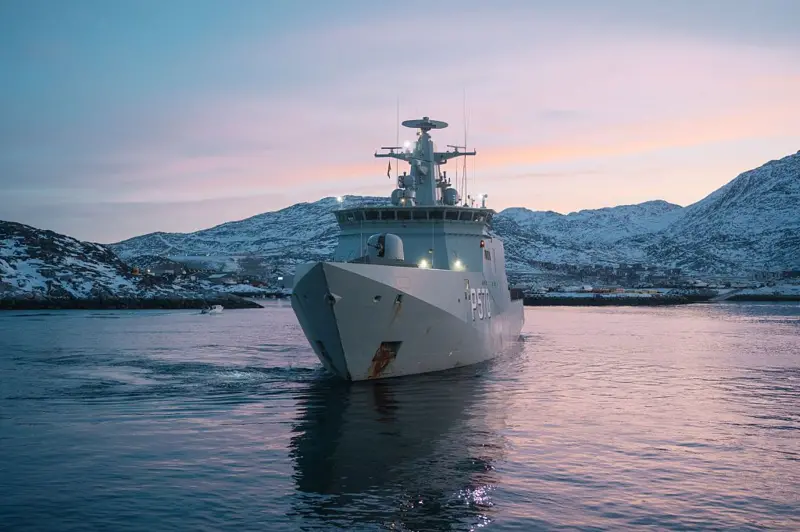
Since the Cold War, a system of sensors and equipment has been established at this gap to track submarine passages through the line.
As explained by another NATO representative during a briefing at headquarters, this line is truly very important. Last week, alliance countries conducted the Arctic Dolphin exercises there, focusing on anti-submarine warfare.
Whether Greenland will be involved in the activities of “Arctic Sentinel” in any special way, how exactly, and who will be responsible for it is currently unknown.
In comments, alliance representatives usually emphasize that this initiative covers the entire Arctic region, and since all NATO countries will participate in it, talking about any special involvement of individual states is premature.
“High latitudes” are no longer “low tension”
Although NATO does not discuss specific military plans, the UK has already announced strengthening its military activity in the Arctic.
In 2026, a carrier strike group with the aircraft carrier “Prince of Wales” will head to the North Atlantic and Arctic to ensure the presence of the Royal Navy in the northern seas. American fighter jets will also be based on the aircraft carrier.
The group will operate in the area of the Faro-Icelandic gap, but not only there.
“During deployment, the group will participate in major exercises off the coasts of the USA, Canada, and northern European allies,” reads a statement from the British Ministry of Defense.
In addition, over the next three years, the UK will double the number of its troops stationed in Norway to approximately 2,000.
Last Friday, Denmark announced that it would send four F-35 fighters to the Arctic region to strengthen the presence of Alliance countries.
It can be assumed that in addition to sharing information and joint headquarters and command, “Arctic Sentinel” will also envisage similar increases in the military presence of other countries.
“In the past, NATO adhered to the principle of ‘high north, low tension.’ Therefore, conscious efforts were made not to militarize the Arctic. But, I fear those days are over!,” a senior officer at NATO headquarters told the BBC.
Cover photo: Sean Gallup
