
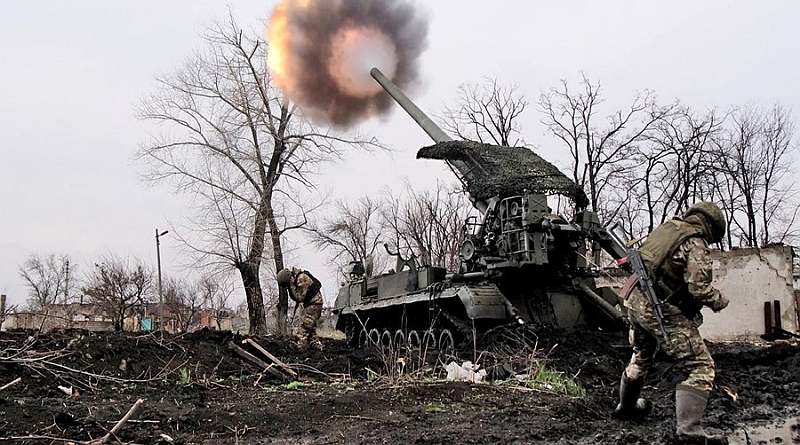
Recently, the media reported that the 34th Artillery Division, formed in the Moscow Military District, is being deployed in the Kupyansk direction. This monster is a relic of the Cold War when artillery groups were created for each command instance. So, the artillery division is a mainstay of the front (now a troop grouping). So far, units of the 62nd divisional command battalion have been spotted on the front line. The artillery division has two brigades in total — the 273rd and the 303rd. Its predecessor was part of the Western Group of Forces, which was withdrawn to the Nizhny Novgorod region and disbanded in 2009. The unit was revived from 2023 to 2025. It is known that the division is armed with 2S19 self-propelled guns, most likely the M2 modification. Just in case, the division was given the honorary name “Perekopskaya.”
But what does the sky have to do with it? The deployment of artillery at such a level indicates preparation for an offensive. Since the divisional command battalion is being deployed towards Lyman, it is clear that the enemy’s West Operational Group (also known as the Moscow Military District) will advance on Sloviansk through Lyman, which it is actually doing now. But let’s not forget about Russian tactics!
And the tactics have evolved from gaining air superiority (not achieved!) to the intensive use of guided air bombs with planning and correction modules (KAB with UMPK) and from there to battlefield air interdiction campaigns, meaning systematic drone strikes on the logistics of the Defense Forces up to 100 km from the front line. Such actions allow weakening defenses without direct risk to manned aircraft. This tactic involves the massive use of FPV drones and heavy flamethrower systems to create gaps in combat orders in areas where there is no dense air defense. This allows the enemy to approach the line of contact and deliver pinpoint strikes.
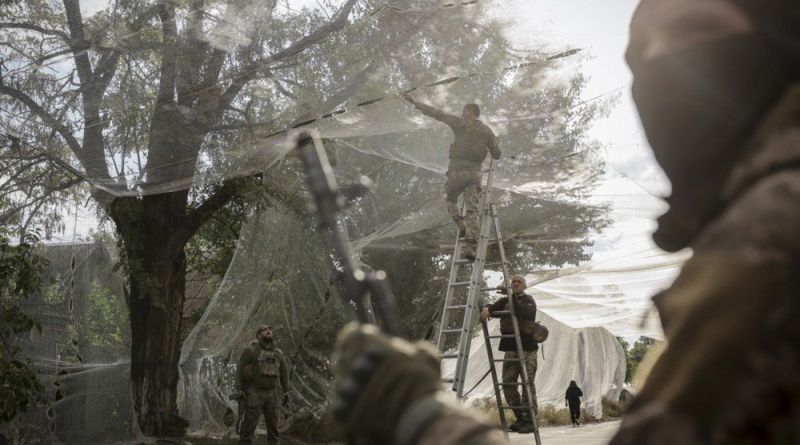
Attacks on Ukrainian logistics in the frontline zone have become a key element of Russia’s strategy of a thousand cuts. The occupiers systematically attack ammunition depots, fuel supplies, supply convoys, and transport hubs such as Pokrovsk, Kostiantynivka, and railway junctions in the operational rear of the Defense Forces, using fiber-optic-controlled drones resistant to jamming and FAB-type aerial bombs (500, 1000, 1500, 3000 kg) to complicate troop maneuvers and resource delivery to the front lines. This is supplemented by laying mines on roads using artillery systems and UAVs, which complicates movement and forces the Defense Forces to switch to nighttime transport using compact vehicles. As a result, supplying the front becomes as dangerous as the battles themselves, causing ammunition supplies to dwindle and weakening defense capabilities.
This struggle is expected to intensify in the spring, and the enemy is preparing for it meticulously. The course of organizational measures was researched by Professor Andriy Haruk of the Hetman Petro Sahaidachnyi National Army Academy, who shared the results with the public.
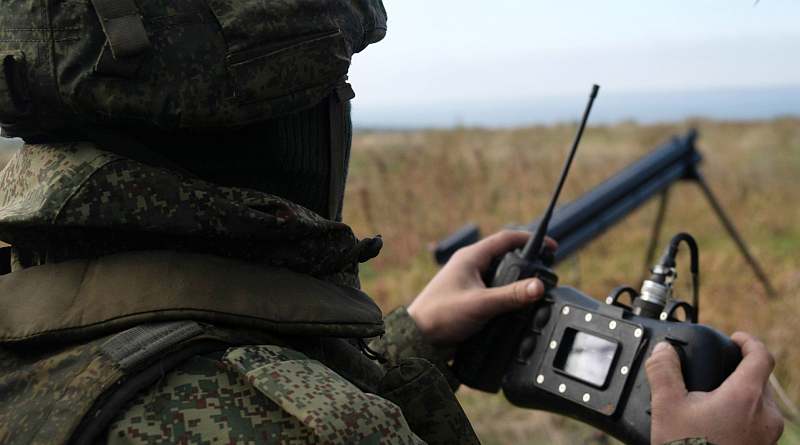
Thus, the enemy has formed drone system troops — 165,000 positions. The enemy’s general staff’s plan is approximately as follows: to have several central command centers, with each military district and fleet having a regiment (five districts — five regiments, four fleets — four regiments, and an additional regiment in the Pacific Fleet), each army having a battalion (16 armies), and a battalion in each division/brigade as well, a peculiar logic they have.
The troops already include the Rubicon Center for Advanced Drone Technologies and the Special Purpose Center “BARS-Sarmat” (formed by Roscosmos in 2023, the BARS “Sarmat” unit migrated from infantry to the Airborne Forces, deciding that from FPV drones to the intercontinental “Sarmat” is somewhat closer than understanding the wishes of infantry commanders from the “unbeatable and legendary”).
They have formed regiments:
in the Central Military District — 7th Separate Reconnaissance and Strike Regiment,
in Leningrad — 65th,
in Moscow — 71st,
in the Southern — 75th,
in the Eastern — 77th.
Based on the “Burevestnik” UAV unit, a regiment is also being formed, for whom/what and with which number — not known yet.
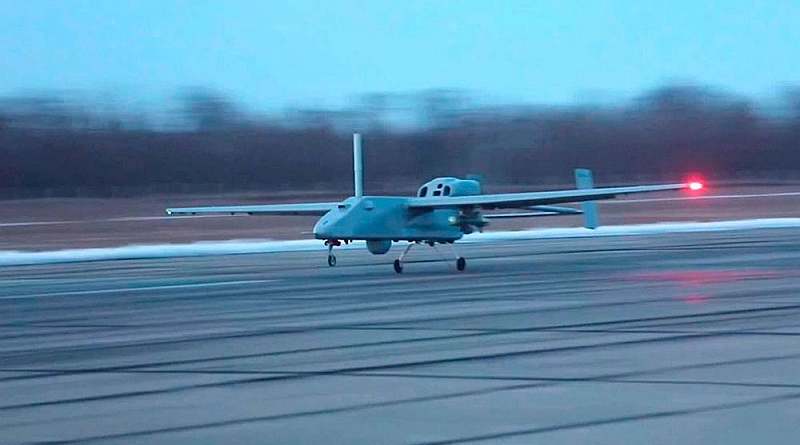
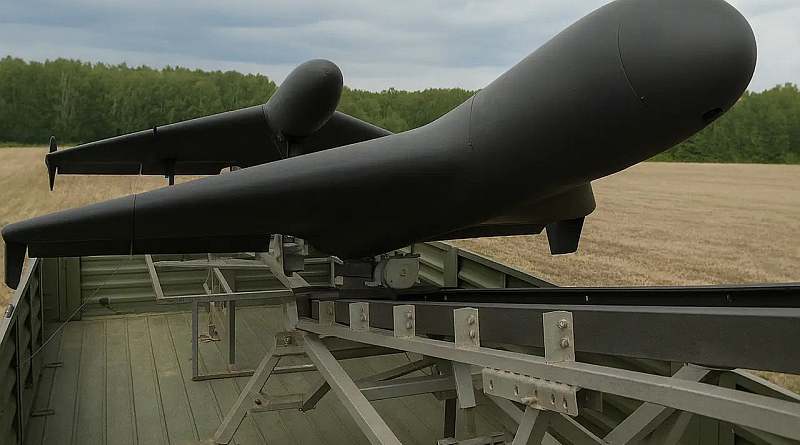
The armament of a typical regiment is known to include: kamikaze drones “Geran-2”, “Harpia-A1”, loitering munitions “Lancet”, reconnaissance UAVs “Orlan-10/30” and “Forpost-RU” (the latter is not precisely known, whether they are in the sky or in the standard — unclear).
Army Battalions:
1st Tank Army — numbering unknown;
2nd Army — numbering unknown;
3rd Army — numbering unknown;
5th Army — 1st Separate Unmanned Systems Battalion;
6th Army — 3rd Separate Unmanned Systems Battalion “Drofa”;
8th Army — numbering unknown;
18th Army — numbering unknown;
20th Army — 7th Separate Unmanned Systems Battalion;
25th Army — 6th Separate Unmanned Systems Battalion;
29th Army — numbering unknown;
35th Army — numbering unknown;
36th Army — numbering unknown;
41st Army — 2nd Separate Unmanned Systems Battalion;
49th Army — numbering unknown;
51st Combined Arms Army — 11th Separate Unmanned Systems Battalion;
58th Army — 24th Separate Unmanned Systems Battalion.
The enemy’s airborne forces are actively developing their unmanned direction:
7th Airborne Division — 24th Separate Unmanned Systems Battalion;
76th Airborne Division — 25th Separate Unmanned Systems Battalion;
104th Airborne Division — 23rd Separate Unmanned Systems Battalion;
98th Airborne Division — 21st Separate Unmanned Systems Battalion;
106th Airborne Division — 22nd Separate Unmanned Systems Battalion.
The Airborne Forces Command of the aggressor’s army has its own unmanned systems battalion — the 20th, as does the 38th Command Management Brigade of the Airborne Forces Command. The latter performs combat missions from the territory of the Kursk region, Kinburn Spit in the Mykolaiv region, and defends the occupied Crimea from attacks by Ukrainian UAVs.
In total, it is planned to form 190 battalions, meaning all divisions and brigades will have their own unmanned systems battalion.
After the enemy’s Black Sea Fleet partially hid at the bottom of the sea and partially went guerrilla, it turned out it had little to do, so they began integrating unmanned technologies into maritime operations. Each fleet is to form its own UAV regiment, while the Pacific Fleet will form two. Some formations are planned for the Caspian and Dnipro flotillas. The regiments should receive “Orlan” UAVs, “Lancet” loitering munitions, ground robotic systems, “Orkan” and “Zephyr” unmanned surface vessels (USVs), and underwater vehicles (UUVs). The task of such regiments is to counter asymmetric threats, primarily Ukrainian marine drones, and to strengthen control over the water areas, primarily the Black Sea and the Dnipro River.
The tactics of using naval components of the enemy’s UAV in their Navy are evolving based on the war experience in Ukraine. The Russians are already using USVs for mining, reconnaissance, and attacking coastal targets. For example, “Sirius-82” class unmanned surface vessels are deploying mines in the Dnipro, while improved versions of “Orkan”/”Zephyr” simulate Ukrainian drones in exercises or for attacking coastal targets.
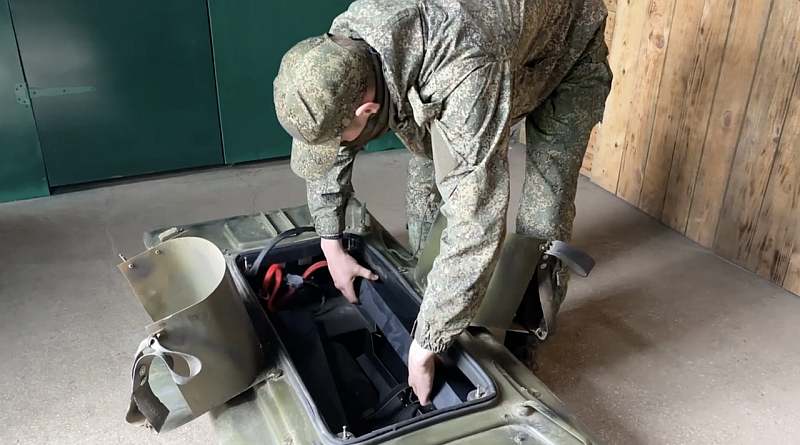
Unmanned systems regiments are integrated with traditional naval units, ensuring coordination with submarines (for example, “Yasen-M” class, of which we have none in the region) and aviation for joint operations. According to analysts, this will allow the enemy to enhance asymmetric capabilities without significant crew losses, although production and integration still lag behind Ukrainian counterparts. The overall goal of the Russian General Staff is to dominate unmanned systems by 2030 (optimists! they won’t last!), with a personnel count of 210,000.
Under the roof of the 4th Air Force and Air Defense Army of the Russian Aerospace Forces, the 50th Separate Drone Systems Brigade of the Supreme Commander-in-Chief’s Reserve is being formed based on the “Grom-Kaskad” UAV brigade. According to available information, such a brigade will have four “Forpost-RU”/”Orion” UAVs, 150 “Orlan-10″/Supercam UAVs, 22 launchers for “Lantset” loitering munitions, 21 “Geran-2” kamikaze drone launchers, six air target launchers (presumably “Gerbera”), 52 sets of quadcopter-type FPV drones, 52 fixed-wing FPV drones, 50 fiber-optic FPV drones, two quadcopter-type UAVs, two heavy quadcopter-type UAVs, 80 ground robotic complexes, 24 water-based unmanned systems, 63 sets of interceptor drones, 18 radars, 54 electronic warfare posts, and nine UAV counteraction teams. A very peculiar organization, something like “from pillar to post,” as they say in Russia.
This summer, the small skies will be hot.
On the cover: reconnaissance drone “Forpost” of the Russian army. Photo: Occupying forces’ media
