
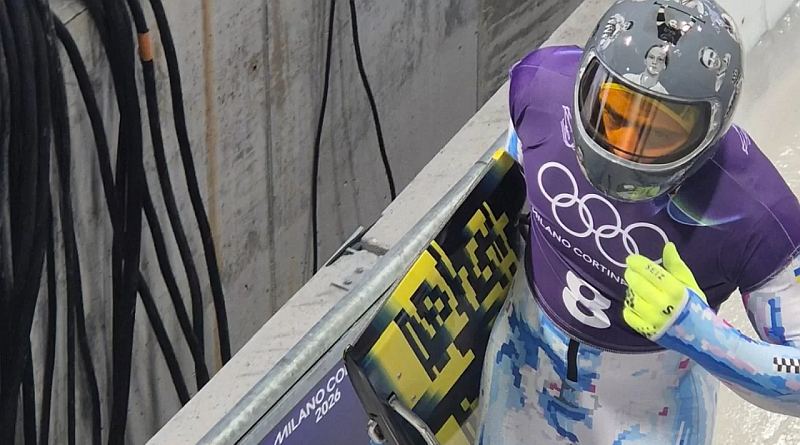

The International Olympic Committee is very displeased that we are not dying unnoticed, but trying to talk to their clients about the fact that right now, during the Olympics, while they are having a great time in the stands with hamburgers, coca-cola, popcorn, we are being killed on live broadcast. Both military and civilians, who were athletes and perhaps were not very interested in politics.
Noticing our deaths for the IOC is not only about losing profits and satisfied users, but also about the necessity to somehow respond.
And here begins the most interesting part. Because if they respond, they have to acknowledge that Russian Z-athletes publicly support the war and, accordingly, should not participate in sporting events held according to Olympic principles.
But Russia has pumped money into sports federations for decades. Some of them are literally occupied by Russians and fully controlled, although they are formally considered international!
Sports officials are no different from others. They are equally greedy for freebies, trips to Moscow, bars, girls, vodka, caviar – a full mix of Asian bribery and entanglement in corrupt traps.
That’s why there’s such resistance to Ukrainian Heraskevych, who does not want to forget Ukrainian athletes killed by Russians. That’s why there is such opposition, threats, and intimidation of ruining a sports career.
I don’t know what sports result Ukrainian skeleton racer Vladyslav Heraskevych will show. But he has already shown his human qualities, patriotism, and concern for those who, due to Russian aggression, will never be able to stand up for themselves again. It is worth a lot to stand up for those who cannot protect themselves. And this is very Ukrainian, very much in the style of our people, who demonstrate the best qualities of people who are almost no longer in the modern world.
It’s hard to say how events will unfold, but it’s really great that Ukrainian athletes, who just a few years ago were hugging with Russians, now feel their country and stand up for it to the end. Without fear of personal loss. Without doubts. With heads held high.
Because the truth is on our side, and no officials can change that.
We will win. Glory to Ukraine!

Nerves are completely shot, I’m sitting, looking at the news feed where all the world media are enthusiastically praising the rebellious Vladyslav Heraskevych and his helmet, — and I’m crying as if I’m watching a prisoner exchange…
You’ve already won, boy. Regardless of what sporting result you show, — you’ve already defeated that damned IOC, the whole gang of pedo-rashist blood-stained scum (of course, the head of the IOC is in Epstein’s files, who would doubt it!), — all they have are tainted money, but you have your dead. Our dead: to carry them on your helmet — it’s immediately such a timeless, knightly gesture (Tausend Richter voll bewaffnet! — those who read Notre Dame d’Ukraine will recognize this quote!), that you have already earned your hero’s laurels — for defending the honor of the flag in front of the whole world.
May God help you. And all those you carry on your helmet.

Ukrainian skeleton athlete Vladyslav Heraskevych took to the Olympic track wearing a helmet depicting athletes killed as a result of the Russian invasion. His colleagues supported him. The International Olympic Committee (IOC) prohibited it. The Ukrainian does not give up and is receiving more and more support, both official and from concerned individuals.
I assert that members of the IOC either forgot the history of the Olympic Games’ origin in Greece, or consciously (which is more likely) politicize this issue.
The fact is that scholars believe (and it is now the prevailing opinion) that the Olympic Games originated from the practice of holding competitions in honor of fallen heroes and warriors. The most famous literary example is the 23rd song of Homer’s “Iliad,” where Achilles holds games in honor of his fallen comrade Patroclus. A Greek warrior could compete in games to honor the memory of comrades, as the tradition of ancient athletic competitions is closely linked to funeral games.
For the ancient Greek warrior, participating in competitions that imitated combat skills (running in full armor, wrestling, javelin throwing) was a way to demonstrate the strength and courage inherited from comrades and thereby glorify their memory.
Although the Olympic Games were officially held in honor of Zeus, they retained elements of hero worship. An athlete’s victory was considered a “divine light” that brought honor not only to the victor but also to his family, city-state, and fallen comrades.
Besides the pan-Hellenic Olympics, there were local games established to honor those who died in wars. For example, the Isthmian and Nemean Games also had roots in funeral rituals.
According to the beliefs of that time, competitions were a way to avert the wrath of the deceased and transform the energy of grief into a life-affirming demonstration of the community’s strength.
I hope that Ukrainian IOC members, along with respected IOC members from other countries, will remind their colleagues of the origins of the Olympic movement.
Ukraine must also take a clear and firm official stance. Otherwise, the situation at the Paralympic Games in March could become even more complicated.
Incidentally, let me remind you that Israeli athletes honor the memory of the 11 members of their delegation who died in the 1972 attack at each Olympics. Since 2016, this commemoration (a moment of silence) has become part of the IOC’s official events.
Support from the USA would also be appreciated, as they have a similar approach to Ukraine – honoring fallen Olympians and Paralympians (see the link to the U.S. Olympic & Paralympic Museum, where there is an entire exhibit dedicated to Americans who died in wars – Olympians and Paralympians).
Pictured: Vladyslav Heraskevych wore a “helmet of remembrance” at the next training session of the 2026 Olympics. Photo: Suspilne Sport/Serhiy Zakharchenko
