
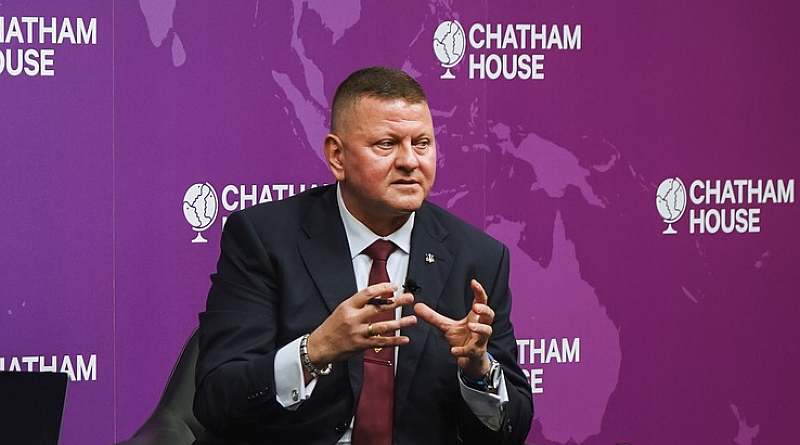

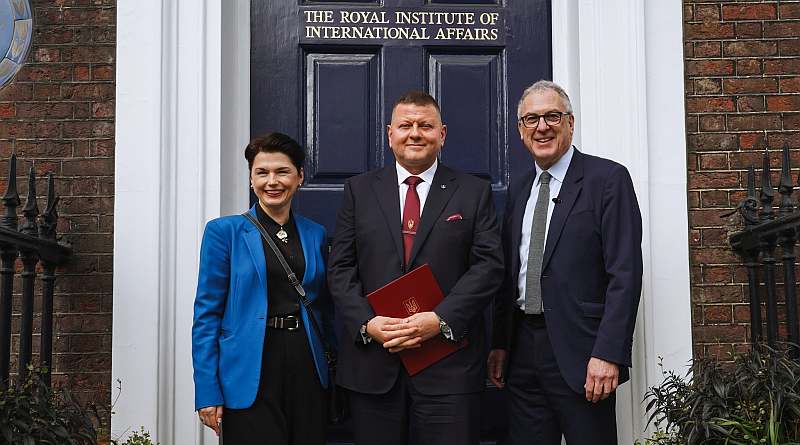
I had the honor of once again being invited to Chatham House, where I shared thoughts on the world of hard power and the future of the war against Ukraine on the eve of the anniversary of the full-scale invasion.
Modern and especially future wars have long gone beyond long trenches, powerful tank battalions, and air battles. The desire to survive, the rejection of imposed foreign will, creativity, and freedom of thought have become an exceptional incentive for Ukrainians towards technological progress and victory in the last World War II-style war. However, this very technological progress has not only discarded old doctrines and strategies but also led to a war of attrition.
In such a war, the only effective strategy in opposing Russia is not to combat their resources, but to combat their cost. It’s necessary to make the war more expensive for Russia, making it impossible for them to continue. However, Ukraine cannot achieve this alone. We need to unite for international isolation and sanctions against Russia, and also complete our homework, which involves maximizing the technologization of defense. Combined with a high culture of management, this will allow us to stabilize the front line.
Time is not on our side. It is already evident that the new front in the war has become the energy system of the country, the stabilization of which is another extremely difficult task. Transitioning from a Soviet centralized network to a modern decentralized, hybrid system is not only modernization but also the ability to survive, and thus to win.
All wars in human history have ended sooner or later. However, few have the courage to say that a war is only considered over when it is possible to avoid the next, more brutal war, even a civil one. Today the world still has the opportunity not only to make a choice but also to conclude this war in such a way as to prevent a new, much larger conflict with unpredictable consequences.
So the global community has its choice: to become the “Munich betrayers” of the 21st century and accept all the suffering of war, or to stop the war in a way that prevents another one.
We, Ukrainians, no longer have a choice. We will either perish or survive. The survival formula is clear: keep fighting, strengthen the economy, and maintain unity.
The full speech in Ukrainian is below.
Full text in English
Four years of full-scale invasion: main conclusions of the war
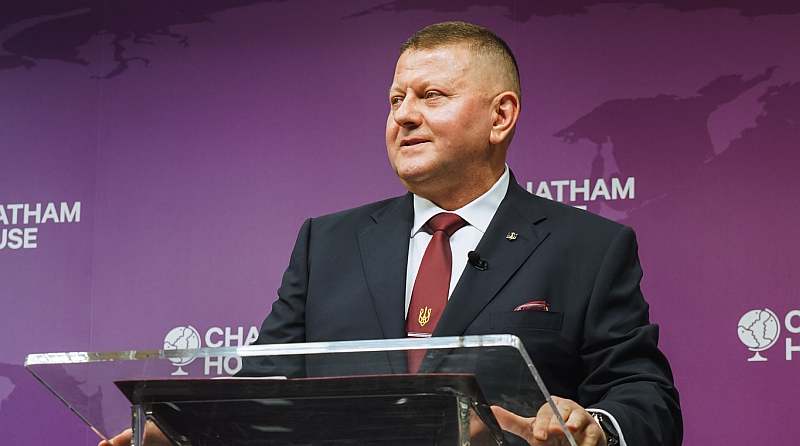
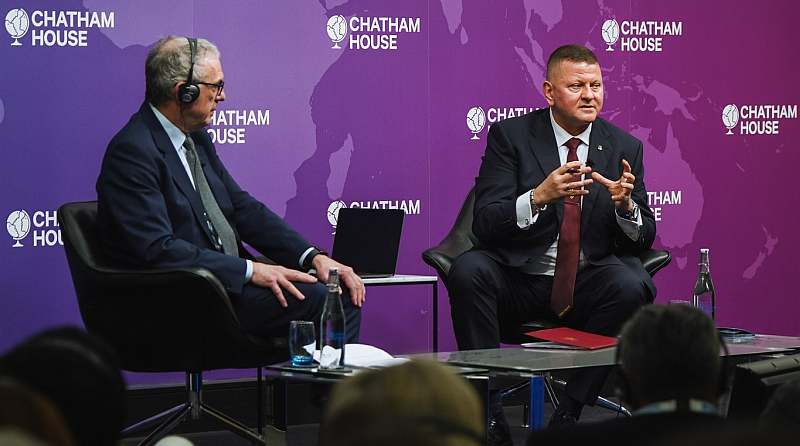
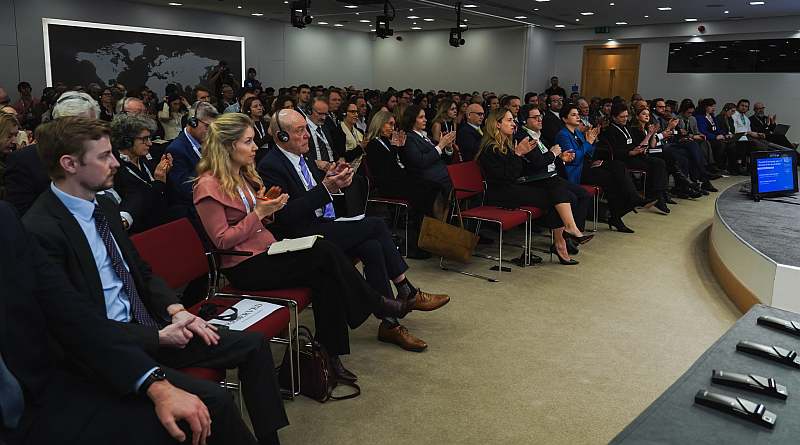
Speech by the Extraordinary and Plenipotentiary Ambassador of Ukraine to Great Britain and Northern Ireland, Commander-in-Chief of the Ukrainian Armed Forces (2021–2024), Valerii Zaluzhnyi at Chatham House, February 23, 2026.
Lately, my name has appeared in the news more often than weather changes in London. And honestly, sometimes with such creativity that I begin to suspect there’s a special department somewhere that wakes up every day thinking, “What does Zaluzhny think today? Even if he doesn’t know yet.”
Amid another wave of political battles, loud leaks, Epstein files, and global conspiracy theories, perhaps it’s worth talking about something less exotic. For example, the war in Europe.
Especially since Ukrainians have an advantage in this topic – we live it.
Today I was asked to speak in Ukrainian. Because it is the language of a country at war. And it is important to me that this speech is heard not only by experts but also by those for whom we are here today. So that we are heard not only in think tanks but also in bomb shelters.
I also understand that in the current atmosphere, any word I say can be quoted faster than a drone dismantles a horde of orcs. Therefore, I want to reassure: there will be no sensational news or political statements to headline. Or rather, there could be, but it’s not preferable. There are others to quote in this world.
Just one simple thing: reality.
The reality is that the war in Ukraine long ceased to be just a Ukrainian story. It has become a laboratory of the future. And like any laboratory, it doesn’t ask if we are ready for the experiment.
I know I’m often described as the “general who thinks in terms of technology.” That’s true. But even more, I think in terms of responsibility. Because technology changes the nature of warfare. And responsibility determines whether this war will be the last or just an introduction to the next.
And since I’m being discussed so actively in the news, let me seize this opportunity usefully. Not to explain rumors or the influence of someone’s thoughts on air temperature, but to explain trends that are changing the entire world. Unfortunately, not someone’s thoughts.
Because today the question is not who said what. The question is what the world will be like if we pretend that nothing is happening.
So let’s talk about serious matters.
Without conspiracy theories. Without illusions. And, if possible, without Munich 1938. At least, that’s not for me.
In 1947, due to humanity’s special anxiety about the recently developed atomic bomb, Albert Einstein made the famous statement: “I do not know with what weapons World War III will be fought, but World War IV will be fought with sticks and stones.”
It is with this quote from this wise person that we will begin our dialogue, specifically about what Albert Einstein didn’t know back in 1947.
I believe I have a tremendous opportunity to tell you with what weapons World War III is already being fought and will be fought, and what should we all do?
Modern, and even more so future warfare, long ago moved beyond long trenches, powerful tank fists, and aerial battles.
The desire to survive, rejection of imposed foreign will, exceptional creativity, and freedom of thought have become exceptional stimuli for Ukrainians towards technological progress. Therefore, modern warfare already integrates drone and robotic systems, distributed sensor networks, and the entire electromagnetic spectrum, meaning virtual, informational, electromagnetic, partially physical, into a single battlefield. All of this is quickly being “intellectualized” under the influence of artificial intelligence technologies.
I have given many lectures and written numerous articles about how war has changed and continues to change. I mentioned this almost two years ago. Almost no one wanted to believe it, and many criticized me. However, this reality is now past.
Today, it is no longer important who still thinks in terms of peace and is caught in the illusions of the past. The war today between us and the Russian occupiers is what it is. And we know for sure that right now, no country has enough military power to somehow deter this war.
Summarizing the four years of war, I will briefly highlight the main conclusions:
In modern warfare, the battlefield has become completely transparent. This has led to the creation of a robotic kill zone, the depth of which is now no less than 25 kilometers, and the capability to destroy logistics is constantly growing. Today it has already led to the inability to use the so-called rear zone up to 50 kilometers deep.
The classic logistical “noose,” which we successfully devised during the liberation of the Kherson region, has received new momentum. All of this has resulted in the impossibility of conducting classic offensive or defensive actions. The number of people who can physically perform tasks in the combat zone is minimal. It continues to decrease and effectively trends towards replacement by robots.
What about mobilization or the possibility of improving it?
The experience of both Russia and ours shows that the traditional approach to mobilization in modern warfare has completely exhausted itself.
Firstly, this war, long and highly intense, has shown: paradoxically, but the most expensive resource in such a war is human because restoring it takes too much time, significantly more than production cycles. Such a resource simply cannot be quickly replaced on the battlefield.
Secondly, given that the battlefield has become transparent and is controlled automatically by robots, the likelihood of a person’s survival no longer depends on the quality of their training and leads to inevitable losses, requiring distancing humans from this kill zone.
Thirdly, our experience also confirms that the issue of mobilization is sensitive and one that affects the resilience of society in a war of attrition and its readiness to support such a war. Therefore, Russia does not declare mobilization, which sometimes frightens us.
For Russia, fighting with mercenaries and volunteers versus forcibly mobilized troops are different wars, and the political consequences of such wars are different. Therefore, future wars certainly won’t involve large-scale mobilizations of the entire population.
It is more about technological and economic mobilization as the guarantee of an uninterrupted process of ensuring and maintaining technological superiority over the enemy.
Today, robots not only perform auxiliary functions, but also conduct individual assault operations, and even capture live enemy soldiers.
The use of any equipment or personnel in these kill zones has turned into a real suicide mission.
So the conclusion—on demography and war. The Russo-Ukrainian war has provided countries with demographic challenges a critically important lesson: a warfare model that exchanges human lives for tactical gains is no longer a logical or viable option. Except for Russia, although any resource for Russia is also finite.
On today’s high-tech battlefield, saturated with precision strike systems, such an approach is unacceptable not only from a moral standpoint but also in terms of tactical efficiency. Paradoxically, with increased battlefield technology, the human becomes the scarcest and only fundamentally non-renewable resource. This is especially relevant for developed countries, where demographic trends make traditional warfare approaches increasingly unacceptable.
For example, on the European continent, no country has a positive birth rate index, and every loss of life on the battlefield has more social-economic significance than military. Thus, the technological evolution towards the ‘robotization’ of warfare offers an alternative that allows maintaining combat effectiveness while radically reducing human involvement and consequently human losses.
Replacing the ultra-expensive precision weaponry that was the real game-changer of the 20th century, came the weapons of attrition. These are cheap and mass-produced, yet quite precise weapons that rapidly deplete expensive armament systems. Incidentally, these are the systems upon which the entire NATO doctrine is built. This attrition weaponry is developing consistently and effectively. Undoubtedly, no country today can handle such a deluge alone, especially those that are politically cautious. As a result, this questions the ability of even resource-rich countries to conduct prolonged warfare against smaller ones. Conversely, establishing a rational defense with old approaches, even with resources, is already physically impossible.
For instance, the war in Ukraine showed that it makes little difference how many operational frigates, corvettes, submarines, or even missile cruisers you have. All of this can be nullified by a country without a navy, since it was effectively destroyed at the onset of the war. And let’s be honest, who really controls the Black Sea now?
Summarizing the above, we can conclude that security in the era of new wars is not guaranteed by purchasing expensive and unique products.
And most importantly, success in high-intensity attrition warfare, given the reduced cost and increased effectiveness of offensive means, depends on the resilience of the economy and its capacity for continuous replenishment. We will return to this. Simply put, the ability to sustain military potential over a long period under constant tension, complex logistics, and accelerated technological changes.
The economy, combined with political and societal readiness, becomes the lifeblood of war. And it is the main target for the opposing sides. How to make the economy lead to victory? In warfare, the economy undergoes two stages. First, it is converted to a wartime footing, mobilized, and then it is replenished. The most challenging question today for Ukraine.
What does it mean to mobilize or transition an economy to wartime status? It’s simple. It means ensuring that as a result of a set of measures, military production planning becomes part of military operations planning and is independent of external supplies. Without pomp and loud statements.
Do we see this in Russia? Yes. There are all indications that the Russian economy is set on a wartime footing and is part of state policy. We feel the consequences of this every day and night. By the way, when discussing the future, remember that stopping such a military machine is almost impossible. It can only be destroyed. This is why every war is inevitably followed by an arms race.
Regarding the economy, traditional defense-industrial models — centralized factories, long supply chains, and rigid production cycles — no longer fit the modern conditions. Besides creating numerous critical vulnerabilities, they are almost incapable of adapting to real operational conditions.
Speaking of the brutal war of attrition in Ukraine, it is essential to note that this is a war against economic capabilities. The most vulnerable link in this economy has proven to be energy.
Ukraine’s energy infrastructure was traditionally built on a centralized model: large power plants and a unified network connecting regions. However, this war has clearly shown that such a system is vulnerable to targeted strikes. During the Russian invasion of Ukraine, strikes on power plants and networks became the main instrument of war. The aggressor’s goal was to cut power to cities. By the end of 2024, up to 80% of Ukraine’s thermal power plants were out of action, and energy transfer to the population was halved. As a result, in 2026, millions of people were left in the cold and without light, especially in winter.
Centralized facilities (large thermal power plants, hydroelectric plants, nuclear power plants, power transmission lines) become the “Achilles’ heel” of national security during war. If the enemy destroys several key nodes, entire regions plunge into darkness. Thus, energy security is inextricably linked not only to economic resilience during war but also becomes part of national security. Protecting energy facilities becomes as crucial as defending territories.
To fully understand the current situation, several other aspects need to be considered.
First of all, nuclear weapons. What about them?
In my personal opinion, today this super-powerful weapon more likely resembles a fig leaf on the body of an atlas, covering the true capabilities of the one who wields it. It merely suggests that there is something behind it, but does not display actual capabilities. It is a weapon of self-destruction primarily. But it is definitely not a weapon of deterrence. For example, the Zaporizhzhia NPP, despite its absolute danger, has rather become a hostage of economic and political pressure than a threat.
The next aspect. Missiles. Yes, they remain in active use despite their significant production costs. At the same time, their functional purpose has shifted from purely military applications to participating in the so-called “missile terror,” aimed specifically at striking the economic capabilities of a state. Likely, this type of weaponry will remain the most costly in a war of attrition, not only due to production costs but also because, at this stage, there are no other solutions for defense except for anti-missile systems, which of course will be more expensive than the offensive means themselves.
Missiles become another weapon of state attrition. This is obvious. On the other hand, their limited production quantity will always give predictable needs for air defense systems, which, with the right application tactics, can yield results in limiting the attrition effect. Of course, the mere presence of such missiles prompts the enemy to the necessity of having more expensive air defense systems, which will be quite significant for the economy. That’s why some are quite cautious about Ukraine’s ability to have such weaponry. Because this is truly a path to our victory and also part of the forgotten theory of non-nuclear deterrence.
Separately, to understand the full picture, I will focus on aircraft. The Russian Aerospace Forces are the second most powerful in the world, second only to the USA. Therefore, Russia has a huge advantage over Ukraine in the total number of combat aircraft. However, Russian planes very rarely dare to enter deep into Ukrainian territory due to the threat of being shot down by Western-made air defense systems. In this war, classic aerial battles are also rare. Everything is due to cost. For example, a 4th generation SU-30 fighter jet costs about 50 million US dollars and can be easily shot down by a PATRIOT system missile costing 4.5 million US dollars. Such simple arithmetic shows that this weapon cannot be a weapon of attrition, but it is used quite effectively as a platform for deploying such weapons.
Thus, today the role of strike aircraft is still preserved as a platform for delivering strikes against ground targets with attrition weapons and as a carrier of air defense systems. However, without entering the zone of engagement with enemy air defense systems. We can confidently state the emergence of a unique kill zone for manned aviation and only confirm that humans are increasingly distancing themselves from this zone. This situation in the sky allows for an operation to break through the enemy’s air defense system specifically by exhausting it with other means. Of course, this will require resources.
All of the above outlines the changes that have occurred since the beginning of the Russian-Ukrainian war, as the largest conflict in Europe since World War II, only in general terms. I want to stress again that as a result of scientific and technical progress, each domain (maritime, air, land, space, cyber) has already undergone deep transformation and continues to rapidly transform influenced by the development of artificial intelligence technologies. This process has fundamentally changed the role of traditional means of warfare and has undoubtedly affected not only the nature of combat operations but also the process of preparation, organization, and formation of defensive capabilities.
All this necessitates adapting military strategy, tactics, and operational art. It is the emergence of new technological solutions that leads to the most revolutionary changes in warfare. In the past, it was gunpowder, airplanes, or nuclear weapons. Today, it’s unmanned systems and artificial intelligence.
Therefore, when we talk about the war of the future, we must state that the military technology revolution based on unmanned systems and artificial intelligence provides unprecedented tools for warfare and destruction of the enemy’s military-economic potential. However, it is already possible to observe the main trends in the development of these technologies. The main functions that are continuously developing, including through the introduction of artificial intelligence in the process, pose a threat: the function of swarm application and the function of autonomy.
Simply put, in the near future, with the development of the resource base and hardware, we will see more intelligent and cheaper drones attacking by the dozens or even hundreds from various directions and altitudes, simultaneously from the air, land, and water.
At the same time, the autonomy of these drones will develop in two main directions. Either in a unified centralized digital space, within a general management and interaction system in real time, where all actions and processes are still controlled by humans, albeit with the help of AI. Or through fully autonomous, robotic complexes (“swarms”), both combat and support. These drones will be endowed with a high level of individual artificial intelligence, learning and evolving in real time within the limits necessary to perform combat missions, without requiring constant communication between each other or with command nodes to fulfill their missions.
This is effectively transferring responsibility to the onboard individual tactical system (drone).
Of course, it is possible to consider an option that combines these basic architectures, namely, to use the network’s advantages when possible and switch to autonomous “darkness” when there’s no other choice.
Then, logically, the most relevant task for those who need long-term security guarantees includes, among other things, working on improving swarm intelligence algorithms on one hand and finding ways to combat and counteract drone swarms on the other. Naturally, the very “laboratory” where all this is being tested is currently located in Ukraine. Let me remind you that it was precisely on the night of September 6-7, 2025, that Kyiv was attacked by 862 Shahid-type kamikaze drones simultaneously.
So, whether we agree or not, the future war is a war of autonomous and semi-autonomous robotic systems. The competition to harness the full potential of autonomous swarm UAVs is evidently capable of providing a decisive advantage both in direct combat effectiveness and in security guarantee capabilities. Of course, the prospects for developing drone swarm technologies (UAVs, ground, surface, underwater) in Ukraine must be considered in light of critical dependence on global microelectronics supply chains. Therefore, future security alliances will likely be built on a resource-security principle. For Ukraine, unfortunately, the development of relevant national capabilities is impossible without the full implementation of sustainable partnerships and the implementation of appropriate policies in the field of military-purpose digital products and services.
The current technological state of the Russo-Ukrainian war is in a transitional period. This is a period where technology is rapidly evolving, yet its development is still insufficient to completely eliminate human presence in conflict zones or ensure the full autonomy of unmanned systems.
However, conducting operational tasks of a classical war has been entirely impossible for more than two years. Traditional weapons and structures are still used but are gradually being phased out or transformed. Given Russia’s failure to achieve the political goals of the war and Ukraine’s refusal to capitulate, Russia is increasing the intensity of attacks on infrastructure, energy systems, transport hubs, and other key elements of state management and life support. Thus, the war strategy is aimed not so much at territorial conquest as at exhausting the opponent’s resources and capabilities to achieve its objectives.
All of this is happening against the backdrop of the expected disruption of the old world order. This is further intensified by U.S. policies that disregard international legal frameworks, which could lead to the ultimate destruction of the existing international system. A system that could theoretically take measures against the aggressor country and serve as a foundation for a future peace treaty. These U.S. actions also exacerbate internal contradictions within NATO, reducing both the actual effectiveness of the Alliance and coordinated support for Ukraine.
Russia is using this situation to reduce sanctions by expanding its military-industrial complex, accumulating necessary technologies, and receiving additional support from China. By inviting Ukraine to negotiations, it begins a war on a much higher strategic level. A war against women, children, and the elderly, sparing neither expensive missiles nor “shaheeds,” forcing them to freeze in cold cities, hoping for a swift capitulation.
In such a situation, where the tension and intensity of the war of attrition are increasing, it’s necessary to find a solution that not only does not harm the current geopolitical situation but also becomes the foundation for future peace, a peace based on potential capabilities rather than obligations.
Such a solution may involve performing three parallel tasks.
The first and very challenging task is to maintain the maximum circle of partners and respect their interests, without which it is impossible to withstand Russian strikes and apply pressure today and effectively build a future defense alliance, without harming future allies. This requires delicate and measured diplomatic work that has no precedent in world history due to the completely unprecedented conditions all participants in this process find themselves in.
The old rules no longer work, yet they still hold great expectations, and new ones have not even been formulated. When this happens and in what perspective is unknown.
The main condition of this process is preserving democracy and freedom, and the standard of living, which are the main achievements, for example, of Europe. There is a significant risk of arriving at situational agreements, cynical arrangements, and short-term interests without any common frameworks.
However, this needs to be done. Because the lessons of this war emphasize the necessity of uniting efforts to create defense capabilities.
This war, along with the analysis of the current development of military capabilities of leading countries, demonstrates the following: individual states will be able to independently create a technological advantage in specific areas, but no state will be able to ensure self-sufficiency across the entire spectrum of critical military technologies. Thus, the search for alliances and partnerships for joint development and exchange of advanced technologies and enhancement of production capacities will become an absolute necessity not only for us but also for countries seeking to ensure their own technological advantage and competitive capabilities in potential conflicts. Of course, I am talking about Europe, where Russia will remain a source of danger for an indefinite period.
We will need technological alliances, not treaty articles, where countries join their resources, technologies, and innovative potential with us to achieve a common strategic advantage and, consequently, gain the strength of potential capability.
The second crucial task involves the stabilization of the line of combat contact and the protection of critical objects and infrastructure. Achieving tactical successes, even through significant losses of manpower and energy terror, is primarily about exerting pressure on those who can influence not the end of the war but at least the lifting of sanctions and our support, as well as intimidating future partners.
When it is already clear that this is a war of attrition, where survival of the economy is the main goal, it is necessary to move away from the classical strategy of inflicting maximum losses and sequentially defeating the enemy. Additionally, likely due to the inability to resolve mobilization improvement issues and the disparity in demographic indicators with Russia, the only strategy is not a symmetric response and following the enemy’s logic, but changing the very nature of the war.
We need to make the war more costly for Russia, thus leading to inevitable defeat. Then, it is evident that today the task of stabilizing the line of contact is only possible through maximum technologization of defense. But transitioning to high-tech defense is possible only with stable defensive positions. If these positions can be located at unfavorable borders and the front line is not stable, it can nullify the possibilities of technological advantage. For example, due to efforts being scattered to eliminate tactical breakthroughs. Stable defensive positions can also reduce the tension and fatigue of those stationed there and allow for the preparation of necessary reserves and the scaling of optimal technological solutions.
It is also important to understand that all this must occur with the acquisition of the necessary managerial discipline, which will provide the necessary advantage. This is why Russia constantly uses the tactics of manpower infiltrations and rear area control, not only to capture additional territories but also to prevent us from seizing technological initiative. The situation is similar with protecting critical infrastructure. The problem is not even that more air defense and innovative solutions are needed for its protection, but that this system, for example, energy supply, can no longer exist and be defended in the form created in the 1950s. In such conditions, it is likely necessary to pay more attention to the strategy of decentralizing energy as a way to increase the country’s resilience to any strikes.
The military actions and their consequences have given this concept an urgent character: decentralization has shifted from a matter of efficiency to a matter of the country’s survival.
Energy decentralization involves transitioning from a few large energy sources to many small, distributed ones across the territory. This is the implementation of the distributed generation concept: electricity and heat are produced closer to the consumer at local, low-capacity power plants, renewable power plants, and in micro and mini-grids. Such an architecture will significantly enhance the resilience of the energy system against the threat of attrition warfare. This process is highly complex, yet obvious and predictable, unlike promises to not destroy such a system or to produce more air defense systems.
It is likely necessary to start the rebuilding process already, without waiting for a “peace deal” which may never come, and to initiate a new format of peacekeepers who rebuild rather than fight.
The main conclusion is that the energy system has become a new front in the war, and its stability determines the outcome of the confrontation. The transition from the Soviet centralized network to a modern decentralized, hybrid system is not just modernization, but also the capacity for the country to survive, and thus to prevail.
In any case, the preservation and protection of critical infrastructure must rely on real, not expected or uncontrolled, capabilities.
The third task is to convince our partners of the necessity of imposing significant sanctions and not to reduce the sanctions regime against Russia. In a war of attrition, this is the only effective mechanism to stop the war, which involves depriving the aggressor of the very ability to wage war.
The latest activity by Russia in the US and the intensified terror in our cities indicate significant problems in Russia’s economy. This is a real signal that essentially emanates from within the Russian state apparatus. The worsening economic situation, the threat of citizen deaths in the war, gradually creates a fundamentally different perception situation regarding the ruling regime by Russians and raises questions about the stability of the entire totalitarian regime. Such an “economic crisis” once forced the Soviet Union to stop the war in Afghanistan and led to a phase of loss of control.
The war economy, burdened with enormous defense expenditures and payments to mercenaries, is approaching a breaking point.
It is very important to continue striking at the sources of Russian income, alongside sanctions support from partners. Among the main measures should be the reduction of purchases of Russian energy resources and combating the shadow fleet, especially in the Baltic Sea.
Of course, there will be money for war in Russia until the end. However, understanding that limiting its economic capabilities and isolation must be irreversible are the only things that can lead to the end of the war.
Any war is yet another mistake of humanity and a huge tragedy. And although the causes of war are easily understandable and always clear, its consequences are absolutely unpredictable.
Every war is unique in its own way. Each has always required its own unique strategy. However, the one thing that unites all wars is their essence—they are always acts of violence, and they eventually end. It is because of their essence, because of the violence, that humanity, guided by the instinct for self-preservation, has always tried to end wars. Even the Hundred Years’ War, which lasted almost 116 years, ended. Obviously, the war that has been ongoing for the 13th year in Ukraine must also come to an end. This is an inevitable process that must finalize and cement the political goals of the warring parties.
Importantly, human suffering in sustained conscious violence almost never ended wars. Not always in history, and to be precise, with few exceptions, has anyone managed to achieve their goals. Therefore, each side has the right to justify its losses and its own, unique historical justice. And it is precisely this that sometimes drives more and more participants to war, causing wars to become not only lengthy but also global. So now, in trying to satisfy the appetites of yet another aggressor, the world stands on the brink of another war, whose outcome, as is known, is completely unknown.
Thus, the global community has its choice. Whether to become the “Munich traitors” of the 21st century and accept all the sufferings of war, or to stop a war so as to avoid another. For now, it is still not necessary to send soldiers to war.
For now, it is sufficient for our friends to at least show the will and demonstrate their attitude toward the fact that yesterday’s murderers of Ukrainian children will be participating in the Paralympic Games. By the way, every disaster began after such Olympics, where supposedly sport was outside politics.
For us Ukrainians, there is no choice left. We will either perish or survive. The formula for survival is simple: continue to fight, strengthen the economy, and maintain unity.
All photos: Facebook/Valerii Zaluzhnyi
