
The weather outside is still February: some Kyiv apartments are +22 °C, while others are +8 °C. Some are happy with warm radiators, while others blame the authorities. Yet, there are those who independently decide when and how much to heat their homes. It’s all reminiscent of an energy mishmash, seemingly impossible to untangle. Actually, no. Experts generally understand how to transition Kyiv from the Soviet heating model to a modern one, where heat is supplied smartly, economically, and without accidents. Texty.org.ua explored what future heating might look like. Spoiler: complete disregard for central heating is unlikely, but cool innovations will save us.
Three Ways to Stay Warm
In fact, there are only three methods of home heating.
First method: centralized. The same traditional Ukrainian approach, where a large CHP plant or boiler house heats an entire district, and hot water travels kilometers through pipes. In peacetime, it’s convenient. But war has highlighted the main disadvantage: one missed missile, and tens of thousands are left without heat.
Second method: autonomous. A boiler serves one or several buildings and is located directly next to them or even on the roof. The heat travels a short distance, losses are smaller, and so are the bills. For new residential complexes, this is already the norm, and for older buildings, the goal. Autonomous buildings handle the aftermath of attacks best, given there is gas and backup power for the boilers.
Third method: individual. Having a personal boiler in an apartment or private house offers complete freedom, but also requires full responsibility. Small towns in Ukraine were forced onto this path in the 1990s. This option is problematic for high-rise buildings due to safety requirements. Therefore, for Kyiv, Kharkiv, or Dnipro, individual heating is more of an exception.
Today, almost everywhere, the heat carrier is water, sometimes with additives to prevent freezing. Steam heating is a thing of the past (more on that later).
Scheme for Kyiv
The capital’s plans are documented in the official Scheme for Kyiv’s Heating Supply until 2030. It was developed by the Institute of Technical Thermophysics of the Academy of Sciences and approved by the Kyiv City Council. The war has made adjustments, but the direction remains unchanged: fewer losses, lower temperatures in the networks, more automation and control at the building level.
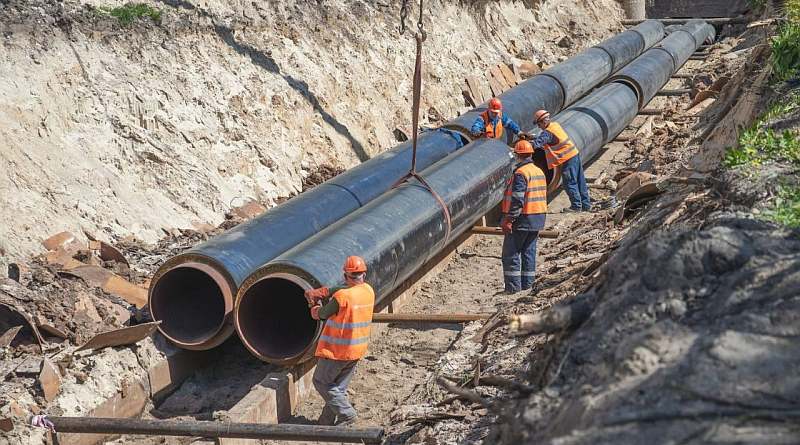
The main problem with the capital’s heating is losses. A significant portion of the pipes is worn out, and 30–40% of the heat warms the ground. The approved Heating Scheme of Kyiv involves replacing two-thirds of the network. Instead of old steel pipes, they plan to install modern, well-insulated ones.
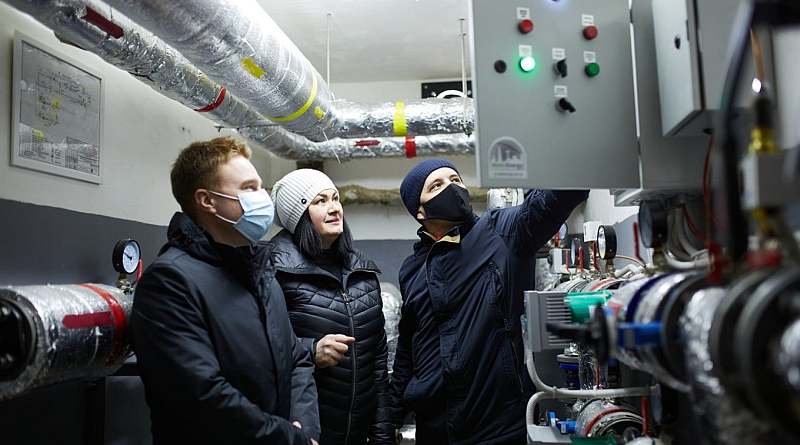
The key necessary change is the massive installation of individual (building-level) heating units. ITPs are automated units in a building that allow staying connected to central heating while also connecting own heat sources (a gas boiler or a heat pump that extracts heat from air, ground, or water) and quickly switching between them depending on the situation.
ITPs become the “brain” of the building. They allow reducing the network temperatures from the Soviet 120–150 °C to much safer and more economical 70–95 °C. They also distribute heat evenly in the building, eliminating the old problem of some apartments being too hot while others are cold.
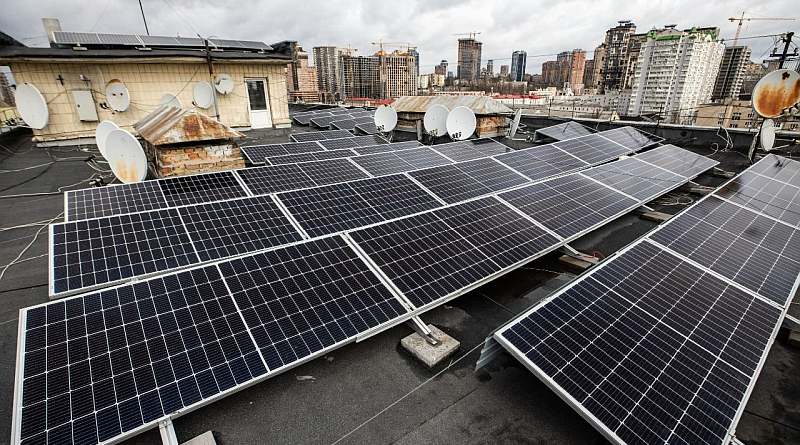
Plans also include developing cogeneration (modular mobile units that produce heat and electricity by burning gas), using waste heat (byproduct heat generated by industrial enterprises), solar collectors, and heat pumps. All of this should reduce fuel and electricity consumption and make the system less vulnerable to accidents and Russian strikes.
Of course, amid this winter, much of what is declared seems distant. Currently, Kyiv is forced to resort to temporary solutions such as decentralized gas and diesel units, generators. But the new Heating Scheme provides an answer on what to do after stabilization.
The idea is not just to patch up the old system but to gradually build a new, flexible, and less centralized one.
A Brief History of Heating
A bit of history to understand where we are now and where to look.
The first generation of centralized heating appeared at the end of the 19th century in the large cities of Europe and the USA. It operated on steam with a temperature exceeding 200 °C. It’s impressive but inconvenient: the heat losses are immense, and even a small pipe malfunction can lead to severe burns.
The second generation was formed in the 1950s–1970s. In our case, this is the mass Soviet urban development. The scheme is simple: hot water at a temperature of 120–150 °C moves through pipes to panel buildings. This system still supports most Ukrainian cities.
The third generation, which Ukraine is only approaching, works with lower coolant temperatures — 70–95 °C. However, it uses well-insulated pipes and ITP. In Scandinavia, this has been the standard for recent decades. While here it is almost a privilege.
The fourth generation, which is already actively working in Western Europe and Southeast Asia, combines centralized heat supply with heat pumps, solar panels, and waste heat from industry and data centers. Managing such systems resembles a “smart home.”
The fifth generation seems like science fiction at first glance: water circulates in the network at a temperature of 10–25 °C, and each building, using its heat pump, brings the heat to a comfortable level. These systems have almost no losses and work for both heating and cooling in summer. They are already being built in Germany, the Netherlands, and China.
Most Ukrainian heating networks remain at the level of the second generation, sometimes with fragments of the third. We cannot leap to the fourth or fifth generation — this requires huge investments, complex technologies, and society’s readiness for a different model of energy consumption.
The main question is how quickly and massively to transition to at least the third generation? How to find a balance between centralized and autonomous heating?
Hybrid Model
The Russian strikes on CHP plants have formed three approaches to the heat problem in Ukraine. The first is to restore large district heating plants and strengthen air defense. The second is to transition to a semi-decentralized model with dozens of smaller cogeneration stations, local networks, and “bridges” between them. The third is full decentralization, where heat is produced by autonomous boilers for one or several buildings.
The reality is that completely abandoning the centralized system is impossible — Kyiv was built with large district heating plants in mind. But sticking with the old model is no longer viable due to the war. Therefore, the most likely path is a gradual transition to a mixed system.
Within the hybrid model, large CHP plants will be partially restored, while autonomous heat sources will also appear. Buildings and neighborhoods will gradually become less dependent on the large pipeline.
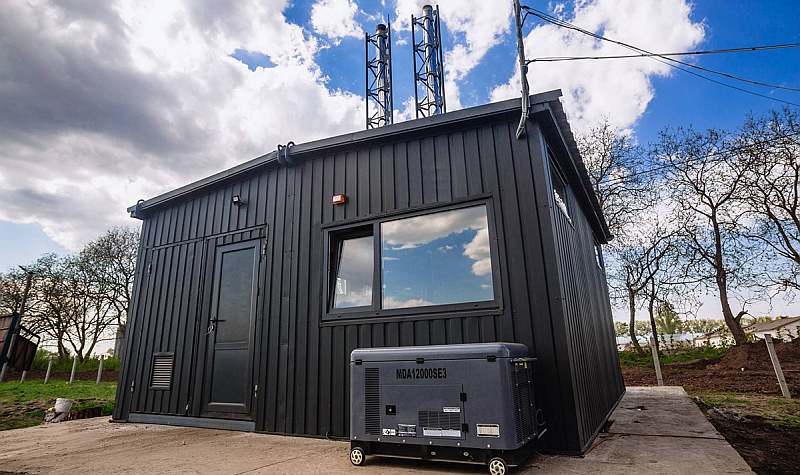
A key element of such a system is the ITP. To put it in perspective: installing an ITP in a high-rise building costs from 1 million UAH. This unit does not produce heat and does not replace the central network, but it separates the building’s internal system from the main pipeline problems. In essence, it is the simplest step toward autonomy.
The ITP also serves as a technical foundation for future solutions. It has a modular structure that allows for easy component changes and intelligent management. Over time, a heat pump or gas boiler can be added to it, granting the building freedom of maneuver.
In other words, the building’s heat point becomes a starting point, allowing for the choice of development direction depending on how the situation evolves.
Homework
Mass installation of residential IHS should proceed regardless of when the war ends and what the fate of the large CHP plants will be. Even if hostilities cease, the risk of renewed escalation remains. Kyiv’s example shows: the necessary steps are known. The question is why Klitschko focuses only on traffic interchanges and parks instead of energy (and other) infrastructure.
In summary, the thermal transition of Ukrainian cities is inevitable. The issues are the availability of funds, the pace, and whether there will be enough political will to implement the plans. Much will depend on the position of society.
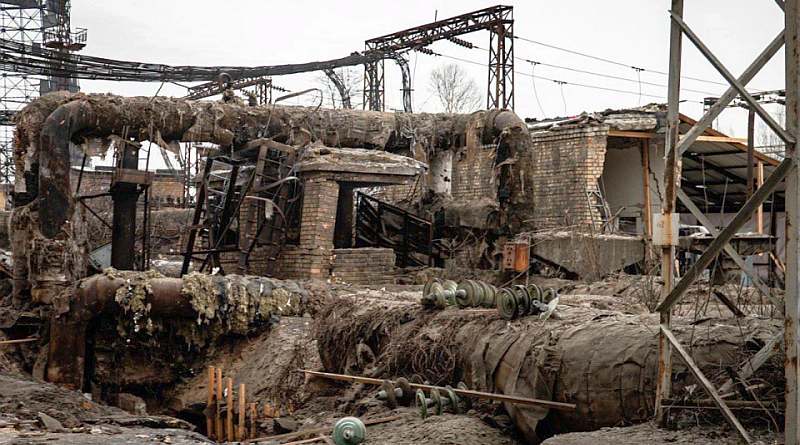
In the cover image: Destroyed Darnytska CHP. Photo: LLC “Euro-Reconstruction”
