
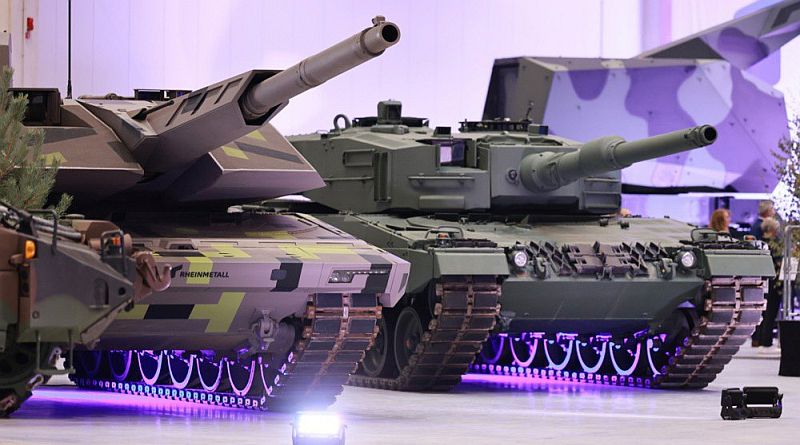
So, a brief overview of what is happening in the European defense. Surprisingly, Europeans have proven to be more adequate partners than the US. Now, as Donald Trump is causing quite a stir with Greenland (although nothing prevented him from deploying any bases there under the 1951 treaty), Europe remains an oasis of adequacy. All these threats of tariffs on Scandinavian countries and French wines because the US ‘suddenly’ needed bases—a complete scramble.
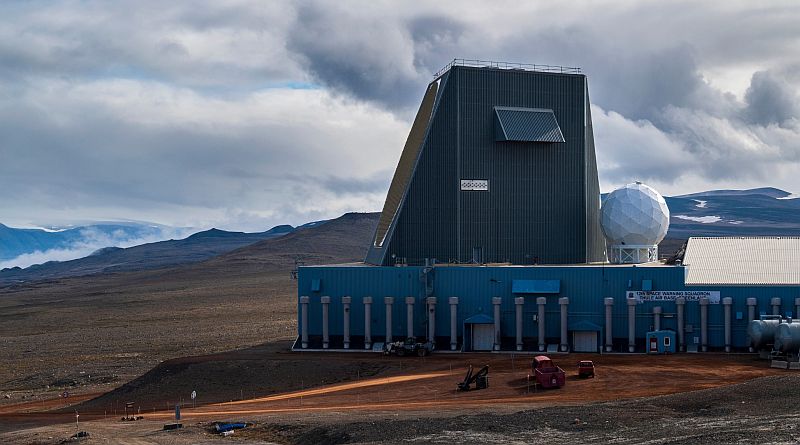
At Pituffik Base, where early warning radar for ballistic attack is stationed, there are currently only 160 personnel. So when you joke about 13 Frenchmen and 13 Germans, you should understand that during the Cold War there were six thousand. Neither Denmark nor any tariffs on wine prevent the deployment of any group in the region according to the same 1951 treaty, under which the US confirms Denmark’s sovereignty in the region.
Therefore, besides the jaw-dropping stories from the ginger original about the ‘golden dome’ and assertions that Greenland can only be protected by US troops, there’s nothing to add.
It’s extremely amusing: a coalition of European countries participated twice in the invasion of Iraq and Afghanistan at the request of the US. In one case, there was a test tube with mysterious white powder, which was never found with Saddam, although his gas attacks on Kurds, ethnic cleansings, and conflicts in the region that greatly affected hydrocarbon prices were more than enough.
But the provided service is worth nothing, and now Trump tells how little the EU spends on defense and that Europe should buy weapons for Ukraine while the US imposes tariffs on the EU and broadcasts through his mouth: ‘Get out of Greenland!’. Tomorrow, Canada will ‘fall ill’ again, and the day after he will want to stop the ninth war—between Armenia and Azerbaijan.
Overall, everything will be extremely difficult as long as this administration is led by a frankly unhealthy person with strange obsessions, like the story of Rurik and the Pechenegs, only in the context of Danish ships.
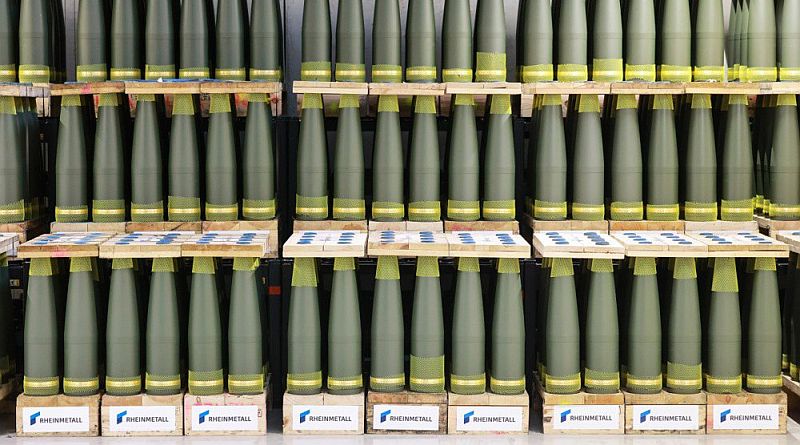
Last year, European manufacturers reached a peak in producing one and a half million shells of 155 mm caliber. Only Rheinmetall delivered 700,000 “boars,” which is just a third of the EU’s capacity. The plan for 2026 is two million units. To reiterate, these are only 155-mm shells, and there are also 105-mm and numerous post-Soviet calibers in Romania and Bulgaria. Thus, the European Union has surpassed the USA, which continues to talk about “golden domes” and “golden battleships,” while North Korea accumulates more shells. Concurrently, the SAFE program was launched — 800 billion euros on the table from the first eight economies of the EU. By 2030, this will be a single defense order in a unified field for joint loan funds.
The manufacturer of IRIS-T systems invested one and a half billion euros in expanding production and opened a facility in Saarland to produce more air defense systems. Today, the plan is 11 complexes per year, expanding to 16 units by 2027. This is a serious package for both Ukraine and the EU’s “Sky Shield,” in which IRIS-T serves as the primary medium-range missile for air defense systems.
On January 23, 2026, the German company Diehl Defence opened a new missile integration center in Nonweiler. The aim is to sharply increase the production of the IRIS-T missile family, which saves our cities. Orders from Germany, Denmark, and Sweden are planned years in advance, and the market value of European defense companies has tripled since 2022.
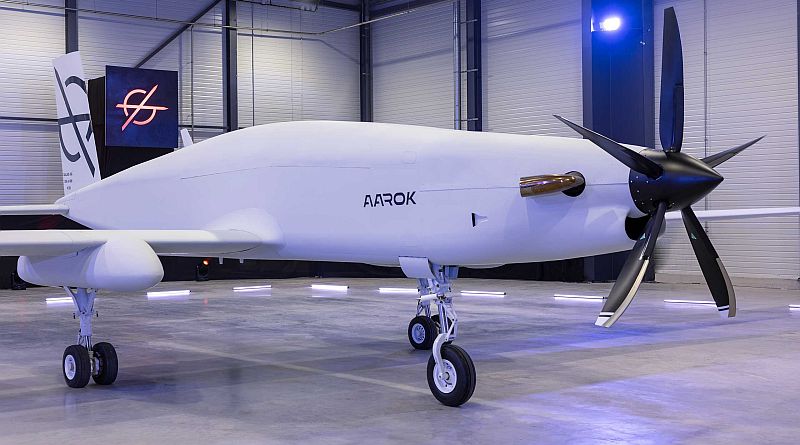
France has also announced that it is deploying the production of long-range guided munitions. Renault and Turgis & Gaillard factories plan to produce up to 600 drones per month. The program is designed for ten years with a total of 72,000 units. This is a direct response to the success of Ukrainian long-range systems and recognition that in the event of threats from “shaheds” towards the Russian Federation, tens of thousands of UAVs will fly from factories beyond the reach of “sushkas.”
Amid pressure from Trump over Greenland, NATO command confirmed readiness for a special Arctic mission. Denmark is accelerating the purchase of Lockheed Martin radars, and a coalition of Norway, the UK, and the Netherlands plans to strengthen the fleet to protect critical infrastructure on the shelf. I remind you: their fleets can challenge China independently, both in aircraft carriers and in nuclear submarines.
In principle, the European defense industry is growing at a wild pace, with most manufacturers loaded with a ten-year horizon. Shares of Rheinmetall have risen by 180%, and defense funds ETF show a 30% increase over the year. In the near future, investments in defense and nuclear energy seem extremely promising. The capture by Italians of a shadow fleet ship of the Russian Federation carrying scrap, as well as the French tanker, plus two tankers off Africa that suddenly lost pace, indicate that the cheerful times for the Russian oil industry are over.
The Defence & Aerospace sector in Europe now is not just a buzz, it’s a guaranteed government order for decades. Companies like Rheinmetall, Leonardo, Thales, and Dassault are transitioning from industry to Tech unicorns with AI solutions and massive investments.
Everyone stomped their feet for a long time, saying the EU is asleep, but it has woken up and is trying on grandpa’s uniform. It definitely won’t be boring, I guarantee.
