
Kateryna Ostapenko, Vladyslav Faraponov / Tyzhden
Since Donald Trump came to power in January 2025, the United States set out to “restore American dominance in the field of mineral resources,” which was subsequently accompanied by a series of executive orders and agreements with international partners.
The Trump administration clearly explains the heightened priority of minerals as a necessity to reduce dependency on China, and thus political maneuvering.
Critical minerals have recently moved to the center of global geopolitics, given the increased demand for them in a new world where electronics play a central role in the economy and defense.
China’s dominance in the field of minerals should not be surprising. A corresponding deliberate strategy began back in the 1980s, developed over decades, and was further consolidated in the 2015 plan titled “Made in China 2025.”
By directing enormous investments into such fast-growing industries as electric vehicles, clean energy, and semiconductors, China was able to secure almost complete dominance over the market of critical minerals. The country controls 70% of the world’s rare earth element extraction, and its management of processing makes China a crucial hub in the supply chain.
The danger for the United States lies in China using its resource advantage as leverage. In recent months, this tactic has become sharply visible in the U.S.-China trade confrontation. In early October 2025, China’s Ministry of Commerce expanded export control over rare earth elements, adding five minerals to the previous April list.
These restrictions were a kind of strategic maneuver aimed at gaining economic concessions from the U.S. and its allies. Despite the subsequent agreement on a temporary truce, in which China suspends new export restrictions for a year and the U.S. reduces tariffs on Chinese goods, the threat of excessive Chinese dominance in the field of critical minerals has not disappeared.
The issue of access to critical minerals for the United States is so serious that it was recognized as a priority in the 2025 National Security Strategy.
To combat Chinese dependency, at the beginning of his second term, Donald Trump adopted a determined state-capitalist approach. It involved supporting the “America First” policy through increasing domestic extraction of necessary metals and developing intergovernmental bilateral agreements with state funding support and public-private partnerships.
Although the US mines some critical minerals domestically, they are insufficient. Mountain Pass in California houses the only operational rare earth materials mine, yet it lacks adequate infrastructure to process the necessary amount of critical minerals.
An alternative is the so-called “friendshoring” — trading agreements with friendlier countries possessing known critical mineral reserves. This led to the creation of the Minerals Security Partnership in collaboration with Australia, certain EU members, India, Japan, Norway, South Korea, and the UK to build a platform for non-Chinese mineral supply chains. Simultaneously, the US, along with G7 countries, launched the “Global Infrastructure Investment Partnership” program to counter China’s “Belt and Road” initiative.
However, Trump’s tariff policy, even against partner countries, negatively impacts any initiatives of collective resistance against China’s resource dominance, undermining trust in the American partner. Thus, the United States continues to seek potential allies to gain greater access to critical minerals.
What role is assigned to Ukraine in Trump’s resource policy?
Once important for Soviet Ukraine, the mining sector gradually began losing its strategic significance, thus confirmed data on the resource quantity in the country’s subsoil is scarce. However, Ukraine is considered rich in a large number of minerals and has approximately 20,000 documented deposits containing over 20 critical minerals and rare earth metals. Various estimates suggest their total value could be between $14 trillion to $26 trillion, comprising about 5% of the planet’s critical mineral reserves.
The potential entry of American companies into a new source of rare earth and other rare metals was undoubtedly an important factor in Trump’s foreign policy strategy, but far from the only one.
One of his main accusations against the previous American president, Joe Biden, was the spending of “350 billion dollars” on aid to Ukraine. Therefore, the proposal for access to deposits as a way to commercialize this aid, presented by the Ukrainian side back in October 2024, was positively received in the United States, as it opened opportunities to justify US military support domestically.
Thus, the agreement to establish the American-Ukrainian Reconstruction Investment Fund, signed on April 30, 2025, does not obligate the United States to provide further military assistance. However, before its signing at a Cabinet meeting, Trump stated that the US would be able to effectively recover these funds: “We made a deal where our money is safe, where we can start digging and doing what we need.”
The agreement was also not intended as a security guarantee, and thus it is clear that its full and successful implementation depends on a potential peace agreement. It should include certain commitments from Ukraine’s partner countries to ensure security and protection in the post-war period.
There were claims that the mere presence of American enterprises and investments on Ukrainian territory, especially near the front lines, could have a deterrent effect, preventing Russian attacks. However, during the full-scale invasion, foreign companies, including American ones, repeatedly became targets of Russian drones and missiles. Therefore, this component of the agreement no longer works, as attacks are not a signal for NATO allies to protect their business.
In fact, the initial version of the agreement envisaged the actual transfer of Ukraine’s mineral reserves to the US as compensation for their assistance. Later, teams managed to reach more favorable terms, retaining full ownership for Ukraine, with profit distribution now at 50% each.
This means that Ukraine was able to avoid a situation where the agreement would be perceived directly as a “debt payment” for assistance. Instead, its final version confirmed both Ukraine’s independence and a partnership-oriented relationship.
The signing of this agreement is a significant success for Ukraine. Thanks to this, it will be able to attract investments for the development of an economy shattered by military costs over the coming years.
Such cooperation also reflects President Trump’s foreign policy approach, which is based on creating foreign partnerships on the basis of mutual economic interests. The strategic priority of the United States in the situation with Ukraine, as well as with other countries, is rather to ensure the flow of raw materials than direct ownership of resource assets. Moreover, as the US seeks to reduce its dependence on Chinese supply chains for critical raw materials, this agreement highlights Ukraine as a potential alternative.
At the same time, although the White House positions the agreement as beneficial, any real results will only be visible in years to come. It is important that the agreement focuses on prospective rather than existing mining projects.
For Ukraine, this means that it will take several decades for actual construction and the start of profitable activities, not to mention that a prerequisite for this is ensuring a relatively safe environment. According to some assumptions, large-scale production of rare-earth elements is unlikely before 2040.
On the other hand, it is worth understanding that the United States is trying to play the long game, securing a potential platform that could provide profit and a good additional source of necessary resources when (or if) circumstances allow.
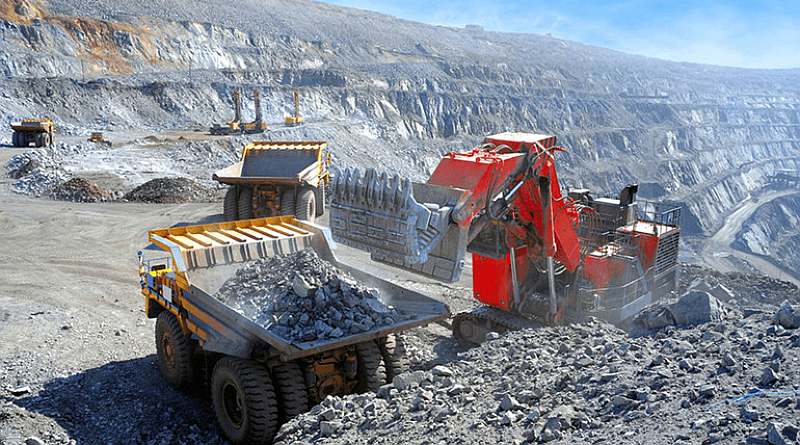
Cover photo from open sources
