

In Moscow, there is significant dissatisfaction following the conclusion of the annual World Economic Forum in Davos. The Kremlin was counting on Trump to dismantle the entire system of Euro-Atlantic solidarity and ultimately the collapse of the entire Western bloc.
It must be acknowledged that there are significant contradictions within the Western community as well as between individual EU member countries.
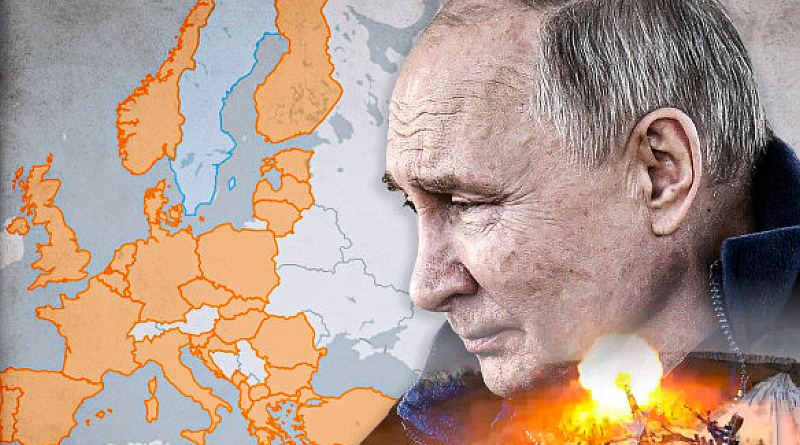
The latest trend is that Europeans are gradually postponing the timeline of a potential direct military confrontation with Moscow. According to new alarming assessments, within the next 12 months, Russia might attack the Baltic countries, which it views as a problem for controlling the Baltic Sea. The attack could be on Lithuania to control the Suwalki Corridor, or on Estonia because of its sea ports. Latvia should also be wary, considering the size of the Russian diaspora in the country. It turns out that a Russia-NATO war could start 3 years earlier than planned, before Putin concludes a peace agreement over Ukraine.
It seems that this is why GRU General Kostyukov last week gave a comment to Zarubin, which ended with the phrase “everyone understands everything.”
Russia and Ukraine do not want to quarrel with Trump, so they have to engage, essentially simulating negotiations. There will certainly be no harm in this, so why not, but the result is unlikely to be substantive.
Peace for Europe on its Ukrainian flank may never come, and if Putin feels weakness and the effects of increasing American isolationism, it will be easy for him to expand the front with another theater in the Baltic. Here, the focus will be on surprise and blitzkrieg. Russian generals are preparing “the capital of the Baltic country X in three days” instead of “Kyiv in three days.” Unfortunately, this is no longer military fiction.
What could deter the Russian aggressor? First and foremost, decisiveness in countering the entire spectrum of its malicious actions, both overt and covert. Putin plays on disagreements, uncertainty, and hesitation.
If we consider the Russian political discourse from January 2026, Russian propaganda placed a colossal bet on the actual invasion of Greenland by the USA, its seizure from Denmark, and annexation. Direct parallels were drawn with Crimea and other military conquests by Russian imperialists.
But Putin faced great disappointment when tensions around Greenland decreased. NATO Secretary General Rutte acted as a competent intermediary between Washington and Copenhagen. A détente followed after Davos, and now civilized negotiations on revising the 1951 agreement on Greenland are on the table, aimed at restoring the US position on the island within legal frameworks. The USA, implementing joint Arctic defense, will gain new bases in Greenland to counter threats from China and Russia in the region. Furthermore, NATO member states will increase contributions for financing security in the Arctic region. Russia will need to bolster its military presence over an enormous and inaccessible expanse, spending billions of scarce resources to safeguard its interests in the Arctic.
Meanwhile, purges in the upper echelons of military power in China, the fall of the all-powerful General Zhang Youxia, and the army’s transition under the control of neo-incompetent military leader Xi Jinping, like Putin, weaken China and undermine Russian hopes for serious cooperation with Beijing. It is likely that the Chinese will increasingly focus on Taiwan, meaning Putin will have to adjust plans for the war in Ukraine and for invasion in Europe.
A strong obstacle to Russian aggression will be the new logic of defense actions by small and medium-sized European countries. Instead of fully relying on NATO’s omnipotence, they are shifting to principled pragmatism, variable geometry in security, and situational defense alliances.
Undoubtedly, all these points collectively serve as a significant counterbalance to the Kremlin’s aggressive plans.
