
Since we have already seen what planes from two carrier strike groups plus 300 Israeli aircraft can do to an 80-million strong country, we have finally reached the summary table on the EU, which “sleeps, doesn’t wake up, and will collapse tomorrow.” I think it will be useful for many to update their operational memory.
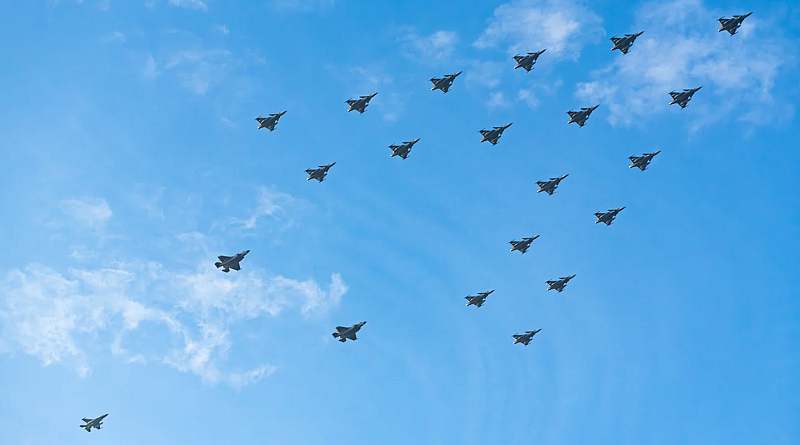
Reminder, pilot flight hours in the EU for years have been 180 hours. This is not just flying in a straight line. It includes air refueling, night missions at ultra-low altitudes, operating under the most intense electronic warfare conditions, and simulating fights with “hard-to-detect targets.” One hour of such flights in intensity equals three hours of ordinary patrolling.
Throwing iron based on ground coordinates does not help conduct an air war against an equal opponent, just in case about the Russian raid.
1. “Front line”: heavy and multi-role fighters.
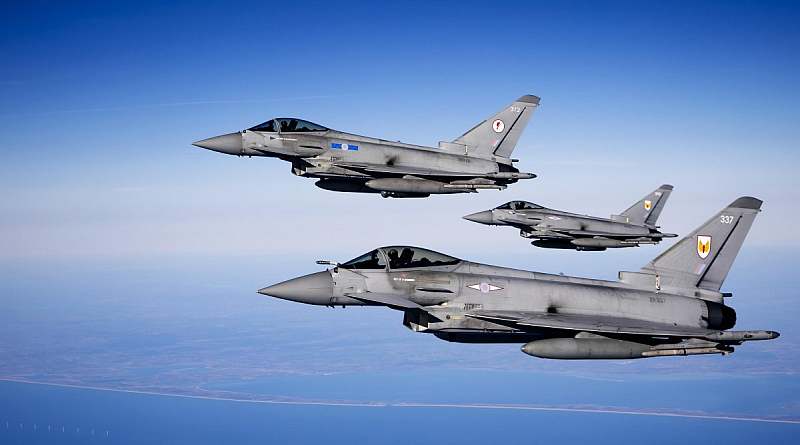
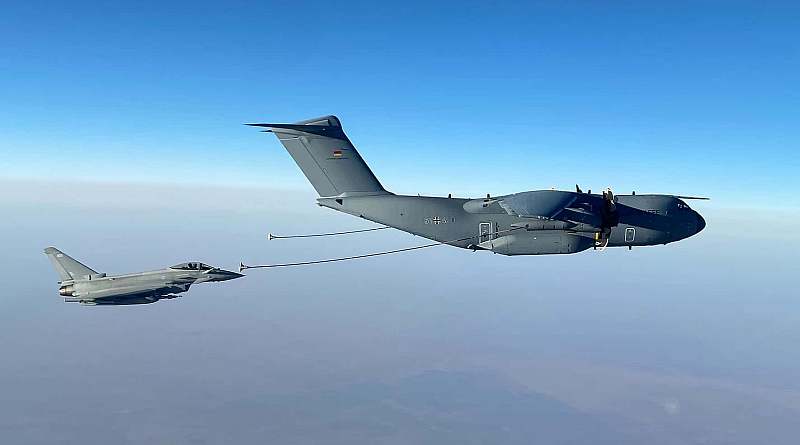
These are the ones that will take down Su-35s, intercept missiles, and work as a “scalpel” at the rear. In total, this is ~1600 aircraft in constant readiness: ~480 Eurofighter Typhoon (the backbone of Europe’s air defense), ~230 Dassault Rafale (including the naval version), ~550 F-16 (the most common “workhorse”), ~120 JAS 39 Gripen (“forest fighters,” capable of taking off from roads), ~140 F/A-18 Hornet and ~80 of another Mirage 2000.
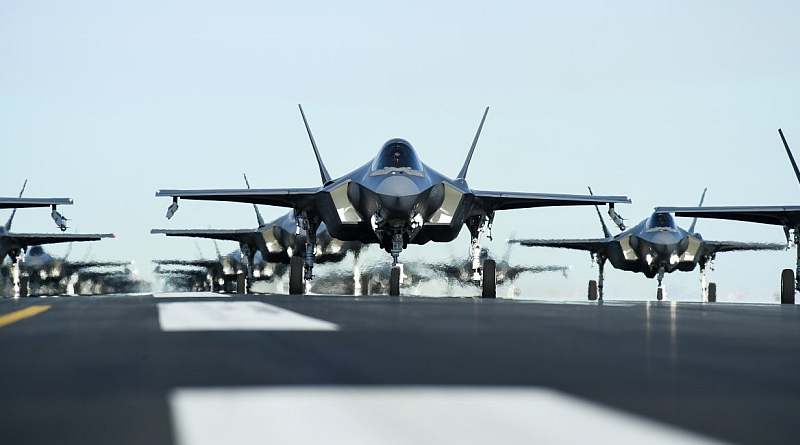
2. “Stealth spear”: fifth generation (F-35 Lightning II).
As of 2026, deliveries are in full swing. These aircraft go unnoticed and take out radars and S-400s. Currently, it’s ~200-220 aircraft (United Kingdom, Italy, Netherlands, Norway, Poland, Belgium, Denmark). Germany and Finland are preparing the infrastructure. Plans by 2030 — 600 units. Not 14 Su-35s per year.
The breakthrough weapon for the F-35 is the JSM missiles with a range of 500 km and the small guided bombs SDB-II StormBreaker, which can fit up to eight on board. Europe is currently actively stockpiling its arsenal: Norway and Finland have a reserve of 200-300 JSM units, and the production line is running at full capacity, while British, Italian, and Norwegian StormBreaker reserves are estimated at 1,500-2,500 units. If 50 F-35s are launched, they will add around 100 JSM missiles or 400 guided bombs to the salvo. This swarm of small targets will overwhelm and burn out any positional area of the S-400 up to a depth of 100 kilometers in a minute.
3. “Drone Hunters”: training-combat and light aviation.
These will save the resources of expensive fighters by chasing “mopeds” and working on ground targets. Together ~500+ units: BAE Hawk, M-346 Master, L-39/L-159, Korean FA-50, and turboprop PC-21/Tucano. Some will drop unguided rockets and smart bombs, some will distribute electronic warfare with a container, some will intercept drones.
4. “Force Multipliers”.
Without them, combat aviation is blind planes with empty tanks.
AWACS (Eyes): ~25 units (Sentry, GlobalEye, CAEW). Russia doesn’t have these, we killed the program, leaving three old ones in the line. This is a verdict for air ambushes and deep raids — everything will be visible for hundreds of kilometers inward.
Tankers: ~50 units (A330 MRTT). It’s clear what for — to work from dozens of airfields across Old Europe, remaining unattainable.
Maritime Patrol Aviation: ~60 units (P-8 Poseidon, Atlantic 2). Submarine killers, but they will definitely work with anti-ship missiles on land.
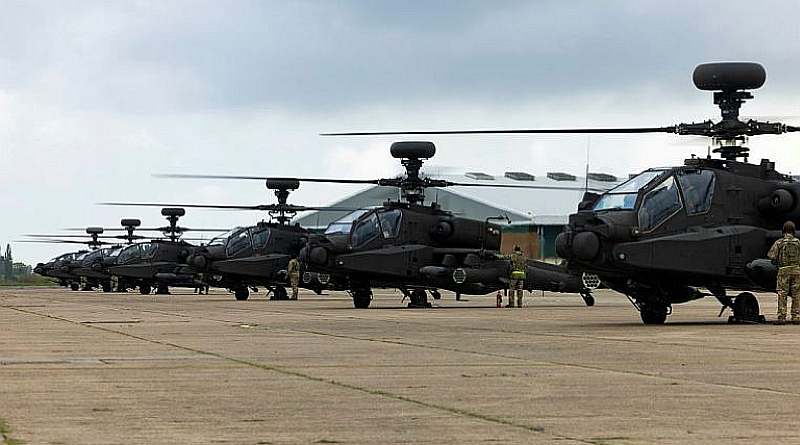
Helicopters: ~450 attack (Apache, Tiger, Mangusta) and ~1,800 transport-combat. Some think that the technology to install a laser pointer and a minigun on board is solely Kyiv’s prerogative, and they have no skills?
In the warehouses (“Plan B”) are aircraft that can be raised in 2-6 months: ~300 old F-16 and Mirage, ~100 Tornado, ~40-50 MiG-21/29 and Su-22/25.
Mathematics of missile volley: only heavy cruise missiles (Storm Shadow, SCALP, Taurus) with warheads of 450-500 kg and a range of 500+ km are considered.
SCALP: 70 Rafale aircraft with 2 missiles each = 140 pcs.
Storm Shadow: 140 aircraft (Typhoon/Tornado) with 2 missiles each = 280 pcs.
Taurus: 110 aircraft (Eurofighter/Gripen/F-18) with 2 missiles each = 220 pcs.
Total of the first wave: 640 heavy cruise missiles in one volley.
Such volleys can be launched at least five times a week, targeting every nitrate plant, chemical weaponry factory, divisional headquarters, and major warehouse in the European part of Russia. The EU can currently produce 15-20 such missiles per month (with a plan to increase to 40-50), but remember the lend-lease: the USA produces 720 JASSM-ER per year (plan — 1100) and will gladly sell them to the EU.
“Smart Iron” (JDAM, Paveway, AASM Hammer).
These are “brain” kits ($25-50k) that convert old bombs into precision-guided munitions (range of 25-70 km). The total stock in Germany, the UK, France (their Hammers fly up to 70 km), Poland, Italy, and the Netherlands is 20-25 thousand units. This accounts for 20,000 destroyed positions, pilot stations, communication nodes, and bridges. In a major war, this would last for one and a half to two months of active combat.
The problem is that to deploy JDAM, you first need to suppress air defenses, but Europeans can, like us, work from very low altitudes, especially since their electronic warfare is better than the Russians’. Europe has enough “smart iron” to turn a country like Iran or the European part of the Russian Federation into a lunar landscape in a month; their strategy is for one devastating blow. Disrupt the pace in the first 60 days.
Because a long war for Russia is death. The combined GDP of Europe is about 10-12 times larger than Russia’s. For every ruble Moscow spends, Europe can put up ten euros without straining the middle class. I repeat: they are mobilized, while these are not yet, but it’s one to ten.
In a long war, Russia will switch to “analog” (iron and simple metal), whereas the EU will scale up precision technology. Europe manufactures its own machinery, while Russia will be patching holes and cannibalizing the old.
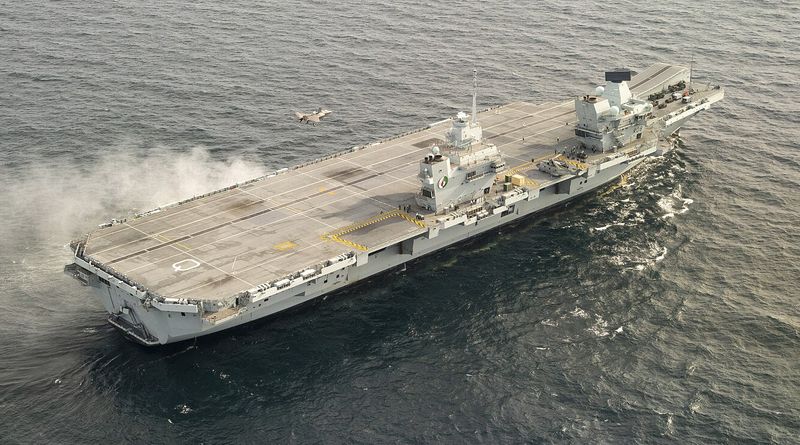
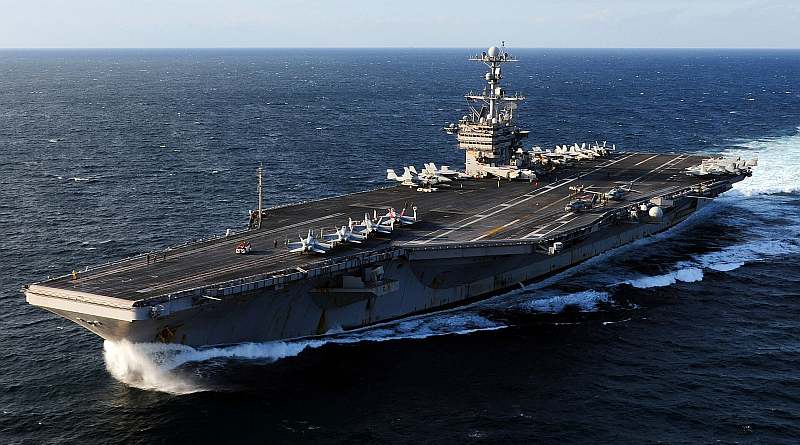
Navy: What a French aircraft carrier, two British ones, and a dozen helicopter carriers will do to the “Kuznetsovs” — I hope is now clear? France uses MdCN cruise missiles (similar to the “Tomahawk”) with a total arsenal of 250-300 pieces on FREMM frigates and submarines, while the Royal Navy of Great Britain relies on 150 American Tomahawks on Astute-class nuclear submarines.
The simultaneous naval salvo of the European fleet, which is physically loaded into launchers right now, consists of 100-120 cruise missiles that will finish off headquarters from unexpected directions. Plus, Spain, Italy, Norway, Poland, and Germany have hundreds of heavy anti-ship missiles capable of hitting coastal infrastructure at 200-300 km, taking out ports and warehouses.
Europe will not storm landings near Voronezh. It will methodically take out the rear: warehouses, bridges, substations, drone workshops, emergency vehicle assembly points. Even if Russia could do this (spoiler: it can’t), it would be in the least developed regions of the EU, while Moscow will suffer entirely.
Did you read the analysis on saltpeter in Dorogobuzh? There are only a few such plants in Russia. Europe has enough bombs to turn the entire Russian industrial base into monuments to Soviet industrialization in six months. Without chemicals, there is no gunpowder, without gunpowder, there is no war.
Blockade: The Baltic Sea is now a “NATO lake.” The Black Sea is a closed jar. Vladivostok hangs on a single railway line, Murmansk is in the sights of Finnish F-35s. This is a perfect economic noose. When one system trades freely and the other does not, the end is somewhat predictable.
Any attempt to attack the Suwałki Gap, the Baltic countries, or withdraw Berlin from supporting Kyiv will be halted, struck by thousands of smart bombs, and buried under the weight of the blockade.
All stories about “maybe they won’t fly” are for consumers of Moscow’s propaganda or those frightened by drone overflights. Because Sweden and Finland joined the EU and NATO not for consultations. If they had doubts, they would have remained neutral. But neutrality in 2026 equates to a greater risk than “Spanish planes won’t fly.”
All those who for years claimed that the West had reached the end of history and would be overwhelmed by thousands of “shaheds” suddenly plunged into a reality where “shaheds” can’t break through to Israel because they are shot down by the Jordanian Air Force and the British from the Akrotiri base.
The Iranian “roast” is just a demo version of what happens when dictatorships face systemic might. Mathematics is relentless: an army on the verge of mobilization, shifting to “analog” hardware and cannibalizing old machines, always loses to a digital industrial conveyor.
Featured: Eurofighter fighters from Great Britain fly over the North Sea after refueling from an MRTT aircraft from the Eindhoven Air Base as part of NATO “Ramstein” exercises, April 2, 2025. Photo: NATO
