
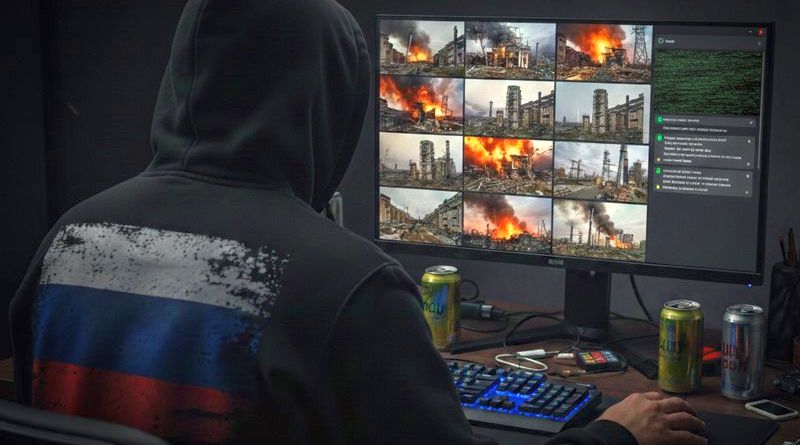
The Center for Countering Disinformation at the National Security and Defense Council of Ukraine has recorded peak activity of Russian bot farms and a change in tactics of information attacks on the topic of heating and electricity shutdowns. Systematic monitoring of the information space shows abnormal activity of automated networks on the topics of power outages, according to the CPD report from January 20. The unnatural speed of comment appearance, their synchronization across different platforms, and atypical ratio of reactions to views all indicate that a significant portion of negativity is generated by algorithmic bots.
Russians have been experimenting with tools to influence public opinion in Ukraine throughout the years of full-scale invasion. What the CPD describes can now be seen even with the naked eye, especially on Facebook. Where heated topics are discussed, there is also an influx of bots. Fake accounts are racing to comment on power outages, cold apartments, recruitment centers, NABU investigations, and political scandals. Harsh, cynical, and categorical in their judgments, they stubbornly push Kremlin-planted narratives.
Some comments gather hundreds or even thousands of likes, and algorithms further elevate such “successful” statements to reach more users. If social media users lack critical thinking skills, they may start thinking like bots. Because when you read dozens of times a day that “the government stole everything, which is why there’s no power” or “the recruitment centers are worse than the Russians,” and you haven’t formed your own clear opinion, you might believe someone else’s.
What real Ukrainians now write (and likely think) alongside bots cannot be ignored. Calls to oppose recruitment centers, discreditation of the military and authorities undermine national defense capability. What can we counter with?
Bots love energy protests and military scandals
As part of the “Black Winter” campaign, Russian bots place responsibility for the consequences of Russian strikes on the energy infrastructure on the Ukrainian authorities, according to the CPD report. They spread fakes about “losing control,” “goods shortages,” and manipulate claims about supposedly unfair distribution of electricity and its “irrational use.” A separate direction is the discreditation of resilience centers (claiming it’s dangerous because “recruitment centers patrol” and their overall poor provision).
Russians have delved deeper and somewhat adapted their tactics. They create networks of pseudo-local channels and communities (like the network of Russian propaganda resources ZOV), which imitate regional news and discussions. There, “among their own,” they exploit socially sensitive topics and everyday fears. The proliferation of new sites, content localized for specific regions and cities, aims to create the illusion that there is an “alternative opinion” in the regions, according to CPD analysts. This is intended to destructively influence the Ukrainian audience from there.
The influence is comprehensive. “The topic of recruitment centers is still a top issue, but in second place for the bots is the topic of energy,” explains Andriy Kovalenko, head of CPD NSDC.
Dmytro Zhmailo, executive director of the Ukrainian Center for Security and Cooperation (UCSC), adds that they are trying to combine the TCC topic with the SZCH. He says there was relative calm during the holidays, but now there is a lot of activity. “They are trying to push the theses ‘TCC to zero’, ‘SZCH will be amnestied after the end of hostilities’, plus they are circulating Kyrylo Budanov’s statement about the failure of communication on the mobilization issue,” he says. “This story is actively gaining momentum.” UCSC conducted its own research on bot activities, their content production, and counted about 200,000 mentions of the corresponding content in just a few weeks, starting from the end of 2025. In just one week, from January 5 to 11 of the current year, there were up to 26,000 of them. “About 30,000 authors are trying to fragment Ukrainian society,” says Zhmailo.
They keep repeating in various ways everything related to the TCC and forced mobilization. They spread fakes that more than 90% of those mobilized die immediately and spread theses that volunteers from 2022-2023 have long since perished. “By the way, I can confidently say that these volunteers are the backbone of our military, and this is one of the reasons why they cannot be discharged from the army now (and this is one of the key problems),” notes the analyst and co-founder of the UCSC.
So far, the number of positive mentions online is growing only in the topic of recruitment, but not for long: Russians will start discrediting this process as well, Zhmailo is convinced.
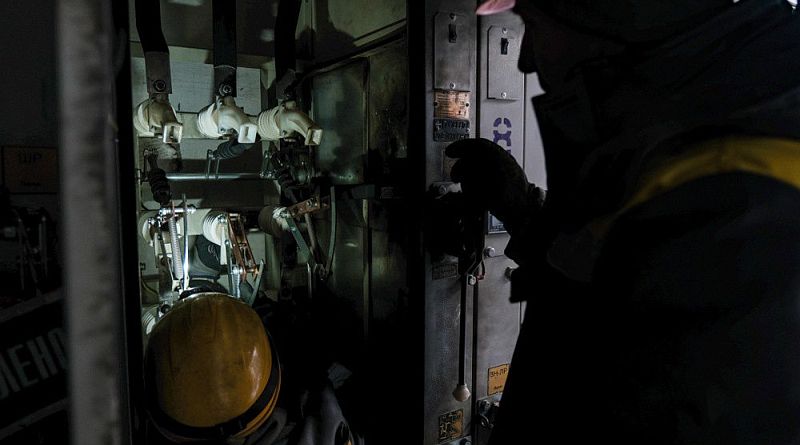
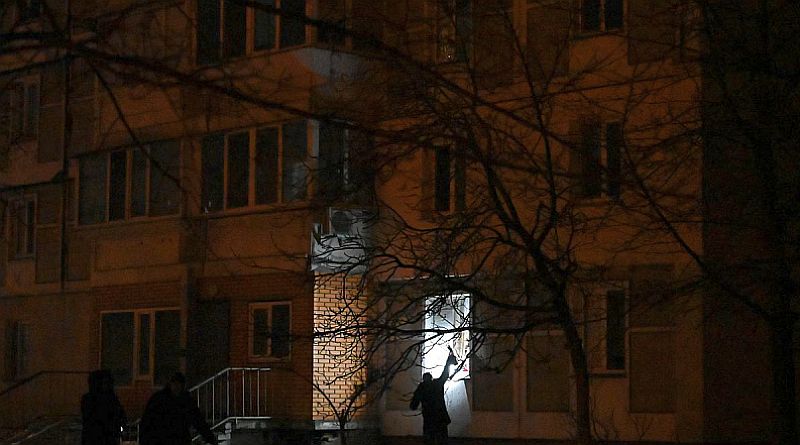
They will also not leave the topic of the energy crisis while the attacks on energy continue. Unfortunately, they are achieving their desired points in it. Previously, protests were held in Kyiv, and on January 20 and 21 in Poltava and Khmelnytskyi against prolonged power outages. Bot attacks are aimed, in particular, at bringing people to the streets.
“When people block roads because they believe the power went out because ‘all the money was stolen’ or ‘everything was sold abroad’ — that is precisely what Russian propaganda desires,” says Zhmailo.
It also tries to manage these protests, immediately introducing a cohort of pseudo-lawyers who promise legal protection in case of detention of protesters, etc.
The second goal is to disrupt everything possible, any disputes in society. Arguments about dictatorship, the necessity of going abroad, corruption, and so on, are used. The focus on the energy crisis will definitely continue at least until early spring. “Until the situation stabilizes. Then, probably, the emphasis will shift back to mobilization, disrupting it is the main focus,” Dmitry Zhmailyo believes.
AI-generated videos, artificial amplification of reported incidents, adding negative connotation to real statements and events — all will be employed. “I think next week there will be an increase in content volume, a buildup of the number of authors,” predicts the analyst.
How bots work now
“We constantly monitor their activity and now we see that Russians have bet heavily on the social network Threads,” says Andriy Kovalenko. Other resources are also actively used. They extract organic videos from TikTok of Kyiv residents about “life in cold apartments” and inject it into Telegram, in comments, etc. And in Threads they are now generating artificial accounts in batches.
“Such one-day accounts, with a couple of followers, a photo or picture, and through AI write in Ukrainian: ‘we need to flee Kyiv’, ‘borders are closed’, ‘the government is to blame for the blackout,’ ‘DTEK is to blame for not providing electricity,'” says Kovalenko. “And now the energy topic is already in second place in the bot’s focus — due to the use of Threads as a new social network where you can freely sow betrayal.”
Freely, thanks to the social network’s algorithm, which resembles the TikTok algorithm but in text form. TikTok promotes videos, providing large reach, while Threads ensures this reach with short text messages. In addition, Meta is currently slow to respond to requests from CPD and other monitoring structures for detecting hostile bot farms.
“We provide information about suspicious accounts, and all other social networks quickly eliminate them (TikTok especially quickly), but with Threads the policy is still quite complex, even Instagram is easier,” explains Kovalenko.
Perhaps this is due to the fact that the new social network is still gaining popularity and does not want to introduce any restrictions. “We’re still figuring this out,” specifies the head of CPD.
It’s impossible to blame the entire stream of negativity in sensitive topics on bots, as there is a noticeable percentage of organic comments. “There are people who vent anger at energy workers, utility workers—it’s human nature,” says Kovalenko. “It’s easier than shooting down a Russian missile.”
The task of bot farms is to make the first 5–10 comments on a post, so that this number of comments of the required orientation appears at the top.
“This is the strategy, and it usually works as a psychological factor: even if a person is doubtful, let’s say, but sees this top section of comments that leads them to some thought—and most likely, they will take their side,” notes the head of the CCD.
Usually, people without critical thinking skills fall for this, he explains, and they are the majority in any society. And the Ukrainian people in Europe seem to be the most critically thinking. “If you analyze how Russians work in Europe—it’s like playing with children,” shares Kovalenko. “We were like that in 2014, as Europeans are now. Very susceptible to informational-cognitive influence.”
Russians have already invested more than a billion dollars in information work in Ukraine, aimed specifically at disrupting mobilization, says Dmytro Zhmailo.
They operate using various methods, including indirect ones. They post on social networks, particularly in YouTube Shorts and TikTok, AI videos with fictional scenarios of confrontations between military personnel and law enforcement. “Purely emotional videos—a conflict between a soldier and a policeman, aggression of a soldier in the family, etc.—and all this content is formally apolitical,” he provides an example. But subconsciously, it works to discredit the Defense Forces.
A huge amount of AI-generated content has already been posted, and it is becoming more sophisticated: hosts seemingly speak and say something. It’s actually possible to recognize an AI product: glassy eyes, uneven figures, flickering silhouettes. “But everything is posted and gains millions of views,” explains a representative of the UCDC. “And so they try to incite people in parallel with strikes on energy.” AI in the botosphere will definitely be a trend in 2026, he says.
Against Bots — Laws, Campaigns, and Technologies
Ukraine counteracts Kremlin’s informational diversions by conducting its own active measures in the information space of Russia, claims Andriy Kovalenko. All of them are confidential, classified, and public details are hard to find. But there is no doubt they exist.
“Some operations will eventually be revealed—they are worthy of full-fledged films,” assures the head of the center. “Quite serious stories that influenced certain internal decisions in Russia.”
Regarding countering bot farms in Ukraine, besides building dialogue with platforms (which is done continuously and more successfully than in 2022-2023), establishing direct contacts, improving platform policies is necessary.
“Legislation needs to be introduced that will oblige platforms to at least quickly monitor the presence of content that violates our laws, and when the state itself draws attention to violations—to respond promptly,” Kovalenko is confident. Because currently, nothing obliges them to do so, except for “their goodwill and, let’s say, good relations with the heads of certain structures that communicate with them.”
Some members of parliament, according to Kovalenko, have been working for some time on such legislative improvements, and the proposals are in the revision stage.
The issue of blocking Telegtam should not be shelved for long, he argues, because a significant portion of bot destructiveness flows from there.
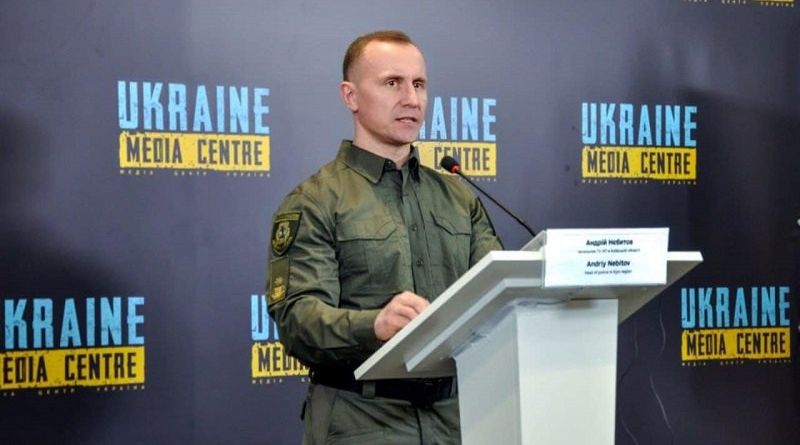
Recently, regarding the significant role of this platform in recruitment, particularly by Russian special services for terrorist acts, LB.ua was addressed by Andriy Nebytov, Deputy Head of the National Police. This could be managed by the technology DPI (Deep Packet Inspection), which blocks traffic by analyzing the content of internet packets.
Of course, it is necessary to block the channels of bot activity, but this alone will not stop the Russians, says Dmytro Zhmilo. “With millions poured into targeting, the Russians will quickly restore all this,” he says. “We need to move towards exclusively national campaigns to restore trust in the pixel.” Like the recruiting one. UCBS cooperates with brigades that specifically deal with it and studied why people are afraid to join the army.
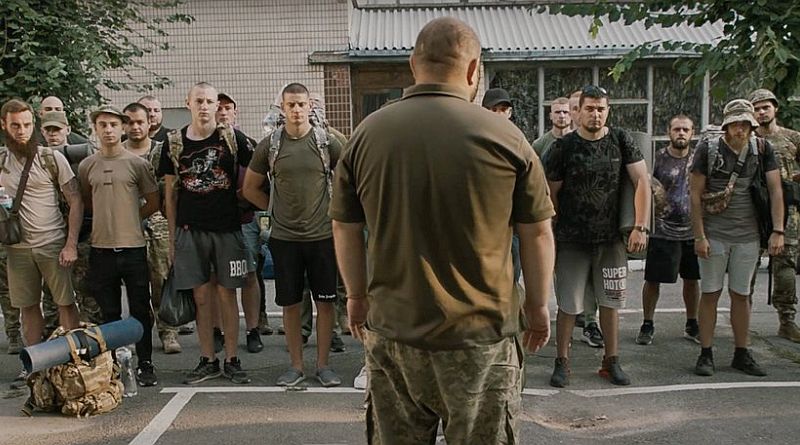
The main reason is the fear of ending up with an unprofessional commander. Therefore, they began introducing potential recruits to the commanders, bringing them to the media, talking about training and the retraining of those joining the brigades. “This way, we do not chase the consequences but address the root cause, trying to achieve systemic changes,” explains Zhmilo. “It is a slow process, but if the number of volunteers increases by 1% over a year, the mobilization plan will decrease by the same amount.”
Such campaigns must involve both military administrations and the media, the expert says. Positive stories need to outweigh the negativity of the bots. “In a direct fight against bot farms, the Russians will just outnumber us; we must constantly think about asymmetrical responses,” says the UCBS head.
Reaching the overhaul of the TCC
The Russians have already achieved some real success. The discrediting of the TCC has gone beyond the internet, leading to attacks on the military; public opinion about this structure is very distorted, affecting the country’s defense capability. “Here we missed an informational goal because the resource expenditure is incomparable; the Russians poured huge sums into the TCC topic,” says Dmytro Zhmilo. “Yet, despite this, the effect was pinpointed, and the resistance did not become widespread.”
The criterion for Russian success would be the failure of mobilization and the breakthrough of the LBS, which did not happen, and the figure of 30,000+ mobilized per month remains stable. For example, during the Vietnam War, the USSR, among others, invested in the hippie movement and anti-war demonstrations and achieved its goals. “The Russians achieve specific successes here as well, particularly because the topic of mobilization is sensitive for certain officials, but we hope that the reset of military-political leadership will lead to changes,” says the executive director of UCBS.
The change in the information paradigm through the efforts of bots has indeed occurred, and new informational approaches to the mobilization process will be a significant challenge for Mykhailo Fedorov and Kyrylo Budanov, he is convinced.
“There are no good or bad decisions in this area; they are always bad or very bad, but the reboot of communications and the structure of the TCC is an overdue issue,” he says.
The problem with the quality of the TCC’s work exists (though it is not as large-scale as it appears in the information space thanks to the Russians), and reform is needed, Kovalенко also believes.
“The new defense minister has already announced it, and this is the right approach since the problem has already gone beyond communications, which will not fix the situation,” he explains. “A reform is needed, and then it should be communicated and defended.”
In particular, according to the head of the CPD, military TCCs should be removed from the streets—they are engaged in work that is not inherent to them, with other services intended for mobilization activities.
At the same time, digital tools should be utilized. “Reserve+ worked quite successfully, increasing the percentage of people registering and coming to the TCC,” recalls Kovalенко. “I think the defense minister knows what to do.”
