
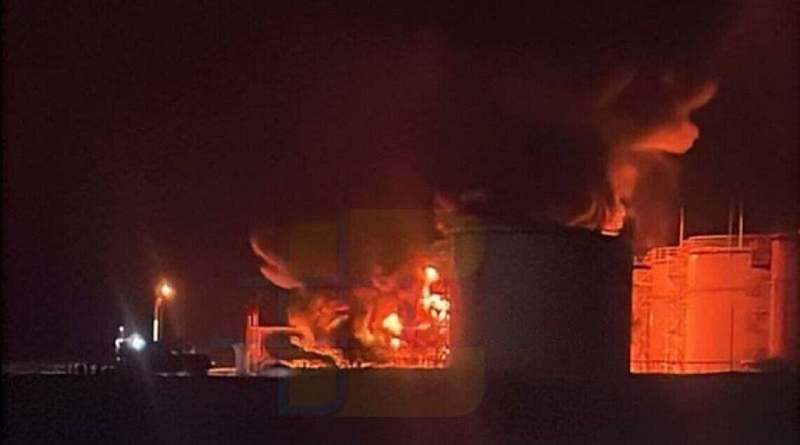
We are systematically blinding the enemy in Crimea and Novorossiysk. The strategic goal remains unchanged: the elimination of air defenses, ships, and radar stations (RLS). The priority is RPN stations (illumination and guidance radars) of the divisions. Without them, any launcher turns into an expensive pile of scrap metal because it cannot see the target. We also strike long-range surveillance radars.
This is very costly for the Russians, and most importantly — painful due to the inability to quickly restore specific electronics under sanctions.
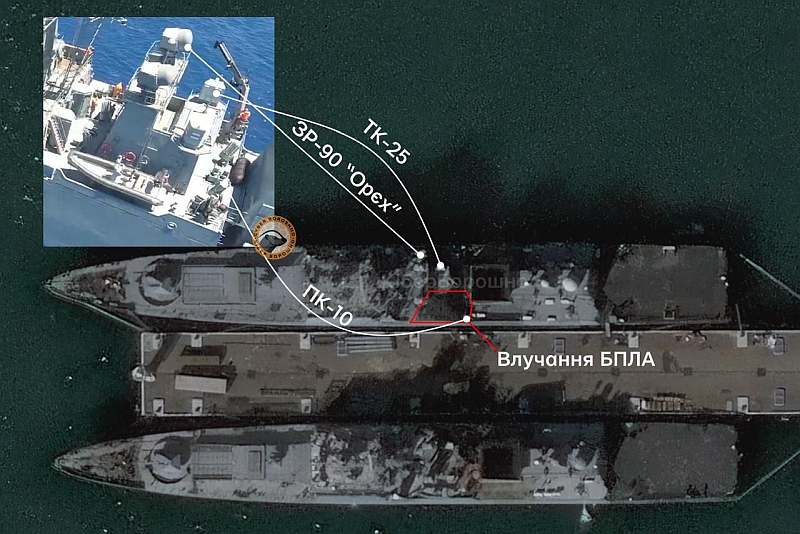
The SBU drone raid on March 2 was very painful for the enemy. The General Staff officially confirmed the hit on two latest frigates of project 11356R “Admiral Essen” and “Admiral Makarov”. Each is armed with eight “Kalibrs”. The strike hit exactly the middle superstructure, where the main command post and integrated control system are located.
Since these ships do not have heavy armor, the explosions of drone warheads and fires pierced the interior through and through. The TK-25 electronic warfare system and MR-90 “Orekh” radars responsible for guiding anti-aircraft missiles were damaged. Now these vessels cannot shoot or see, and their repair in Novorossiysk will take months.
It is important to understand the synergy of strikes: we are passing through the Novorossiysk air defense system for the second time in a short period, burning the fleet directly at the moorings, and working on the infrastructure. Logically, after the appearance of drones in the air, the fleet should head out to sea to have maneuvering space. But there is panic from our unmanned boats (UBCs) and underwater drones waiting in the raid. They are cornered and forced to face aerial attacks right in the port.
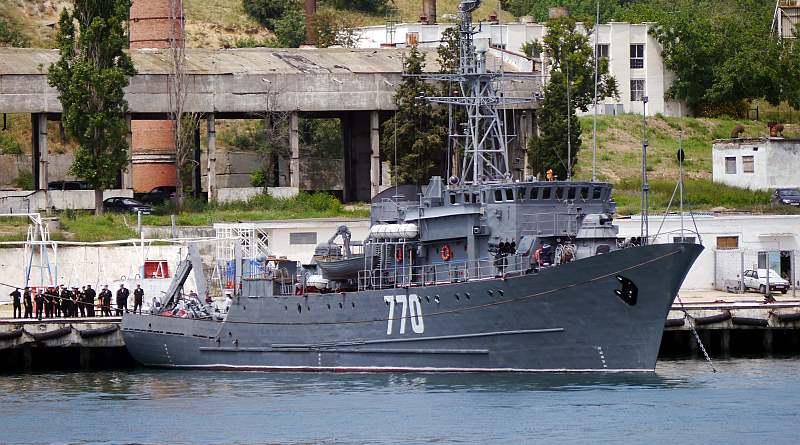
In addition to the frigates, the General Staff confirmed strikes on the minesweeper “Valentin Pikul” and damage to two small anti-submarine ships “Yeysk” and “Kasimov”. They are potentially repairable, but this is long-term work that takes them out of play here and now, weighing down the docks (not to mention dragging them to Crimea).
Pushing the Front and the Role of UAS: Financial Grinder
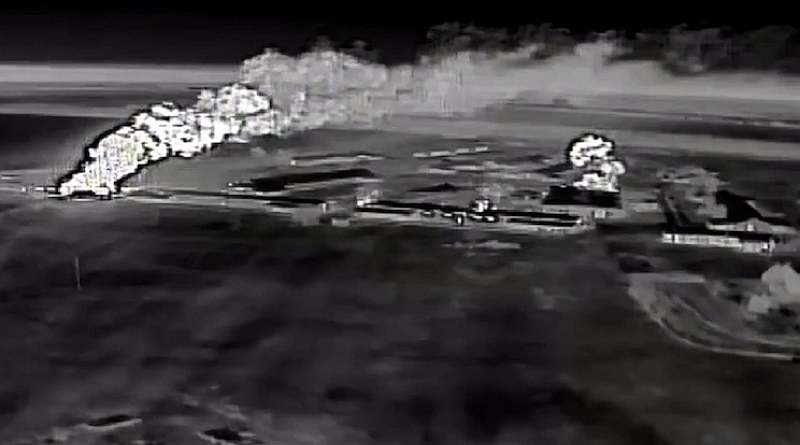
The Unmanned Aerial Systems (UAS) forces are systematically dismantling air defenses in the operational-tactical rear. Bit by bit, we are pushing the frontline air defenses in the Zaporizhzhia and Kherson directions. Recently, we took out a “Buk” SAM system, a “Tor” system, and two “Pantsirs” directly on the line of contact.
The destruction by the Main Intelligence Directorate of a rare radar of the S-500 complex, which the Russians considered invulnerable to air strikes, should be noted separately. This happened deep in Crimea’s rear, once again raising questions about the effectiveness of their defense.
Another “Pantsir” was taken out in Mariupol, and the final blow — the loss of a “Pantsir” in Novorossiysk itself during a raid on March 2. There, the 30N6E2 radar of the S-300PMU-2 “Favorit” system was also destroyed. What was supposed to protect a strategic group and fleet base turned into a target itself.
The damage from this campaign is enormous. If calculated in dollars: the destroyed air defense amounts to hundreds of millions. Plus, two frigates (almost a billion in value), a minesweeper, fast boats “Tuna”, three helicopters, and a hit on an oil depot. The total bill for this short period confidently exceeds well over a billion dollars.
Trap on the Tower and Helicopter Downfall in Crimea
Due to our constant raids on Novorossiysk, the Russians are quite unsettled. They attempt to climb towers like “Sivash” to set up eyes in the form of radars and electronic warfare stations. This is their attempt to create a security perimeter and intercept our sea drones Magura and Sea Baby in advance.
Once they threatened to blockade the grain corridor, and today we have effectively put them in a maritime blockade. I like this “SVO according to the plan.”
Our sea drones attacked a hostile group on one such tower. The supports were blown up, and among the landing party were killed and wounded. A Ka-27 helicopter arrived for evacuation, but our loitering munition hit it right in the cockpit. Now the occupiers are dying together on the tower without medical help — a small thing, but satisfying.
The GUR got another Ka-27 directly in Crimea — at a jump airfield when it was undergoing maintenance. To this, we add a Mi-8, which was hit near Belgorod by its own air defense systems in panic hunting our drones. Not only the pilots but both on-board gunners were killed. Three destroyed helicopters at once — that’s a solid result.
Sheskharis and the Paralysis of Oil Exports
The strike on the Sheskharis terminal on March 2 is a hit to the heart of Russian exports. Six out of seven oil loading stands were hit there—special arms through which oil flows into tankers. This is the largest terminal in the Russian Federation, handling up to a third of all their maritime oil exports. Damage to the splitters (fractional columns for oil separation) and pumping infrastructure means a halt in foreign exchange earnings for months to come. Without Western components, it is almost impossible to quickly restore such an object.
How was this even possible? With their attacks on our energy, they fired missiles worth billions, hoping for a quick blackout. But terror and targeting morale did not work. Instead, they gave us precious time to enhance our delivery means and tactics of application.
Today their air defense is not fully loaded: some equipment is not combat-ready, some under repair, some simply exhausted. We have clear schedules for turning on their radars and detailed satellite images of each object. In strategic bombing, the attacker always has the advantage because he chooses the time and place of the strike.
The strikes on the main fleet base and Sheskharis represent classic new-generation strategic bombing, executed by drones.
The main conclusion: the Russians have effectively given us the initiative in the Black Sea region. They are no longer the masters of the situation even in their own ports. We hope more tankers and gas carriers with huge holes in their sides will burn. Let’s see their willingness to fight like this for 20 years, as their Tsar Peter I once dreamed. Today such a war is too expensive even for a great empire.
